| Cardiology Research, ISSN 1923-2829 print, 1923-2837 online, Open Access |
| Article copyright, the authors; Journal compilation copyright, Cardiol Res and Elmer Press Inc |
| Journal website https://cr.elmerpub.com |
Original Article
Volume 17, Number 5, October 2026, pages 425-436

Clinical and Metabolic Factors as Predictors of Thirty-Day Readmission in Patients With Acute Decompensated Heart Failure With Reduced Ejection Fraction and Type 2 Diabetes Mellitus
Rarsari Soerarsoa, f  , Dian Yaniarti Hasanaha , Emir Yonasb , Azlan Saina, Sunu Budhi Raharjoa , Bambang Budi Siswantoa , Maarten J.M. Cramerc, Pim van der Harstd, Marish I.F.J. Oerlemanse
aDepartment of Cardiology and Vascular Medicine, Faculty of Medicine, Universitas Indonesia, National Cardiovascular Center Harapan Kita, Jakarta, Indonesia
bFaculty of Medicine, Universitas YARSI, Jakarta, Indonesia
cDepartment of Cardiology, University Medical Center Utrecht, University of Utrecht, Netherlands
dDepartment of Cardiology, University Medical Center Utrecht, University of Utrecht, Netherlands
eDivision of Heart and Lungs, University Medical Center Utrecht, University of Utrecht, Netherlands
fCorresponding Author: Rarsari Soerarso, Department of Cardiology and Vascular Medicine, Faculty of Medicine, Universitas Indonesia, National Cardiovascular Center Harapan Kita, Jakarta, Indonesia
Manuscript submitted May 7, 2026, accepted July 8, 2026, published online August 31, 2026
Short title: 30-Day Readmission in Patients With ADHF and T2DM
doi: https://doi.org/10.14740/cr2206
| Abstract | ▴Top |
Background: Patients with heart failure with reduced ejection fraction (HFrEF) had higher readmission rates than those with normal ejection fractions, and readmission rates were highest in the first 30-days post-admission. About 30% of patients with decompensated heart failure also have type 2 diabetes mellitus (T2DM). The aim of the study was to determine the clinical and metabolic predictors of 30-day readmission in patients with acute decompensated heart failure (ADHF) with reduced ejection fraction and type-2 DM.
Methods: The study was conducted in a retrospective-cohort design, and data were taken from medical records based on the admissions of patients. The clinical outcomes were divided into readmission and non-readmission groups. The clinical outcome assessed was the incidence of readmission due to worsening of the condition of heart failure at 30 days after the last admission at the National Cardiovascular Center Harapan Kita (NCCHK), based on clinical encounters/readmission of patients. Logistic regression multivariate analysis was performed to determine significant predictors for 30-day readmission. Bootstrapping was performed to ensure robustness of the multivariate logistic regression analysis.
Results: There were 747 clinical encounters, consisting of 179 readmission events, and 568 were non-readmission events (readmission rate 24%). Atrial fibrillation (AF) was found in 15.7% of clinical encounters. The median ejection fraction (EF) was 23% during admission. median fasting blood sugar and postprandial blood sugar of study subjects were 107(34–324) and 145 (51–409) mg/dL. Multivariate logistic regression analysis showed that the factors associated at 30-days readmission were: AF rhythm (odds ratio (OR) = 2.616; 95% confidence interval (CI), 1.604–4,267; P = 0.000), heart rate at discharge (area under the receiver operating characteristic (ROC) curve (AUC) 0.650 (95% CI, 0.545–0.756) P = 0.007) (OR = 1.022; 95% CI, 1.005–1.039; P = 0.010). Postprandial blood glucose level ≤ 140 mg/dL was a protective predictor for 30-day readmission (OR = 0.528; 95% CI, 0.348–0.802; P = 0.003).
Conclusions: This study showed that clinical factors such as AF and increased heart rate at discharge were associated with rehospitalization risk in 30 days in patients with HFrEF and T2DM, while a metabolic factor of postprandial blood sugar ≤ 140 mg/dL was observed to have protective effects against rehospitalization in 30 days in patients with HFrEF and T2DM. ROC analysis showed that reducing discharge heart rate to below 78 beats per minute (bpm) might be beneficial in diabetic patients with HFrEF and AF.
Keywords: Heart failure; Ejection fraction; Type-2 diabetes mellitus; 30-day readmission
| Introduction | ▴Top |
Acute decompensated heart failure (ADHF) is defined as a sudden worsening of signs and symptoms of chronic heart failure (HF) [1]. Patients with HF, apart from having high mortality, are also affected by high rehospitalization rates. This is especially true in patients with heart failure with reduced ejection fraction (HFrEF). The Atherosclerosis Risk in Communities Study (ARIC) showed higher readmission rates in 30 days after initial discharge in HF patients with reduced ejection fraction (EF) compared with preserved EF (115 vs 88 readmissions per 100 person-years) [2]. In Indonesia, 29% of patients with HF are readmitted within 30 days of discharge. This phenomenon has a significant economic impact, with HF admission cases contributing to the largest cost of hospitalization compared to other cardiovascular disorders, highlighting the need to investigate the clinical characteristics and readmission profiles in ADHF with diabetes mellitus (DM) patients to better depict ADHF patient profile and clinical course in the Southeast Asian population [3, 4].
Patients with HF are commonly found to also suffer from type 2 diabetes mellitus (T2DM). Almost 70% of patients with HF suffer from either prediabetes or T2DM. At least a third of admitted HF patients suffer from type 2 diabetes [5]. Patients with type 2 diabetes are found to be at a twofold risk of developing HF compared to patients without diabetes. HF patients with type 2 diabetes also showed higher admission and readmission rates compared to patients without diabetes. In patients with HF, diabetes and other conditions contributed to the progressivity, complexity, and severity of HF.
A large study of HF patients involving 1,501,811 patients with HFrEF, of whom 36.87% had T2DM, showed a fivefold increase in admission risk in patients who are diabetic compared to nondiabetic patients [6].
The factors associated with increased mortality and rehospitalization risk in HFrEF patients with T2DM remain to be investigated, especially in the first 30 days following initial discharge from the hospital.
Several risk assessment scoring systems, including the LACE index (length of stay, acuity of admission, comorbidity, and previous presentations to emergency), the RAHF (readmission after heart failure) score, and the DERRI (diabetes early readmission risk indicator), have been studied. However, these scoring systems only represent risk assessment on Western populations and often do not resemble phenomenon seen in non-Western countries [5, 7]. Currently, there are no studies that specifically investigated the factors that are associated with rehospitalization and death in specific HFrEF patients who also suffer from T2DM. The objective of this study is to investigate clinical and metabolic factors that are associated with readmission within 30 days in patients with HFrEF and T2DM.
| Materials and Methods | ▴Top |
Study design
This is a retrospective cohort study of acutely decompensated HF patients with decreased EF and T2DM who were hospitalized at the National Cardiovascular Center Harapan Kita, Jakarta, Indonesia, between January 1, 2016, and February 1, 2021.
The inclusion criteria for this study were patients with ADHF and decreased EF (EF ≤ 40%) who had been diagnosed with T2DM and who were admitted between January 1, 2016, and February 1, 2021.
The exclusion criteria were as follows: (1) acute coronary syndrome, including ST-segment elevation myocardial infarction (STEMI), non-ST-segment elevation myocardial infarction (NSTEMI), and unstable angina pectoris (UAP); (2) ADHF with cardiogenic shock clinical profile, including acute lung edema and isolated right HF; (3) primary valvular heart disease; (4) congenital heart disease; (5) a history of valvular surgery; (6) hypertrophic obstructive cardiomyopathy/restrictive cardiomyopathy; (7) death during hospitalization; (8) referral to another hospital; (9) discharge against medical advice; and (10) inability to be contacted by telephone.
Data were collected retrospectively from the medical records of the National Cardiovascular Center, Harapan Kita.
Independent variables of this study consisted of both clinical and metabolic factors: (1) age; (2) gender; (3) body mass index (BMI); (4) blood pressure; (5) heart rate (HR); (6) atrial fibrillation (AF)/ventricular tachycardia; (7) pleural effusion; (8) infection during hospitalization; (9) hemoglobin level; (10) use of intensive diuretic therapy; (11) use of other diuretics; (12) use of angiotensin-converting enzyme inhibitor (ACE-I), angiotensin receptor blocker (ARB), and angiotensin receptor neprilysin inhibitor (ARNI) regiments; (13) use of mineralocorticoid receptor antagonist (MRA) regiment; (14) use of beta-blocker regiment; (15) use of hypoglycemic agents; (16) EF; (17) kidney function; (18) blood sugar levels; and (19) serum electrolyte levels.
The dependent variable and primary outcome of interest of this study are readmission in 30 days secondary to worsening HF.
Data analysis
The primary unit of analysis and outcome of interest is readmission based on clinical encounter, which reflects the dynamic nature of clinical progression of HF with DM at each admission. Data analysis begins with an assessment of data distribution. Assessment of the normality of distribution in numerical data was conducted using the Kolmogorov–Smirnov test. Categorical data were presented using percentages, and numerical data were presented with mean ± standard deviation (SD) for normally distributed data and median with the minimum–maximum value for non-normally distributed data. Several variables were categorized using our operational definition. Bivariate analyses were done using Chi-square test for categorical data. Mann–Whitney U test was used for numerical data with non-normal distribution, and the independent sample t-test for numerical data with normal distribution. Relative risk calculation with 95% confidence interval (CI) was performed for categorical data. Variables with missing data ≥ 10% were excluded from the analysis. Several variables were dichotomized for analysis. Fasting blood glucose was dichotomized into ≤ 100 and ≥ 100 mg/dL, and postprandial glucose level into ≤ 140 and ≥ 140 mg/dL, to align with established recommendations of the American Diabetes Association and Indonesian Society of Endocrinologists, therefore providing highly actionable clinical targets for ward physicians. All variables with a P value ≤ 0.25 in baseline analysis are included in multivariate analysis (logistic regression). To ensure the reproducibility of the internal validation, bootstrapping was performed with 1,000 resamples utilizing a fixed random seed (Mersenne Twister seed: 20000) to calculate bias-corrected and accelerated (BCa) 95% CIs. A P value lower than 0.05 was used as a threshold of statistical significance in this study. All analyses were conducted using SPSS version 26 (IBM Statistics, USA).
Ethical clearance
This study was approved by the National Cardiovascular Center Harapan Kita Research Ethics Committee (approval letter number: LB.02.01/VII/519/KEP 013/2021). The study was conducted in accordance with the ethical principles of the Declaration of Helsinki.
| Results | ▴Top |
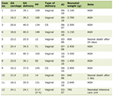
Initially, 1,079 clinical encounters of patients with HFrEF and T2DM were identified. After applying exclusion criteria, a total of 747 clinical encounters remained for final analysis. This consisted of 179 readmission events and 568 non-readmission events. The majority of these encounters involved males (74.8%) with a median age of 58 years. The median length of stay (LOS) across all encounters was 6 (1–76) days. The incidence of infection during admission was 65.6%. Only a few patients (44.5%) reported good adherence to medication regimens. Pleural effusion was present in 13.8% of admissions, and 19.7% of admissions were complicated by chronic kidney disease (CKD) at presentation. In this study, 92.4% of admissions were under an ACE-I/ARB/ARNI regimen, 95.2% under a loop diuretic, 68.3% under an MRA, and 82.3% clinical encounters under a beta-blocker regimen. Other types of diuretics, such as thiazides, were only used by 9.31% of patients on admission. Most of the study subjects received oral hypoglycemic agents (OHO), including insulin on discharge (90.4%). Table 1 shows baseline characteristics of study subjects.
 Click to view | Table 1. Baseline Characteristics of Study Subjects |
AF was found in 15.7% of clinical encounters during admission. The median EF of study subjects in this study was 23% during admission. Regarding DM, the median fasting blood sugar and postprandial blood sugar of study subjects were 107 (34–324) and 145 (51–409) mg/dL. The median glomerular filtration rate (GFR) of study subjects was 46 mL/min/1.73 m2. In this study, there were three variables with missing data ≥ 10%, namely medication adherence, calcium, and magnesium levels (Table 1).
On bivariate analysis, statistically significant results in categorical data were seen on AF (24% vs 13%, P = 0.001), ACE-I/ARB/ARNI on discharge (88.3% vs 93.7%, P = 0.018), fasting blood glucose ≥ 100 mg/dL (70.0% vs 59.5%, P = 0.013), and postprandial glucose ≥ 140 mg/dL on discharge (68.4% vs 52%, P ≤ 0.001). Statistically significant results in numerical data were seen on systolic blood pressure (SBP) 106 (69–164) vs 101 (69–187) mm Hg, HR 81 (50–114) vs 72 (51–105) beats per minute (bpm), urea level 72 (19.7–231.3) vs 62.2 (15.3–207.5) mg/dL, and blood urea nitrogen (BUN) level 33.5 (9–109) vs 29 (7–97) mg/dL.
Based on the results of bivariate analysis, variables that are eligible to be included in multivariate analysis are gender (P = 0.170), infection on admission (P = 0.239), AF on admission (P = 0.001), use of ACE-I/ARB/ARNI on discharge (P = 0.0018), beta-blocker on discharge (P = 0.098), fasting blood glucose ≥ 100 mg/dL (P = 0.013), postprandial glucose ≥ 140 mg/dL (P ≤ 0.001), age (P = 0.054), SBP (P = 0.005), HR (P ≤ 0.001), BUN (P ≤ 0.001), and EF (P = 0.171). Tables 2 and 3 show the results of bivariate analysis of categorical and numerical variables.
Click to view | Table 2. Bivariate Analysis of Independent Categorical Variables to the Incidence of Heart Failure Readmission in 30 Days |
Click to view | Table 3. Bivariate Analysis of Independent Numerical Variables on Incidence of Heart Failure (HF) Readmission in 30 Days |
We performed logistic regression multivariate analysis using the backward Wald method. Our final model with a statistically significant result consisted of AF (odds ratio (OR) = 2.616; 95% CI, 1.604–4.267; P ≤ 0.001), and HR on discharge (OR = 1.022; 95% CI, 1.005–1.039; P = 0.01) as a predictor of readmission in 30 days, while postprandial glucose ≤ 140 mg/dL showed a protective effect against readmission in 30 days (OR = 0.528; 95% CI, 0.348–0.802; P = 0.003). We performed internal validation of the final multivariate model through bootstrapping (2,000 resamples, Mersenne Twister seed: 20000), which produced consistent results with all primary predictors retaining statistical significance and stable BCa 95% CI, confirming the statistical robustness of our analysis result. Table 4 shows the results of multivariate analysis. Receiver operating characteristic (ROC) analysis was performed on all study subjects pertaining to our final model of AF, HR on discharge, and postprandial glucose. The corresponding area under the receiver operating characteristic curve (AUROC) values were 0.557 (95% CI, 0.507–0.607; P = 0.022), 0.599 (95% CI, 0.549–0.648; P < 0.001), and 0.579 (95% CI, 0.533–0.624; P = 0.002), respectively (Fig. 1). We also perform a pooled analysis of all AUCs using a forest plot for AUCs concerning discharge HR thresholds across various study subject subroups (Fig. 2).
Click to view | Table 4. Result of Multivariate Analysis on Factors Associated With Heart Failure Readmission in 30 Days |
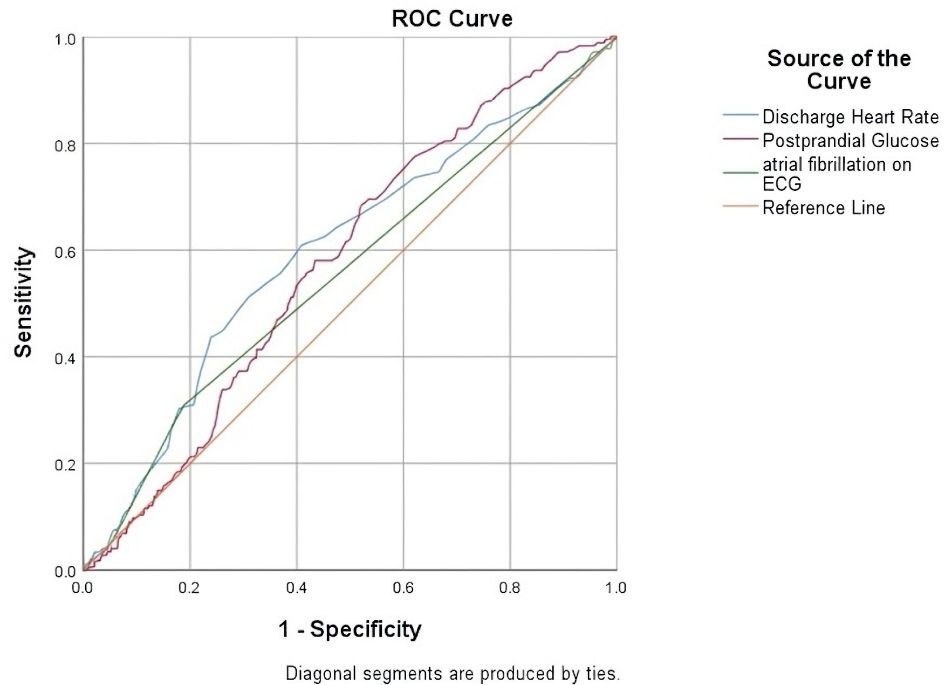 Click for large image | Figure 1. ROC curve of final predictor model of atrial fibrillation on ECG, HR on discharge and postprandial glucose. ROC: receiver operating characteristic; ECG: electrocardiogram; HR: heart rate. |
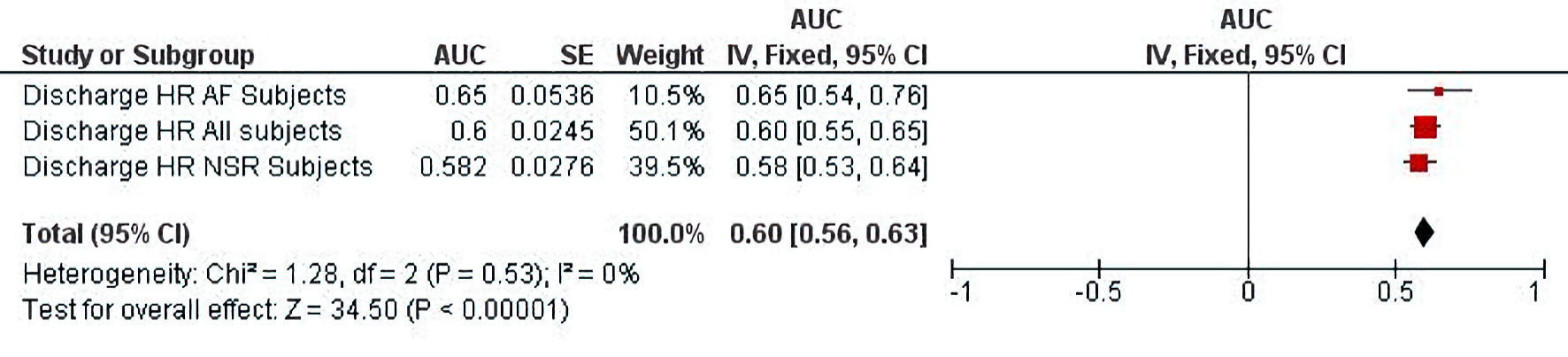 Click for large image | Figure 2. Forest plot comparing AUCs of discharge HR threshold of 76 bpm on all study subjects, subgroup analysis of HR threshold of 78 bpm on NSR study subjects, and subgroup analyses of HR threshold of 78 bpm on AF study subjects. AUC: area under the receiver operating characteristic (ROC) curve; HR: heart rate; bpm: beats per minute; NSR: normal sinus rhythm; AF: atrial fibrillation; CI: confidence interval; SE: standard error. |
ROC curve analyses were performed to evaluate the discriminative utility of discharge HR on readmission. The analyses showed an area under the ROC curve (AUC) of 0.600 (95% CI, 0.552–0.649); P ≤ 0.001), with sensitivity and specificity of 0.654 and 0.521, respectively, at a discharge HR threshold of 76 bpm.
Subgroup ROC curve analysis in normal sinus rhythm (NSR) patients on discharge HR vs readmission showed an AUC of 0.582 (95% CI, 0.528–0.637; P = 0.003), with sensitivity and specificity of 0.581 and 0.585, respectively, with a threshold of discharge HR of 78 bpm.
Subgroup ROC curve analysis in AF patients on discharge HR vs readmission showed an AUC of 0.650 (95% CI, 0.545–0.756; P = 0.007), with sensitivity and specificity of 0.744 and 0.595, respectively, with a threshold of discharge HR of 78 bpm. Figure 3 shows ROC analysis between discharge HR and rehospitalization in AF patients.
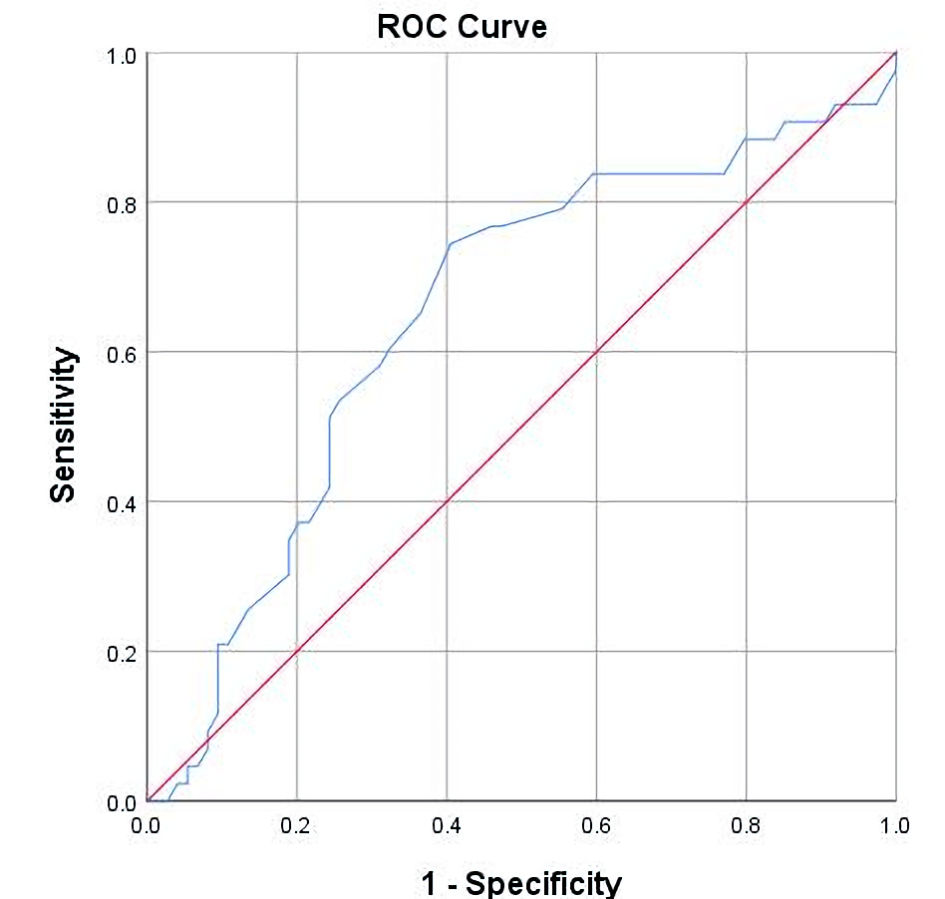 Click for large image | Figure 3. ROC curve of subgroup analysis between discharge HR and rehospitalization in diabetic ADHF patients with AF. ROC: receiver operating characteristic; HR: heart rate; ADHF: acute decompensated heart failure; AF: atrial fibrillation. |
| Discussion | ▴Top |
The main findings of this study are: (1) ADHF HFrEF patients with poor adherence, AF on admission, fasting blood glucose ≥ 100 mg/dL, postprandial glucose ≥ 140 mg/dL, higher median SBP, and higher BUN and Cr were associated with readmission; (2) Using multivariate analysis, ADHF HFrEF patients with AF, higher HR on discharge, and postprandial glucose ≥ 140 mg/dL were associated with readmission; (3) ROC analysis showed that in ADHF HFREF patients with AF, a target HR of 78 bpm showed modest discriminative ability against readmission, with an AUC of 0.650 (95% CI, 0.545–0.756; P = 0.007), with a sensitivity and specificity of 0.744 and 0.405; (4) ROC analysis showed that in ADHF HFrEF patients with AF and NSR, a target HR of 76 bpm showed modest discriminative ability against readmission, with an AUC of 0.600 (95% CI, 0.552–0.649; P ≤ 0.001), with sensitivity and specificity of 0.654 and 0.521, respectively.
In this study, we observed an incidence of 30-day readmission of 23.96% (n = 179). This result is similar to the previous study by Krumholz et al in the USA, which described readmission rates between 18% and 30% [8]. The median age of patients in this study is 58 years, which is similar to the study by Chamberlain et al [7] and Aranda et al [9], which showed the highest readmission rates in patients aged < 65 years old. Our result reflects the result of a previous study by Siswanto et al, which showed that the mean age of ADHF patients in Indonesia is 60 years old [4]. The median LOS in this study was 6 days in both groups. This is similar to a study by Samsky et al, which showed the mean LOS in readmitted ADHF patients to be 4.9 ± 3.7 days in the USA and 7.3 ± 5.6 days in Canada [10]. The incidence of infection during admission was quite high in our study (65.6%); however, during analysis, infection was not found to be affecting readmission rates or LOS. This result differs from a study by Alon et al, which showed higher readmission rates in ADHF patients with infection during admission [11]. Several factors could explain this disparity, including differences in treatment strategies, antimicrobial approaches, and clinical characteristics of the study populations.
CKD is present on 19.7% of all study subjects. However, CKD is not found to be associated with readmission rates on bivariate analysis, while Sherer et al [12] in their study found CKD to be associated with 30-day readmission rates in HF patients. This difference might be caused by the fact that a significant portion of our patients with CKD were new referrals to our hospital, and their CKD diagnoses were established only by history taking and anamnesis.
Lower usage of ACE-I/ARB/ARNI was seen in patients who were readmitted in 30 days in this study (88.3% vs 93.7%, P = 0.018). A similar result is also shown in a study by Sadiq et al [13], which reported that the absence of ACE-I/ARB at discharge was associated with a higher risk of readmission in 30 days (OR = 2.4, P = 0.03) [13]. Inhibition of the renin–angiotensin–aldosterone system (RAAS) plays a significant role in reducing readmission rates in HF patients. This principle also applies to HF patients with T2DM, in which sympathetic upregulation occurs in T2DM patients. Agents belonging to the ACE-I/ARB/ARNI class help suppress sympathetic activation in these patients [13].
One interesting finding in this study is that usage of beta-blockers, even when not associated with a reduction in readmission risk in 30 days, also resonated with other studies. A study by Bhatia et al [14] also showed no association between the administration of beta-blockers and a reduction in readmission risk. Although previous studies have shown beta-blockers to prevent maladaptive cardiac remodeling, which serves as the rationale for prescribing this agent, the protective effect of beta-blockers against rehospitalization might not be seen until up to 1 month after therapy, which might explain the lack of association between beta-blocker usage and reduction of readmission risk in 30 days since the previous admission [13]. This assumption is contradicted by a study by Loop et al [15], which showed a lower readmission risk in 30 days in patients with beta-blockers at discharge. This difference might be caused by a different study population between these two studies [15]. The European Society of Cardiology (ESC) in its guideline still recommends prescribing beta-blockers in HFrEF patients to reduce readmission and mortality secondary to worsening HF [16].
Most of the patients in our study received OHO or insulin (90.4%). Bivariate analysis showed no association between OHO/insulin usage and the reduction of readmission risk. This might be caused by suboptimal blood glucose control in the study subjects, which is reflected by fasting blood glucose levels and postprandial glucose levels in patients with and without readmission (113 (40–321 vs 104 (34–324), P = 0.015; and 158.5 (80–372) vs 142.5 (51–409), P = 0.002, respectively).
In this study, there were more patients with AF at admission in the readmission group compared to the non-readmission group (24% vs 13%, P = 0.001). AF at admission was also found to be associated with a higher readmission risk within 30 days from our multivariate analysis. This association was also shown in previous studies in patients with HF and AF [12, 17–19]. AF in HF cases might reflect a deterioration of ventricular function or an increase in neurohormonal activation. AF can also be the cause of new HF cases or worsening of HF cases. AF causes loss of atrial contractile function, which in turn will contribute to a decrease in cardiac output [20]. AF causes HF by a decrease in cardiac output and by tachycardia-induced cardiomyopathy (TIC) [20]. DM is also a risk factor for the incidence of AF. In diabetic patients, remodeling of the atrial structure by fibrosis and atrial dilatation serves as the main substrate for the incidence of T2DM-related AF. This remodeling is believed to be caused by a combination of metabolic factors such as oxidative stress, advanced glycation end-products (AGEs), and increased expression of growth factors [21]. Patients with T2DM are more at risk of AF [22]. Inadequate blood sugar control in T2DM patients also increases AF development in T2DM patients [22]. In the subpopulation of patients who experienced readmission in this study, out of 43 (24%) patients, 27 (62.8%) patients had fasting blood sugar > 100 mg/dL, and 21 (48.8%) patients had postprandial glucose levels > 140 mg/dL.
Higher resting HRs were seen in the readmission group compared to the non-readmission group (81 (50–114) vs 72 (51–105), P < 0.001). Resting HR was also found to be associated with higher readmission risk in our multivariate analysis (OR = 1.022; 95% CI, 1.005–1.039; P = 0.01). This finding is also similar to the result of two other studies by Kaneko et al [23] and Laskey et al [24]. In T2DM patients, an increase in resting HR is mediated by vagal inhibition and increased activation of the sympathetic axis. A resting HR > 80 bpm in patients with HF might contribute to further myocardial dysfunction. In the SHIFT (Systolic Heart Failure Treatment with the If Inhibitor Ivabradine Trial) study, an increase in resting HR was shown to be associated with increased cardiovascular mortality and rehospitalizations secondary to worsening of HF [25]. This myocardial dysfunction is also believed to be caused by the downregulation of beta receptors with suppression of signal transduction, disruption of intracellular calcium homeostasis, and excitation-contraction coupling. A persistent HR above 100 bpm might even cause TIC [26].
Diabetic patients with higher resting HRs are associated with a worse prognosis in terms of mortality and cardiovascular complications. Resting HR is positively correlated with hyperglycemia status in T2DM patients in terms of fasting blood glucose, postprandial glucose, and glycated hemoglobin (HbA1c). This association is mediated by autonomic system dysfunction secondary to high blood glucose levels [27].
We performed further subgroup analysis in ADHF patients with AF at admission ROC curve to investigate the relationship between discharge HR and readmission risk. ROC curve analysis showed an AUC of 0.650 (95% CI, 0.545–0.756; P = 0.007), with sensitivity and specificity of 0.744 and 0.405, respectively, with a threshold of discharge HR of 78 bpm. Currently, a target HR of 60–110 bpm is recommended for AF patients with acute or chronic HF [28]. Evidence regarding the impact of HR control in the prognosis of AF patients remains inconsistent, with studies showing equivocal results between lenient rate control vs strict rate control [29–31], and even no effect at all [30]. However, it is clear that in patients with HFrEF and AF, an HR above 100 bpm is associated with increased mortality in AF patients [32]. With these results, it might be beneficial to pursue a discharge HR below 78 bpm in diabetic patients with HFrEF and AF. On the other hand, there are still inconsistencies regarding impact of AF on in-hospital mortality of ADHF patients, with ASCEND HF study showing the association between AF and cumulative 30-day all-cause mortality and HF hospitalization [33], while results of HEARTs registry study showing equivocal results of mortality between AF and non-AF patients [34]. A study in Norwegian ADHF patients with AF also showed that AF was not associated with increased mortality rate in ADHF patients using multivariate analysis [35]. Nevertheless, analyses of three randomized controlled trials (RCTs) showed that a history of AF is associated with less loss of weight and a decrease in N-terminal pro–B-type natriuretic peptide (NT-proBNP) levels in ADHF patients, thus making decongestive efforts more difficult in ADHF patients with AF [36].
From our multivariate analysis, postprandial glucose levels < 140 mg/dL were shown to be associated with a lower risk of readmission in 30 days in patients with HFrEF and T2DM (OR = 0.528; 95% CI, 0.348–0.802; P = 0.003). Inadequate control of blood sugar in T2DM will cause endothelial dysfunction and cardiovascular comorbidities [20]. Postprandial glucose levels, not fasting glucose levels, have also been shown to be associated with cardiovascular adverse events in both men and women [37]. In diabetic patients, systemic, myocardial, and cellular mechanism plays a role in causing structural heart disease and HF [38]. Apart from tendencies to cause ischemia/myocardial infarction, diabetes also causes myocardial dysfunction in the absence of coronary heart disease, a condition named diabetic cardiomyopathy [39]. Imaging studies have shown left ventricular hypertrophy to be a characteristic finding in patients with T2DM. Left ventricular hypertrophy causes diastolic dysfunction, which is an early manifestation of diabetic cardiomyopathy. This finding is present in 40–75% of diabetic patients [39].
Our postprandial blood glucose cutoff was set at 140 mg/dL, while our optimal discharge HR thresholds (68–76 bpm) were mathematically derived via ROC curve analysis to maximize diagnostic sensitivity and specificity. Our cutoff for postprandial blood glucose was based on thresholds by the American Diabetes Association guideline; Our discharge HR threshold was supported by major guidelines from ESC/American Heart Association (AHA) and the landmark clinical trial of the RACE II trial, which explicitly established < 80 bpm as the strict physiological boundary for resting HR control [29, 40].
Compared to the classical clinical course of HF, the current clinical trajectory of HF patients is heavily influenced by the post pandemic burden of coronavirus disease 2019 (COVID-19) and its long-term sequelae of “long COVID”. Recent literature has discussed the emerging evidence that severe acute respiratory syndrome coronavirus 2 (SARS-CoV-2) can act as a chronic accelerator, worsening cardiovascular outcomes in patients with cardiovascular comorbidities. A recent systematic review by Parizad et al (2026) [41] showed that patients with pre-existing HF showed an increased rate of readmission related to worsening HF following COVID-19 infection. The authors of the review postulated that the sustained post viral vulnerability is associated with low-grade myocardial inflammation, systemic inflammation, and endothelial injury. Furthermore, when these pathological mechanisms occur in patients with concomitant T2DM, the risk is further increased, as shown in a study by Zhao et al (2025), who described a bidirectional interplay between SARS-CoV-2 infection and diabetes [42]. The authors of these studies postulated that the virus induced glycemic destabilization, alteration in lipid, and coagulation metabolism, which affect cardiovascular complications [29, 41].
Chronic hyperglycemia in T2DM patients causes the generation of AGEs, which in turn will cause cross-linking in collagen molecules and ultimately cause intramyocardial fibrosis. This fibrosis will reduce myocardial elasticity and disrupt cardiac relaxation. Diabetes also causes maladaptive calcium homeostasis and stress on the endoplasmic reticulum, which also contributes to myocardial fibrosis. Chronic hyperglycemia also contributes to activation of the RAAS system, leading to increased secretion of angiotensin II and aldosterone, which also contributes to cardiac hypertrophy and myocardial fibrosis [39].
Study limitations
Our study has several limitations. First, due to the nature and constraints of retrospective single-center design at a national referral center, the findings of this study might have limited external generalizability to primary or community care settings. Furthermore, while our final sample of 747 clinical encounters provided sufficient statistical power for multivariate analysis, this number still represents a modest cohort compared to larger-scale multicenter registries. With the retrospective nature of the analysis, we were also unable to account for unmeasured socioeconomic factors, which may independently influence the risk of 30-day readmission regardless of the patient’s clinical or metabolic status.
Second, regarding discharge medication and the implementation of guideline-directed medical therapy (GDMT), a high number of our clinical encounters received GDMT (92.4% received an ACE-I/ARB/ARNI, 82.3% received a beta-blocker, and 68.3% received an MRA). Due to the retrospective nature of the date, we could not verify what percentage of these patients achieved true maximum GDMT doses. Sodium-glucose cotransporter 2 inhibitors (SGLT2i) were not evaluated as a class of the four pillars of the HFrEF therapy because our study was conducted from January 2016 to February 2021, in which time the SGLT2i were not readily available in Indonesian HF centers and were not included in local HF guideline. The lack of standardized SGLT2i therapy strictly reflects the historical timeline of regional guidelines and availability rather than clinical omission.
Third, this study lacked longitudinal post-discharge tracking to correlate 30-day readmission outcomes directly with long-term medication compliance. The high rate of missing data in the medication adherence variable necessitated the exclusion of this variable from our analysis to ensure data integrity. There is still a possibility that unmeasured confounding of post-discharge non-compliance may have independently caused early rehospitalization.
Fourth, not all subjects in our study received a uniform or comprehensive diagnostic workup for CKD, such as standardized baseline laboratory assays and renal ultrasonography at every presentation. This may have introduced a risk of misclassification bias regarding CKD in our study subjects, which might explain why CKD status was not observed to be significantly associated with readmission risk. Finally, a statistical limitation of this study is the inclusion of multiple admissions from the same individual patient, which could potentially affect the assumption of independence required for standard logistic regression modelling. However, our internal validation of our primary predictors using bootstrapping generated highly stable CIs, which confirms excellent consistency of the identified clinical and metabolic risk factors across successive clinical encounters.
Conclusions
This study showed that clinical factors such as AF and increased HR at discharge were associated with rehospitalization risk in 30 days in patients with HFrEF and T2DM, while a metabolic factor of postprandial blood sugar ≤ 140 mg/dL was observed to have protective effects against rehospitalization in 30 days in patients with HFrEF and T2DM. ROC analysis showed that reducing discharge HR to below 78 bpm might be beneficial in diabetic patients with HFrEF and AF.
Learning points
ADHF patients with HFrEF face high 30-day readmission rates, particularly when complicated by T2DM, which increases cardiovascular complexity and mortality risk. Existing risk scores often fail to reflect the clinical profiles of non-Western populations.
This study identifies AF, high discharge HR, and postprandial glucose < 140 mg/dL as key readmission predictors in an Indonesian cohort. Future implications suggest that targeting a discharge HR < 78 bpm and strict postprandial glycemic control could significantly reduce rehospitalization.
Acknowledgments
None to declare.
Financial Disclosure
This paper received no specific grant from any funding agency, commercial or not-for-profit sectors.
Conflict of Interest
All authors declare no conflict of interest.
Informed Consent
Not applicable; this was a retrospective cohort study, and a waiver of informed consent was granted by the National Cardiovascular Center Harapan Kita Research Ethics Committee (decision letter number: LB.02.01/VII/519/KEP 013/2021).
Author Contributions
Rarsari Soerarso: Conceptualization, project administration, and writing – original draft. Emir Yonas: Formal analysis, writing – original draft. Azlan Sain: Formal analysis, writing – original draft. Dian Yaniarti Hasanah: Writing – review and editing. Sunu Budhi Raharjo: Writing – review and editing. Bambang Budi Siswanto: Writing – review and editing. M.I.F.J Oerlemans: Writing – review and editing. Pim Van Der Harst: Writing – review and editing. Marten J.M. Cramer: Writing – review and editing. All authors read and approved the final version of the manuscript.
Data Availability
The data supporting the findings of this study are available from the corresponding author upon reasonable request.
Abbreviations
ACE-I: angiotensin-converting enzyme inhibitor; AGEs: advanced glycation end-products; AF: atrial fibrillation; ARB: angiotensin receptor blocker; ARNI: angiotensin receptor neprilysin inhibitor; BUN: blood urea nitrogen; CKD: chronic kidney disease; DBP: diastolic blood pressure; ECG: electrocardiogram; EF: ejection fraction; GFR: glomerular filtration rate; HFrEF: heart failure with reduced ejection fraction; LOS: length of stay; NSR: normal sinus rhythm; SBP: systolic blood pressure; SR: sinus rhythm; VT: ventricular tachycardia; T2DM: type 2 diabetes mellitus; TIC: tachycardia-induced cardiomyopathy
| References | ▴Top |
- McMurray JJ, Adamopoulos S, Anker SD, Auricchio A, Bohm M, Dickstein K, Falk V, et al. ESC Guidelines for the diagnosis and treatment of acute and chronic heart failure 2012: The Task Force for the Diagnosis and Treatment of Acute and Chronic Heart Failure 2012 of the European Society of Cardiology. Developed in collaboration with the Heart Failure Association (HFA) of the ESC. Eur Heart J. 2012;33(14):1787-1847.
doi pubmed - Caughey MC, Sueta CA, Stearns SC, Shah AM, Rosamond WD, Chang PP. Recurrent acute decompensated heart failure admissions for patients with reduced versus preserved ejection fraction (from the Atherosclerosis Risk in Communities Study). Am J Cardiol. 2018;122(1):108-114.
doi pubmed - Braunwald E. The war against heart failure: the Lancet lecture. Lancet. 2015;385(9970):812-824.
doi pubmed - Siswanto BB, Radi B, Radi B, et al. Heart Failure in NCVC Jakarta and 5 hospitals in Indonesia. Glob Heart. 2010;5(1):35.
doi - Thomas MC. Perspective review: type 2 diabetes and readmission for heart failure. Clin Med Insights Cardiol. 2018;12:1179546818779588.
doi pubmed - Munoz-Rivas N, Jimenez-Garcia R, Mendez-Bailon M, Hernandez-Barrera V, de Miguel-Diez J, Lorenzo-Villalba N, de Miguel-Yanes JM, et al. Type 2 diabetes increases the risk of hospital admission for heart failure and reduces the risk of in hospital mortality in Spain (2001-2015). Eur J Intern Med. 2019;59:53-59.
doi pubmed - Chamberlain RS, Sond J, Mahendraraj K, Lau CS, Siracuse BL. Determining 30-day readmission risk for heart failure patients: the Readmission After Heart Failure scale. Int J Gen Med. 2018;11:127-141.
doi pubmed - Krumholz HM, Lin Z, Keenan PS, Chen J, Ross JS, Drye EE, Bernheim SM, et al. Relationship between hospital readmission and mortality rates for patients hospitalized with acute myocardial infarction, heart failure, or pneumonia. JAMA. 2013;309(6):587-593.
doi pubmed - Aranda JM, Krause-Steinrauf HJ, Greenberg BH, Heng MK, Kosolcharoen PK, Renlund DG, Thaneemit-Chen S, et al. Comparison of the beta blocker bucindolol in younger versus older patients with heart failure. Am J Cardiol. 2002;89(11):1322-1326.
doi pubmed - Samsky MD, Ambrosy AP, Youngson E, Liang L, Kaul P, Hernandez AF, Peterson ED, et al. Trends in readmissions and length of stay for patients hospitalized with heart failure in Canada and the United States. JAMA Cardiol. 2019;4(5):444-453.
doi pubmed - Alon D, Stein GY, Korenfeld R, Fuchs S. Predictors and outcomes of infection-related hospital admissions of heart failure patients. PLoS One. 2013;8(8):e72476.
doi pubmed - Sherer AP, Crane PB, Abel WM, Efird J. Predicting heart failure readmissions. J Cardiovasc Nurs. 2016;31(2):114-120.
doi pubmed - Sadiq AM, Chamba NG, Sadiq AM, Shao ER, Temu GA. Clinical characteristics and factors associated with heart failure readmission at a tertiary hospital in North-Eastern Tanzania. Cardiol Res Pract. 2020;2020:2562593.
doi pubmed - Bhatia V, Bajaj NS, Sanam K, Hashim T, Morgan CJ, Prabhu SD, Fonarow GC, et al. Beta-blocker use and 30-day all-cause readmission in medicare beneficiaries with systolic heart failure. Am J Med. 2015;128(7):715-721.
doi pubmed - Loop MS, Van Dyke MK, Chen L, Brown TM, Durant RW, Safford MM, Levitan EB. Evidence-based beta blocker use associated with lower heart failure readmission and mortality, but not all-cause readmission, among Medicare beneficiaries hospitalized for heart failure with reduced ejection fraction. PLoS One. 2020;15(7):e0233161.
doi pubmed - Ponikowski P, Voors AA, Anker SD, Bueno H, Cleland JGF, Coats AJS, Falk V, et al. 2016 ESC Guidelines for the diagnosis and treatment of acute and chronic heart failure: The Task Force for the diagnosis and treatment of acute and chronic heart failure of the European Society of Cardiology (ESC)Developed with the special contribution of the Heart Failure Association (HFA) of the ESC. Eur Heart J. 2016;37(27):2129-2200.
doi pubmed - Carlson B, Hoyt H, Gillespie K, Kunath J, Lewis D, Bratzke LC. Predictors of heart failure readmission in a high-risk primarily Hispanic population in a rural setting. J Cardiovasc Nurs. 2019;34(3):267-274.
doi pubmed - Eastwood CA, Howlett JG, King-Shier KM, McAlister FA, Ezekowitz JA, Quan H. Determinants of early readmission after hospitalization for heart failure. Can J Cardiol. 2014;30(6):612-618.
doi pubmed - Munir MB, Sharbaugh MS, Ahmad S, Patil S, Mehta K, Althouse AD, Saba S. Causes and predictors of 30-day readmissions in atrial fibrillation (from the Nationwide Readmissions Database). Am J Cardiol. 2017;120(3):399-403.
doi pubmed - Anter E, Jessup M, Callans DJ. Atrial fibrillation and heart failure: treatment considerations for a dual epidemic. Circulation. 2009;119(18):2516-2525.
doi pubmed - Wang A, Green JB, Halperin JL, Piccini JP, Sr. Atrial fibrillation and diabetes mellitus: JACC review topic of the week. J Am Coll Cardiol. 2019;74(8):1107-1115.
doi pubmed - Fu L, Deng H, Lin WD, He SF, Liu FZ, Liu Y, Zhan XZ, et al. Association between elevated blood glucose level and non-valvular atrial fibrillation: a report from the Guangzhou heart study. BMC Cardiovasc Disord. 2019;19(1):270.
doi pubmed - Kaneko H, Suzuki S, Goto M, Arita T, Yuzawa Y, Yagi N, Murata N, et al. Incidence and predictors of rehospitalization of acute heart failure patients. Int Heart J. 2015;56(2):219-225.
doi pubmed - Laskey WK, Alomari I, Cox M, Schulte PJ, Zhao X, Hernandez AF, Heidenreich PA, et al. Heart rate at hospital discharge in patients with heart failure is associated with mortality and rehospitalization. J Am Heart Assoc. 2015;4(4):e001626.
doi pubmed - Das D, Savarese G, Dahlstrom U, Fu M, Howlett J, Ezekowitz JA, Lund LH. Ivabradine in heart failure: the representativeness of SHIFT (Systolic heart failure treatment with the IF inhibitor ivabradine trial) in a broad population of patients with chronic heart failure. Circ Heart Fail. 2017;10(9):e004112.
doi pubmed - Hori M, Okamoto H. Heart rate as a target of treatment of chronic heart failure. J Cardiol. 2012;60(2):86-90.
doi pubmed - Liang DL, Li XY, Wang L, Xu H, Tuo XP, Jian ZJ, Wang XN, et al. [Correlation between resting heart rate and blood glucose level in elderly patients with coronary heart disease and diabetes mellitus]. Nan Fang Yi Ke Da Xue Xue Bao. 2016;36(5):609-616.
pubmed - Joglar JA, Chung MK, Armbruster AL, Benjamin EJ, Chyou JY, Cronin EM, Deswal A, et al. 2023 ACC/AHA/ACCP/HRS guideline for the diagnosis and management of atrial fibrillation: a report of the American College of Cardiology/American Heart Association Joint Committee on Clinical Practice Guidelines. Circulation. 2024;149(1):e1-e156.
doi pubmed - Van Gelder IC, Groenveld HF, Crijns HJ, Tuininga YS, Tijssen JG, Alings AM, Hillege HL, et al. Lenient versus strict rate control in patients with atrial fibrillation. N Engl J Med. 2010;362(15):1363-1373.
doi pubmed - Moschovitis G, Johnson LSB, Blum S, Aeschbacher S, De Perna ML, Pagnamenta A, Mayer Melchiorre PA, et al. Heart rate and adverse outcomes in patients with prevalent atrial fibrillation. Open Heart. 2021;8(1):e001606.
doi pubmed - Groenveld HF, Tijssen JG, Crijns HJ, Van den Berg MP, Hillege HL, Alings M, Van Veldhuisen DJ, et al. Rate control efficacy in permanent atrial fibrillation: successful and failed strict rate control against a background of lenient rate control: data from RACE II (Rate Control Efficacy in Permanent Atrial Fibrillation). J Am Coll Cardiol. 2013;61(7):741-748.
doi pubmed - Li SJ, Sartipy U, Lund LH, Dahlstrom U, Adiels M, Petzold M, Fu M. Prognostic significance of resting heart rate and use of beta-blockers in atrial fibrillation and sinus rhythm in patients with heart failure and reduced ejection fraction: findings from the Swedish heart failure registry. Circ Heart Fail. 2015;8(5):871-879.
doi pubmed - Abualnaja S, Podder M, Hernandez AF, McMurray JJ, Starling RC, O'Connor CM, Califf RM, et al. Acute heart failure and atrial fibrillation: insights from the acute study of clinical effectiveness of Nesiritide in decompensated heart failure (ASCEND-HF) Trial. J Am Heart Assoc. 2015;4(8):e002092.
doi pubmed - Ajlan M, Almazroa L, AlHabib KF, Elasfar AA, Alfaleh H, Albackr H, Kashour T, et al. Atrial fibrillation in patients hospitalized with heart failure: patient characteristics and outcomes from the HEARTS registry. Angiology. 2018;69(2):151-157.
doi pubmed - Tveit A, Flonaes B, Aaser E, Korneliussen K, Froland G, Gullestad L, Grundtvig M. No impact of atrial fibrillation on mortality risk in optimally treated heart failure patients. Clin Cardiol. 2011;34(9):537-542.
doi pubmed - Patel RB, Vaduganathan M, Rikhi A, Chakraborty H, Greene SJ, Hernandez AF, Felker GM, et al. History of atrial fibrillation and trajectory of decongestion in acute heart failure. JACC Heart Fail. 2019;7(1):47-55.
doi pubmed - Cavalot F, Petrelli A, Traversa M, Bonomo K, Fiora E, Conti M, Anfossi G, et al. Postprandial blood glucose is a stronger predictor of cardiovascular events than fasting blood glucose in type 2 diabetes mellitus, particularly in women: lessons from the San Luigi Gonzaga Diabetes Study. J Clin Endocrinol Metab. 2006;91(3):813-819.
doi pubmed - Marwick TH, Ritchie R, Shaw JE, Kaye D. Implications of underlying mechanisms for the recognition and management of diabetic cardiomyopathy. J Am Coll Cardiol. 2018;71(3):339-351.
doi pubmed - Dunlay SM, Givertz MM, Aguilar D, Allen LA, Chan M, Desai AS, Deswal A, et al. Type 2 diabetes mellitus and heart failure: a scientific statement from the American Heart Association and the Heart Failure Society of America: This statement does not represent an update of the 2017 ACC/AHA/HFSA heart failure guideline update. Circulation. 2019;140(7):e294-e324.
doi pubmed - American Diabetes Association Professional Practice Committee for Diabetes. 6. Glycemic goals, hypoglycemia, and hyperglycemic crises: standards of care in diabetes-2026. Diabetes Care. 2026;49(Supplement_1):S132-S149.
doi pubmed - Parizad R, Hatwal J, Brar A, Batta A, Taban Sadeghi M, Mohan B. Long-term cardiovascular sequelae of COVID-19 in patients with pre-existing heart failure: a systematic review. Explor Cardiol. 2026;4:101284.
doi - Zhao X, Jiang L, Sun W, Tang S, Kang X, Gao Q, Li Z, et al. Understanding the interplay between COVID-19 and diabetes: insights for the post-pandemic era. Front Endocrinol (Lausanne). 2025;16:1599969.
doi pubmed
This article is distributed under the terms of the Creative Commons Attribution 4.0 International License (CC BY 4.0), which permits unrestricted use, distribution, and reproduction in any medium, including commercial use, provided the original work is properly cited.
Cardiology Research is published by Elmer Press Inc.