Cardiology Research, ISSN 1923-2829 print, 1923-2837 online, Open Access
Article copyright, the authors; Journal compilation copyright, Cardiol Res and Elmer Press Inc
Journal website https://cr.elmerpub.com

Original Article

Volume 17, Number 3, June 2026, pages 227-238


Role of Intracoronary Imaging in Percutaneous Coronary Intervention for In-Stent Restenosis: A Prospective Observational Study

Figures

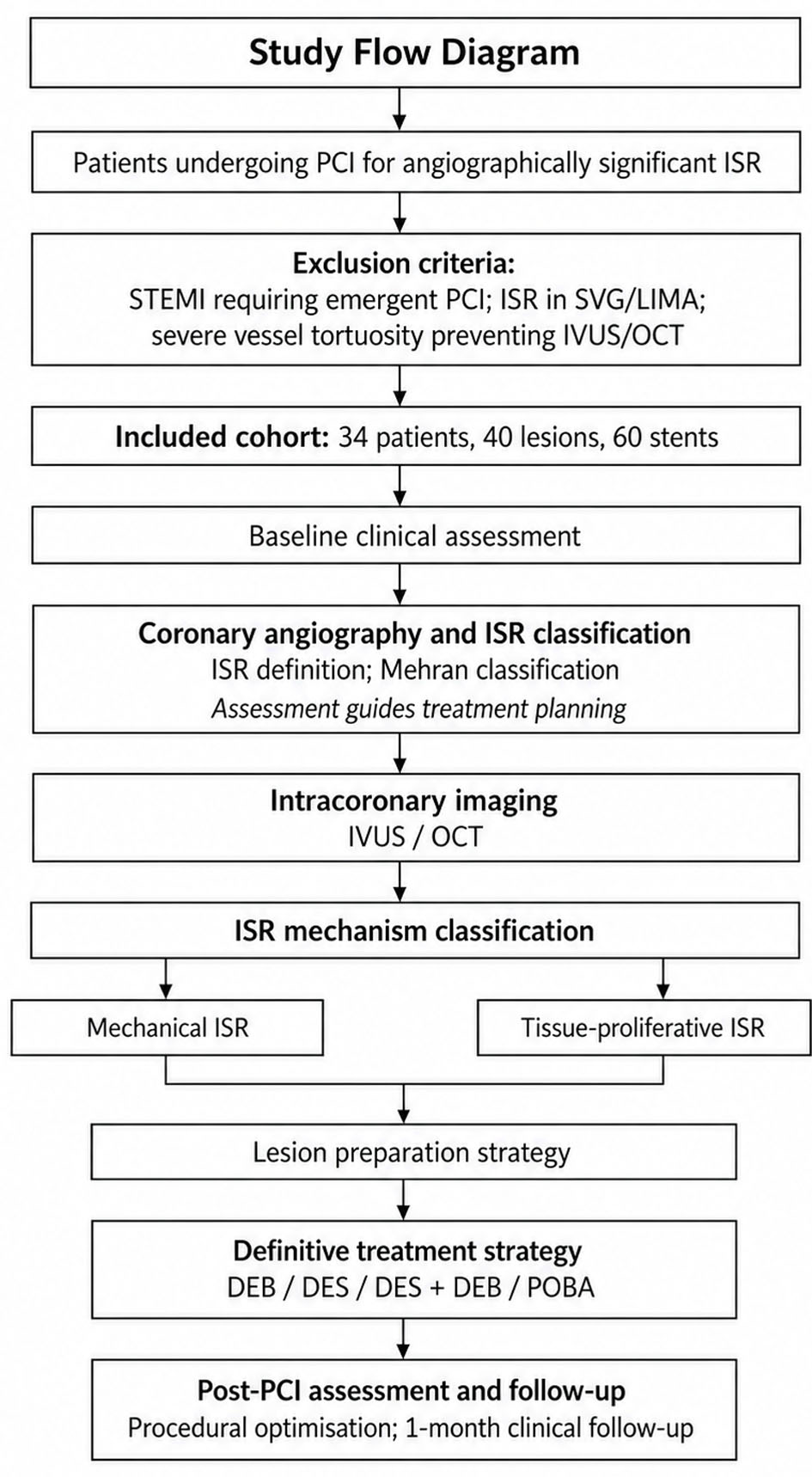
↓  Figure 1. Study flow diagram. Flowchart showing patient selection, baseline clinical assessment, angiographic ISR classification, intracoronary imaging with IVUS/OCT, mechanism-based ISR classification, lesion preparation, definitive treatment strategy, and follow-up. ISR: in-stent restenosis; IVUS: intravascular ultrasound; OCT: optical coherence tomography.
Figure 1.
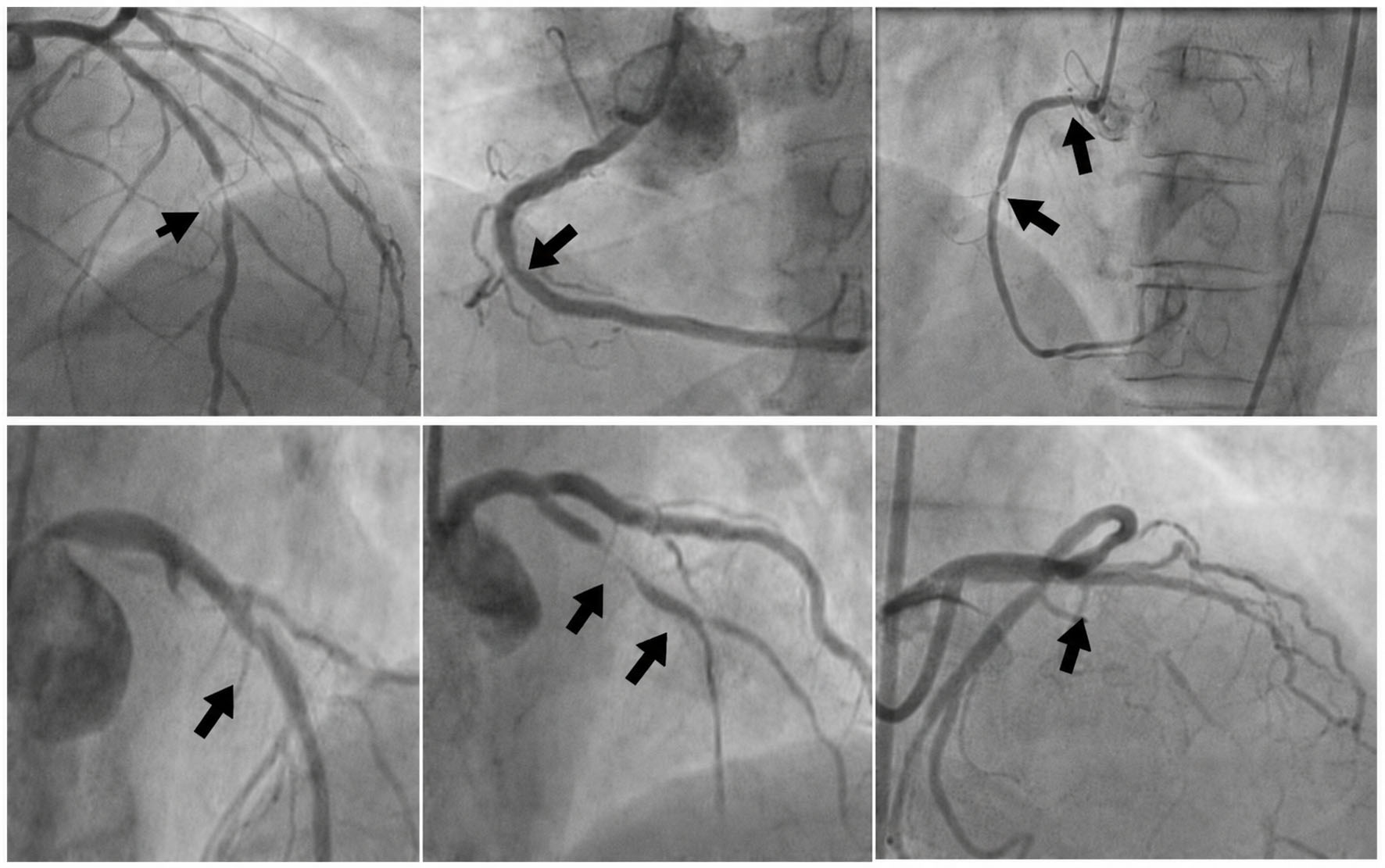
↓  Figure 2. Angiographic images from study patients demonstrating patterns of ISR according to the Mehran classification. Upper panel (left to right) shows focal ISR patterns: Mehran IB, Mehran IC, and Mehran ID. Lower panel (left to right) illustrates diffuse ISR patterns: pattern II (diffuse intrastent), pattern III (diffuse proliferative), and pattern IV (total occlusion). Black solid arrows indicate the site and extent of ISR within or adjacent to the stented segment. ISR: in-stent restenosis.
Figure 2.
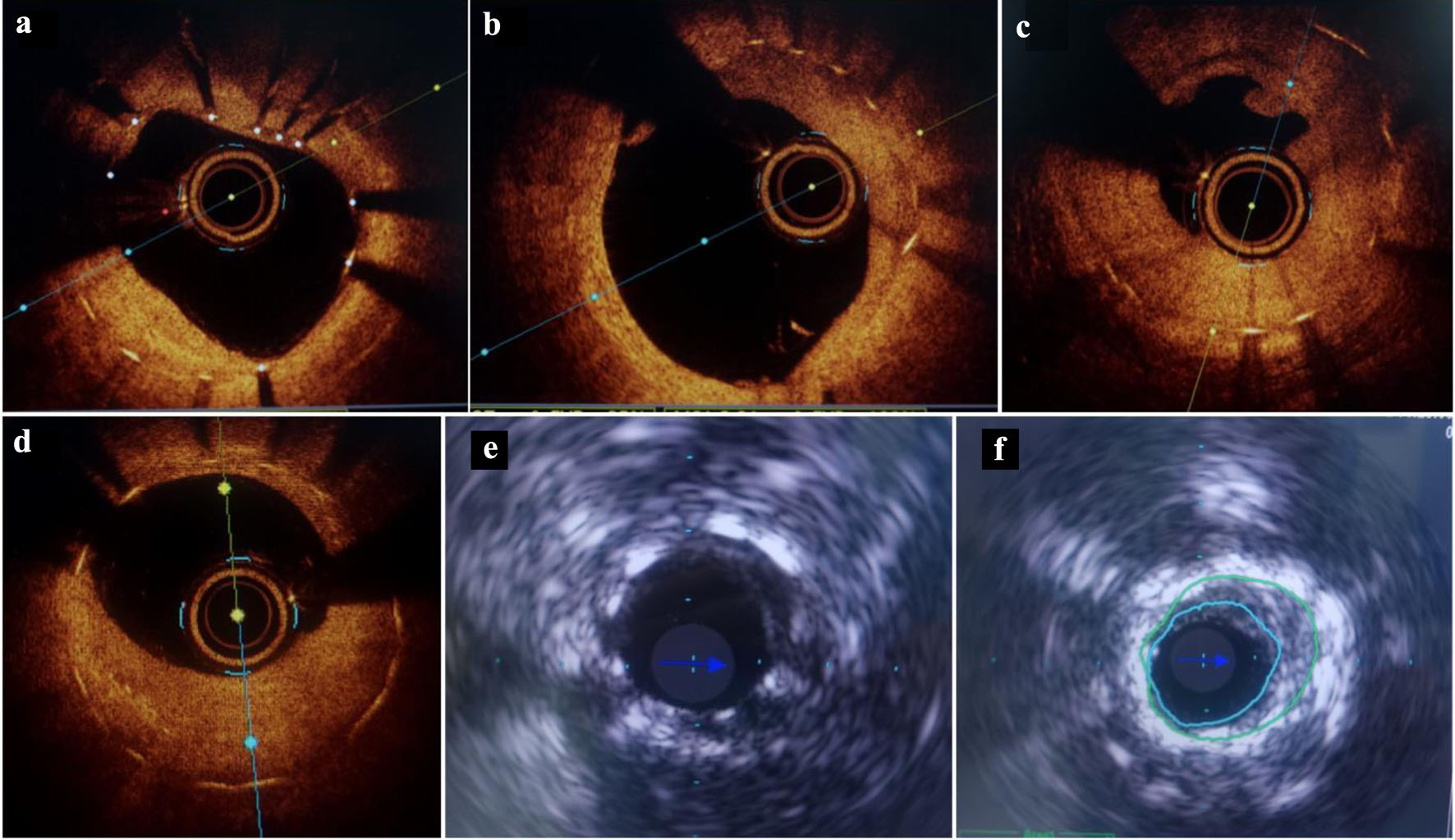
↓  Figure 3. Representative OCT and IVUS images demonstrating mechanisms of ISR. Panels (a)–(d) show optical coherence tomography cross-sectional images of ISR. Panel (a) demonstrates eccentric neointimal hyperplasia within the stented segment causing significant luminal compromise with well-apposed stent struts. Panel (b) shows diffuse, predominantly homogeneous neointimal proliferation resulting in concentric luminal narrowing. Panel (c) demonstrates heterogeneous neointimal tissue with signal attenuation suggestive of complex tissue composition, consistent with neoatherosclerosis. Panel (d) shows concentric neointimal hyperplasia with significant tissue burden leading to luminal narrowing. Panels (e) and (f) show intravascular ultrasound images. Panel (e) demonstrates significant neointimal tissue proliferation within the stented segment without an obvious mechanical abnormality. Panel (f) demonstrates stent underexpansion with reduced minimal stent area and persistent luminal compromise, consistent with mechanically driven ISR. ISR: in-stent restenosis; IVUS: intravascular ultrasound; OCT: optical coherence tomography.
Figure 3.
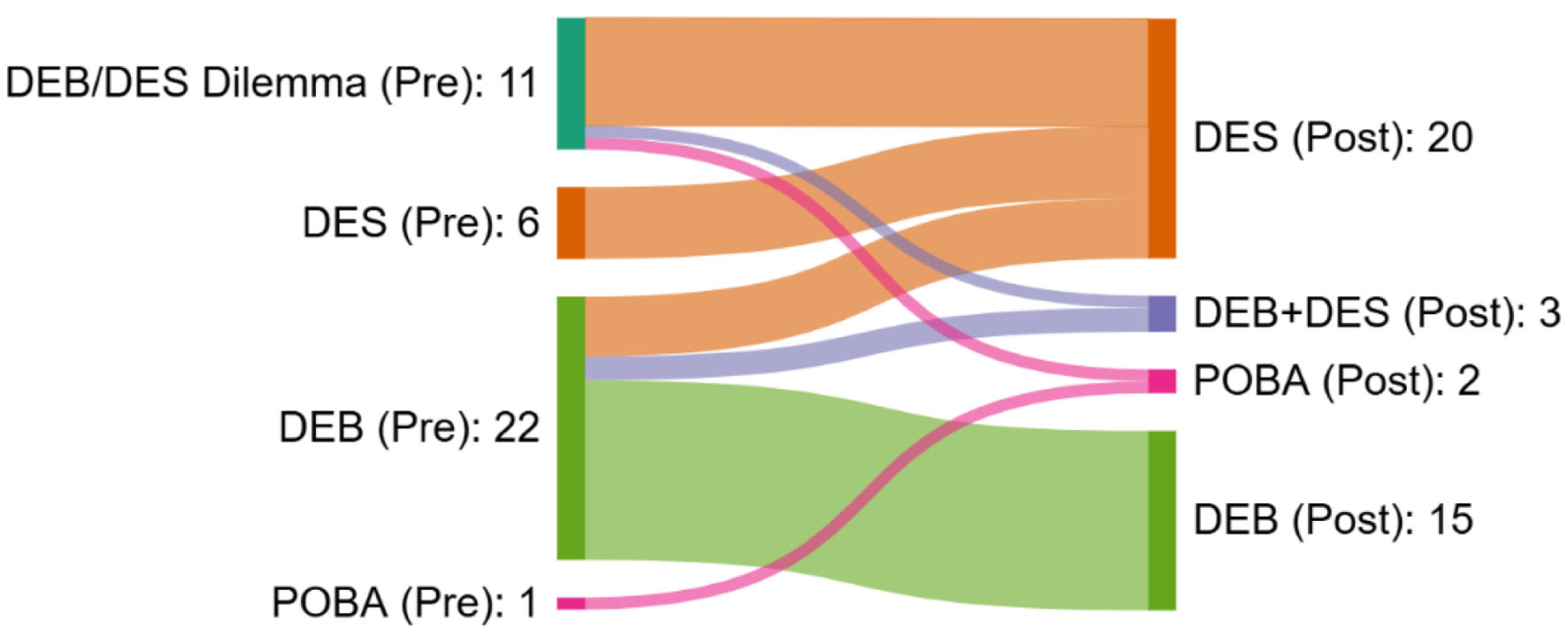
↓  Figure 4. Imaging-guided change in treatment strategy for ISR. Pre-imaging strategies included DEB (55%), DES (15%), DES with possible DEB conversion (27.5%), and POBA (2.5%). Following intracoronary imaging, final strategies were DES (50%), DES + DEB (7.5%), and POBA (5%). The Sankey diagram illustrates reclassification of treatment strategy after imaging, predominantly toward stent-based approaches. DEB: drug-eluting balloon; DES: drug-eluting stent; ISR: in-stent restenosis; POBA: plain old balloon angioplasty.
Figure 4.
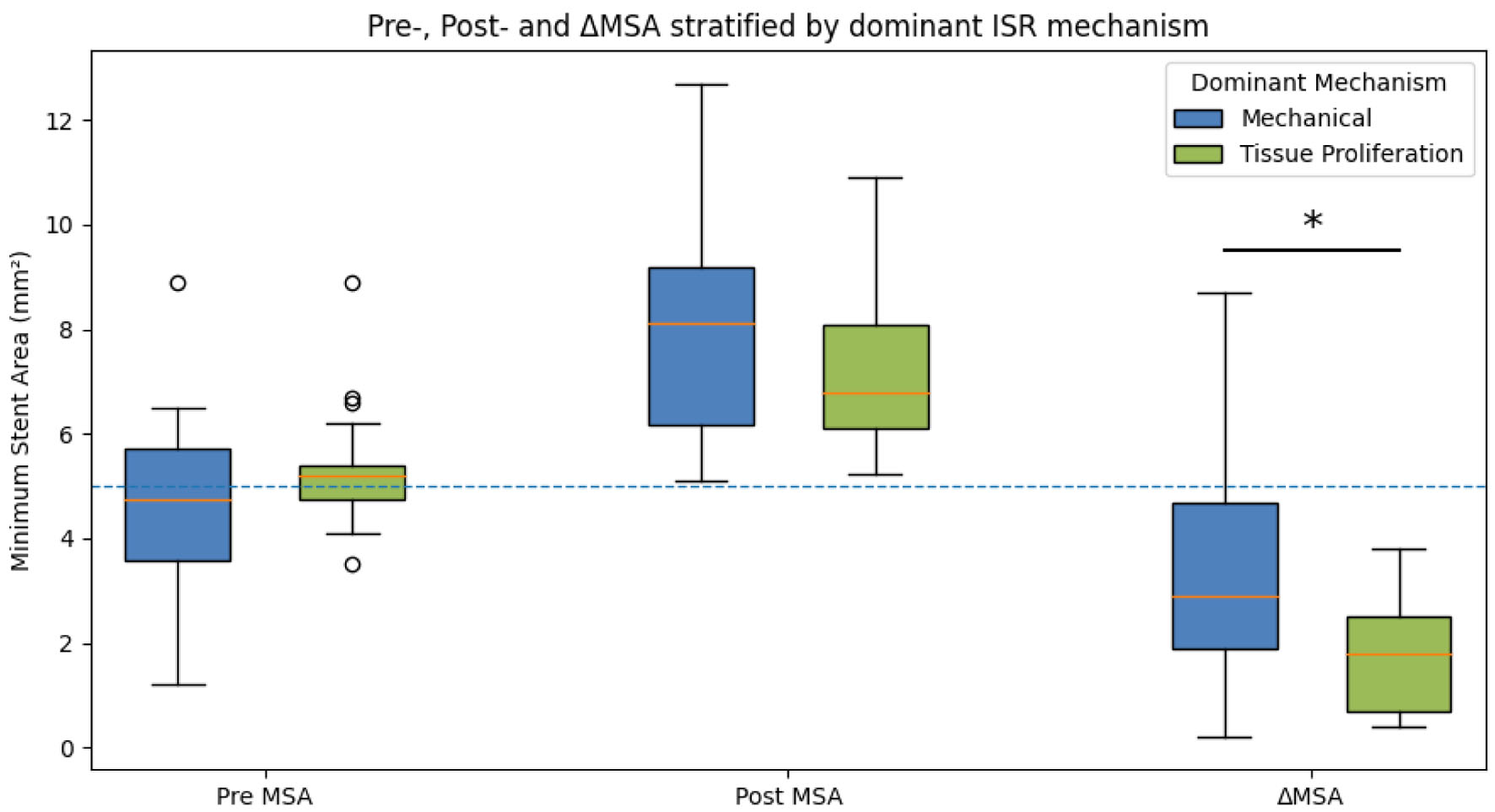
↓  Figure 5. Pre-, post- and ΔMSA stratified by ISR mechanism. Box-and-whisker plots depicting pre-intervention minimum stent area (pre-MSA), post-intervention minimum stent area (post-MSA), and change in minimum stent area (ΔMSA) stratified by ISR mechanism (mechanically driven vs. tissue-proliferative ISR). Boxes represent the interquartile range (25th–75th percentile), the central line denotes the median, and whiskers indicate the range excluding outliers. The dashed horizontal line represents a reference MSA threshold of 5.0 mm2. ISR: in-stent restenosis.
Figure 5.
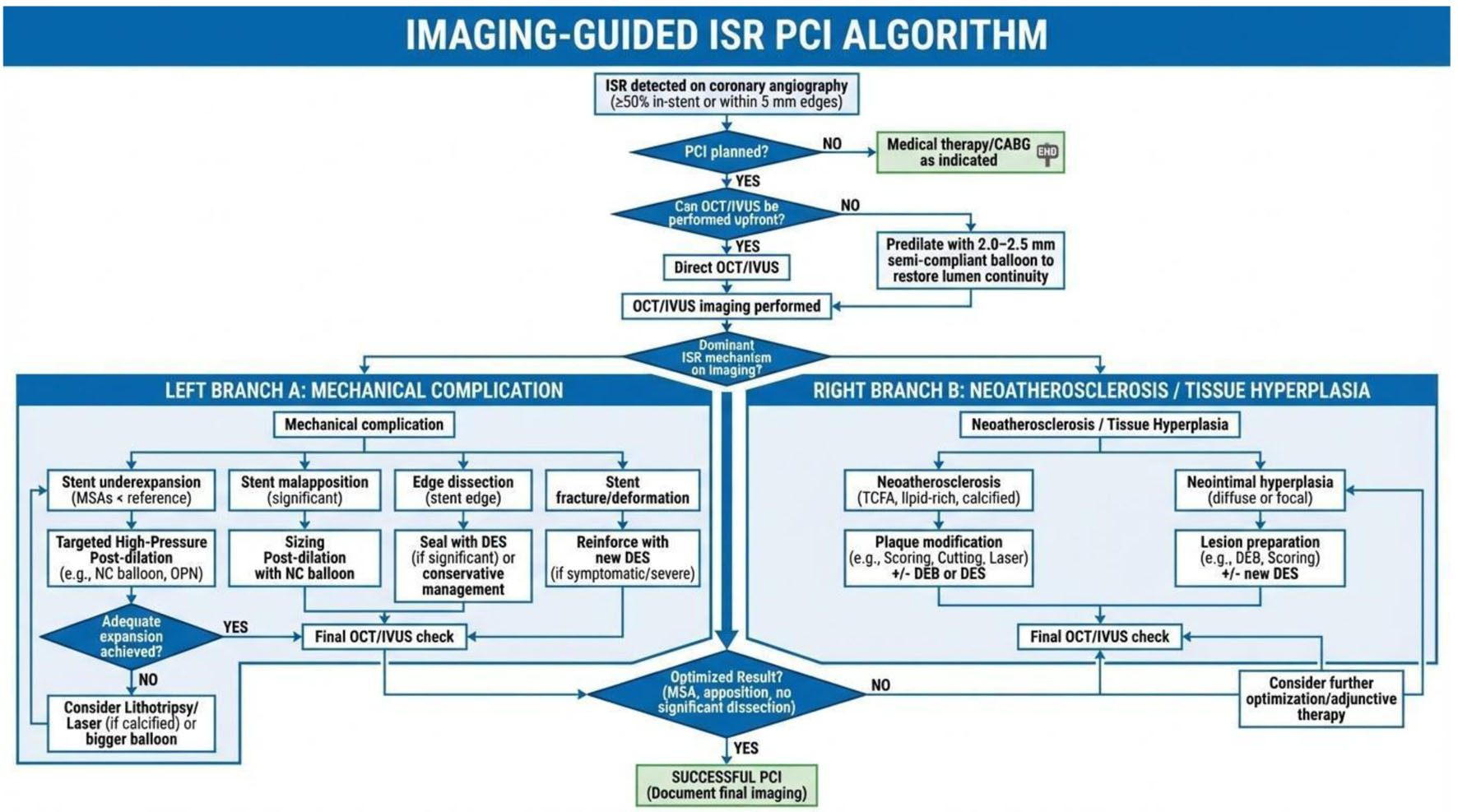
↓  Figure 6. Imaging-guided decision aid algorithm for the management of in-stent restenosis.
Figure 6.

Tables

↓  Table 1. Baseline Characteristics
 
VariableOverall cohort (N = 34)
Data are presented as mean ± SD, median (IQR), or number (percentage), as appropriate. aUncontrolled cardiovascular risk factors were defined as LDL cholesterol ≥ 55 mg/dL, HbA1c ≥ 7.0%, or body mass index ≥ 23 kg/m2 at presentation. eGFR: estimated glomerular filtration rate; GDMT: guideline-directed medical therapy; HbA1c: glycated hemoglobin; IQR: interquartile range; LDL: low-density lipoprotein; ISR: in-stent restenosis; PCI: percutaneous coronary intervention; SD: standard deviation.
  Demographics
    Age (years), mean ± SD63.1 ± 9.3
    Male sex, n (%)28 (82.4)
    Female sex, n (%)6 (17.6)
  Cardiovascular risk factors
    Hypertension, n (%)27 (79.4)
    Diabetes mellitus, n (%)24 (70.6)
    Dyslipidemia, n (%)28 (82.4)
    Current or former smoker, n (%)9 (26.5)
    Obesity, n (%)28 (82.4)
  Uncontrolled cardiovascular risk factorsa
    None (all risk factors controlled), n (%)2 (5.9)
    1 uncontrolled risk factor, n (%)18 (52.9)
    2 uncontrolled risk factors, n (%)10 (29.4)
    ≥ 3 uncontrolled risk factors, n (%)4 (11.8)
  Other factors
    Chronic kidney disease, n (%)13 (38.2)
    Poor compliance to GDMT, n (%)29 (85.3)
  Clinical presentation
    Chronic coronary syndrome, n (%)18 (52.9)
    Acute coronary syndrome, n (%)16 (47.1)
    ST-elevation myocardial infarction (STEMI), n (%)2 (5.9)
    Non-ST-elevation myocardial infarction (NSTEMI), n (%)9 (26.5)
    Unstable angina (USA), n (%)5 (14.7)
  Baseline investigations
    Left ventricular ejection fraction, %51.6 ± 11.1
    LDL cholesterol, mg/dL64.0 ± 23.4
    HbA1c, %7.6 ± 2.0
    eGFR, mL/min/1.73 m271.4 ± 22.4
  Time from index PCI to ISR
    Median delay, months (IQR)12.5 (0.1–264)
    Early ISR, n (%)1 (2.9)
    Late ISR, n (%)16 (47.1)
    Very late ISR, n (%)17 (50.0)
  Baseline antiplatelet therapy
    No antiplatelet therapy, n (%)5 (14.7)
    Aspirin alone, n (%)4 (11.8)
    Aspirin + clopidogrel, n (%)17 (50.0)
    Aspirin + ticagrelor, n (%)8 (23.5)
  Baseline statin therapy
    High-intensity statin, n (%)27 (79.4)
    Moderate-intensity statin, n (%)2 (5.9)
    No statin therapy, n (%)5 (14.7)


↓  Table 2. Clinical Characteristics by ISR Mechanism
 
VariableMechanical ISR (n = 17)Tissue-proliferative ISR (n = 17)P value
*Statistically significant. BMI: body mass index; eGFR: estimated glomerular filtration rate; HbA1c: glycated hemoglobin; IQR: interquartile range; LDL: low-density lipoprotein; LVEF: left ventricular ejection fraction; ISR: in-stent restenosis.
Age (years), median (IQR)67 (58.5–73)62 (56.5–70)0.085
BMI (kg/m2), median (IQR)26.0 (24.08–28.51)24.8 (23.5–26.5)0.17
eGFR (mL/min/1.73 m2), median (IQR)64.0 (49.0–88.0)69.0 (52-98.5)0.760
LDL (mg/dL), median (IQR)64.0 (49-83)56.0 (47.5–68.5)0.394
HbA1c (%), median (IQR)8 (5.95–8.88)7 (6.00–8.58)0.708
LVEF (%), median (IQR)48 (42.5–57.5)51.0 (40.5–66)0.518
Acute coronary syndrome, n (%)10 (56.6)8 (44.4)0.732
Chronic coronary syndrome, n (%)7 (43.8)9 (56.3)
ISR timingMechanical ISR (n = 20)Tissue-proliferative ISR (n = 20)
ISR within 1 year, n (%)16 (80.0)4 (20.0)< 0.001*
Very late ISR, n (%)4 (20.0)16 (80.0)


↓  Table 3. Lesion Characteristics by ISR Mechanism
 
VariableMechanical ISR (n = 20)Tissue- proliferative ISR (n = 20)P value
*Statistically significant. IQR: interquartile range; ISR: in-stent restenosis.
Target vessel
  Left anterior descending artery, n (%)7 (35.0)14 (70.0)0.172
  Left circumflex artery, n (%)4 (20.0)2 (10.0)
  Right coronary artery, n (%)6 (30.0)3 (15.0)
  Left main bifurcation, n (%)3 (15.0)1 (5.0)
Stent characteristics
  Total stent length (mm), median (IQR)42.0 (37.0–63.0)31.0 (25.0–39.5)0.002*
  Minimum stent diameter, (mm)3.00 (2.50–3.00)3.00 (2.75–3.38)0.542*
  Overlap involved, n (%)13 (65.0)5 (25.0)0.011*
Number of ISR segments
  Single segment, n (%)8 (40.0)16 (80.0)0.010*
  ≥ 2 segments, n (%)12 (60.0)4 (20.0)
  Minimum stent diameter (mm), median (IQR)3.00 (2.50–3.00)3.00 (2.75–3.38)
  Tissue burden (% area), median (IQR)65 (45–76)66 (58–78)0.176
  Pre-intervention minimum stent area (mm2), median (IQR)5.32 (3.35–6.35)5.20 (4.58–5.60)0.231
  Pre-intervention minimum luminal area (mm2), median (IQR)1.98 (1.42–2.22)1.84 (1.29–3.13)0.835
  Pre-stent expansion (%), median (IQR)64.6 (44.8–78.6)78.3 (56.6–83.0)0.04


↓  Table 4. Imaging-Based Lesion Characteristics by ISR Mechanism
 
VariableMechanical ISR (n = 20)Tissue-proliferative ISR (n = 20)P value
*Statistically significant. ISR: in-stent restenosis; IVUS: intravascular ultrasound; OCT: optical coherence tomography.
Imaging modality0.677
  IVUS, n (%)17 (85.0%)16 (80.0%)
  OCT, n (%)3 (15.0%)4 (20.0%)
Mechanical abnormality
  Underexpansion, n (%)12 (60.0%)6 (30.0%)-
  Malapposition, n (%)3 (15.0%)0
  Stent fracture, n (%)1 (5.0%)0
Neointimal tissue pattern0.027*
  Homogeneous, n (%)10 (50.0%)4 (20.0%)
  Heterogeneous, n (%)8 (40.0%)16 (80.0%)
  Thrombus, n (%)2 (10.0%)0
Calcification0.004*
  Present, n (%)14 (70.0%)5 (25.0%)
  Absent, n (%)6 (30.0%)15 (75.0%)


↓  Table 5. Treatment and Optimization Characteristics by Dominant ISR Mechanism
 
VariableMechanical ISR (n = 20)Tissue-proliferative ISR (n = 20)P value
DEB: drug-eluting balloon; DES: drug-eluting stent; IQR: interquartile range; ISR: in-stent restenosis; IVL: intravascular lithotripsy; NC: non-compliant; OPN: high-pressure; POBA: plain old balloon angioplasty.
Lesion preparation0.54
  NC balloon use, n (%)12 (30)12 (30)
  Cutting balloon, n (%)6 (15)7 (17.5)
  Scoring balloon, n (%)0 (0%)1 (2.5%)
  OPN balloon, n (%)1 (2.5%)0 (0%)
  Atherectomy/IVL, n (%)1 (2.5%)0 (0%)
Treatment strategy0.45
  POBA, n (%)2 (5)0 (0)
  DEB only, n (%)7 (17.5)8 (20)
  DES, n (%)9 (22.5)11 (27.5)
  DEB + DES, n (%)2 (5)1 (2.5)
  Post-intervention minimum stent area (mm2), median (IQR)8.10 (5.80–8.45)6.80 (5.90–8.44)
  Post-stent expansion (%), median (IQR)99.0 (90.0–110.0)95.0 (89.0–107.8)
  Δ Minimum stent area (mm2), median (IQR)2.88 (1.75–4.20)1.80 (0.63–2.70)