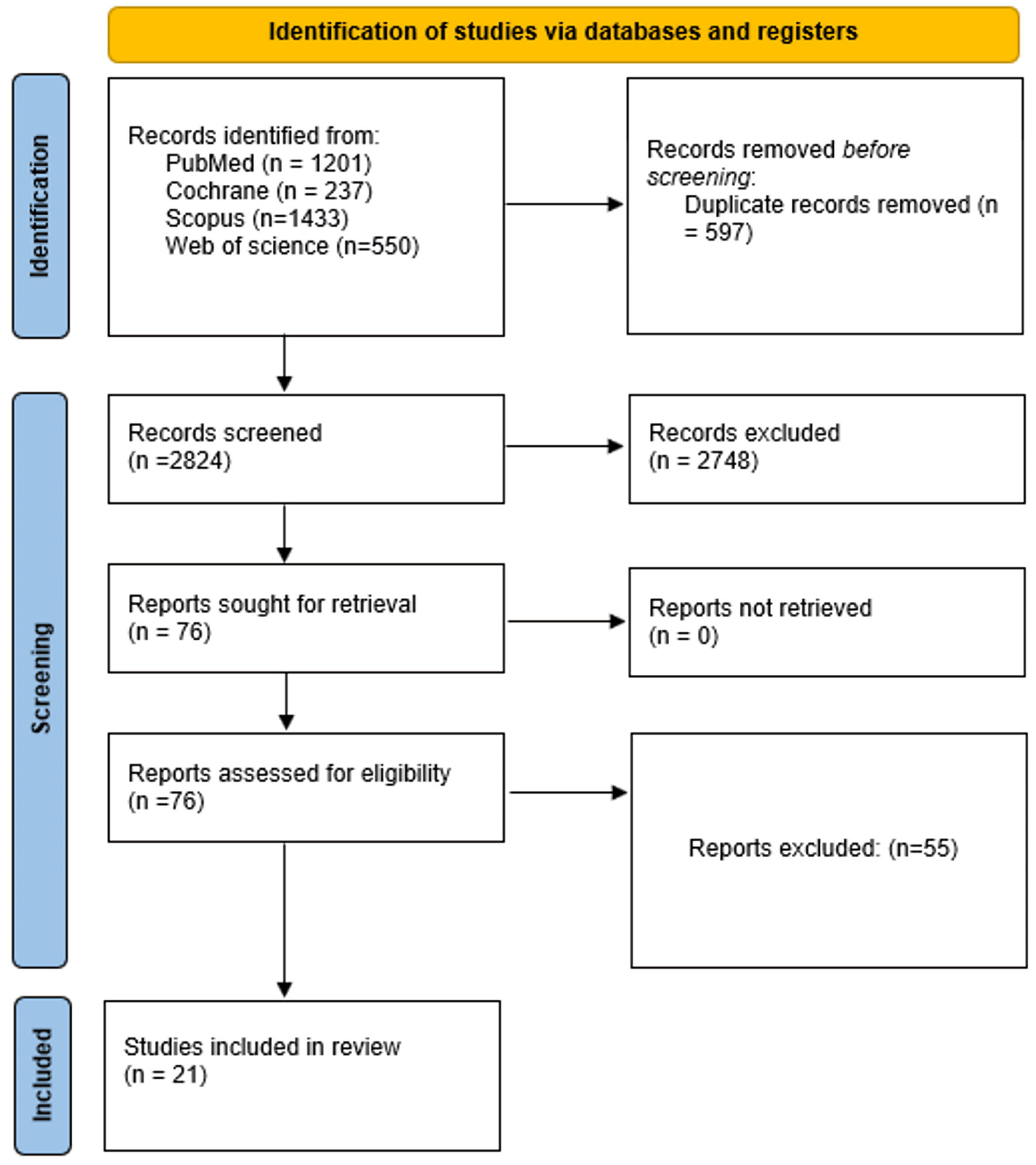
↓ Figure 1. PRISMA flow diagram of study identification, screening, eligibility assessment, and inclusion in the systematic review and meta-analysis. PRISMA: Preferred Reporting Items for Systematic Reviews and Meta-Analyses.
| Cardiology Research, ISSN 1923-2829 print, 1923-2837 online, Open Access |
| Article copyright, the authors; Journal compilation copyright, Cardiol Res and Elmer Press Inc |
| Journal website https://cr.elmerpub.com |
Original Article
Volume 17, Number 6, December 2026, pages 670-689
Association Between Hepatitis C Virus Infection and Coronary Artery Disease: A Systematic Review and Meta-Analysis
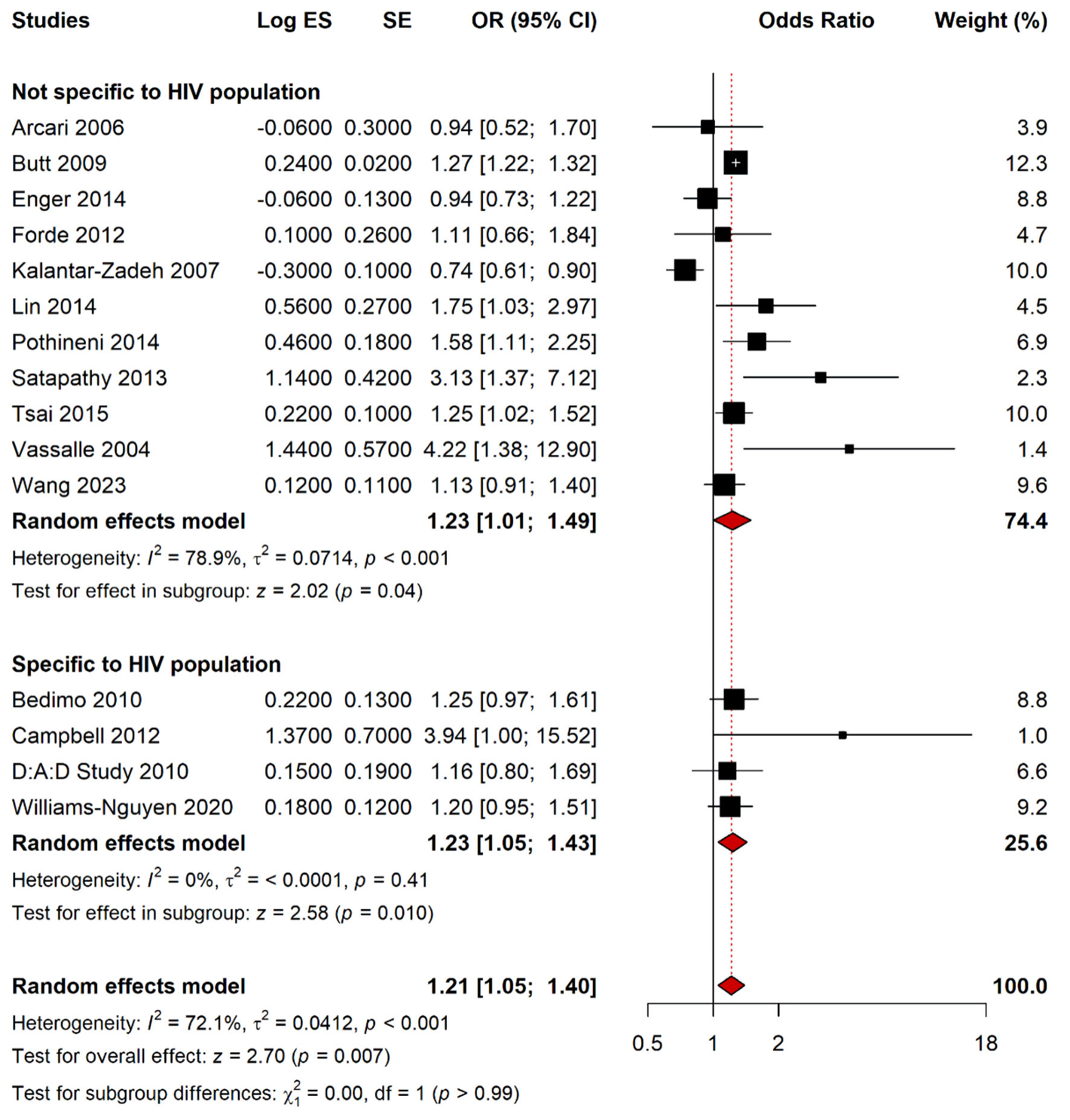
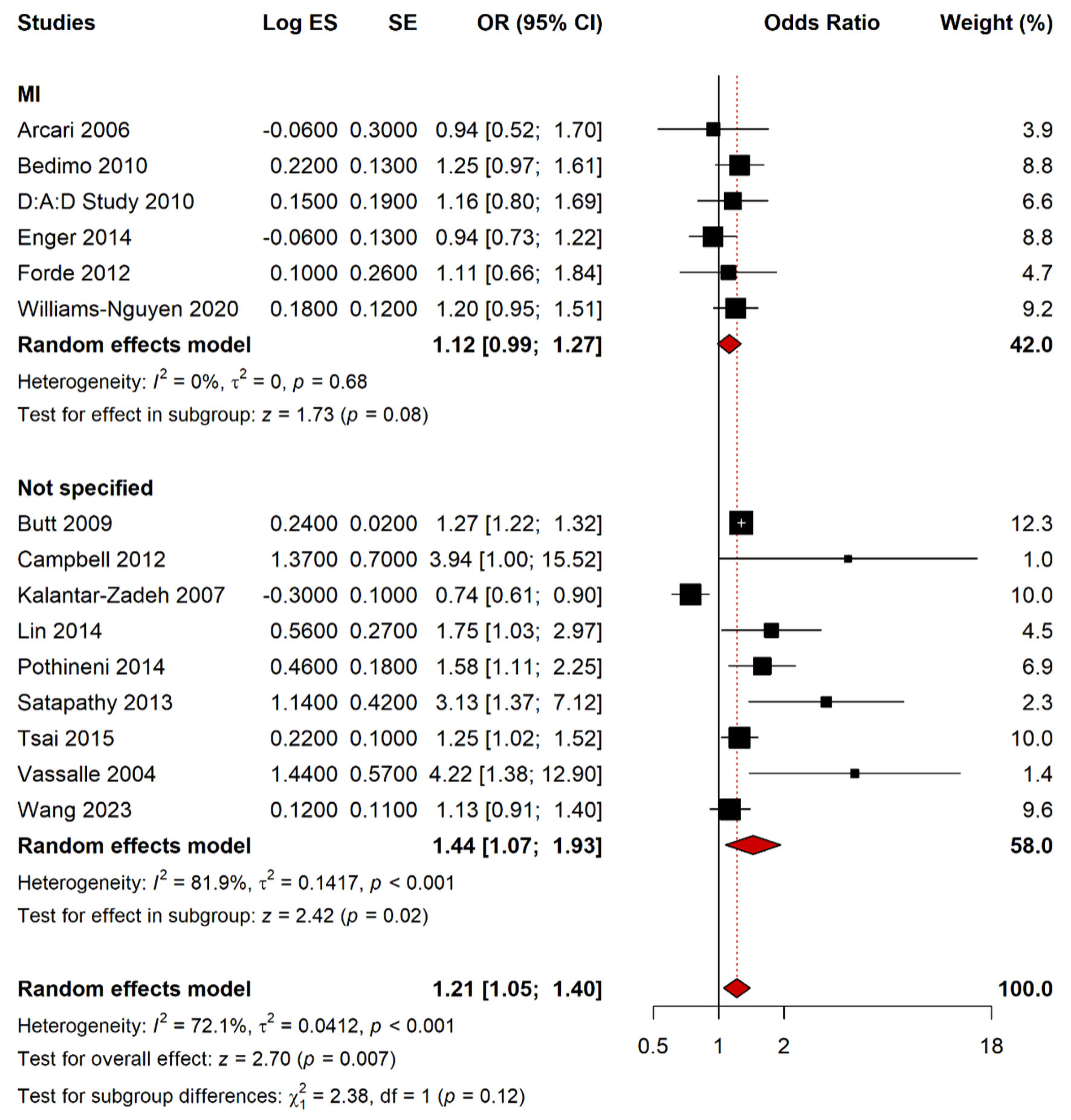
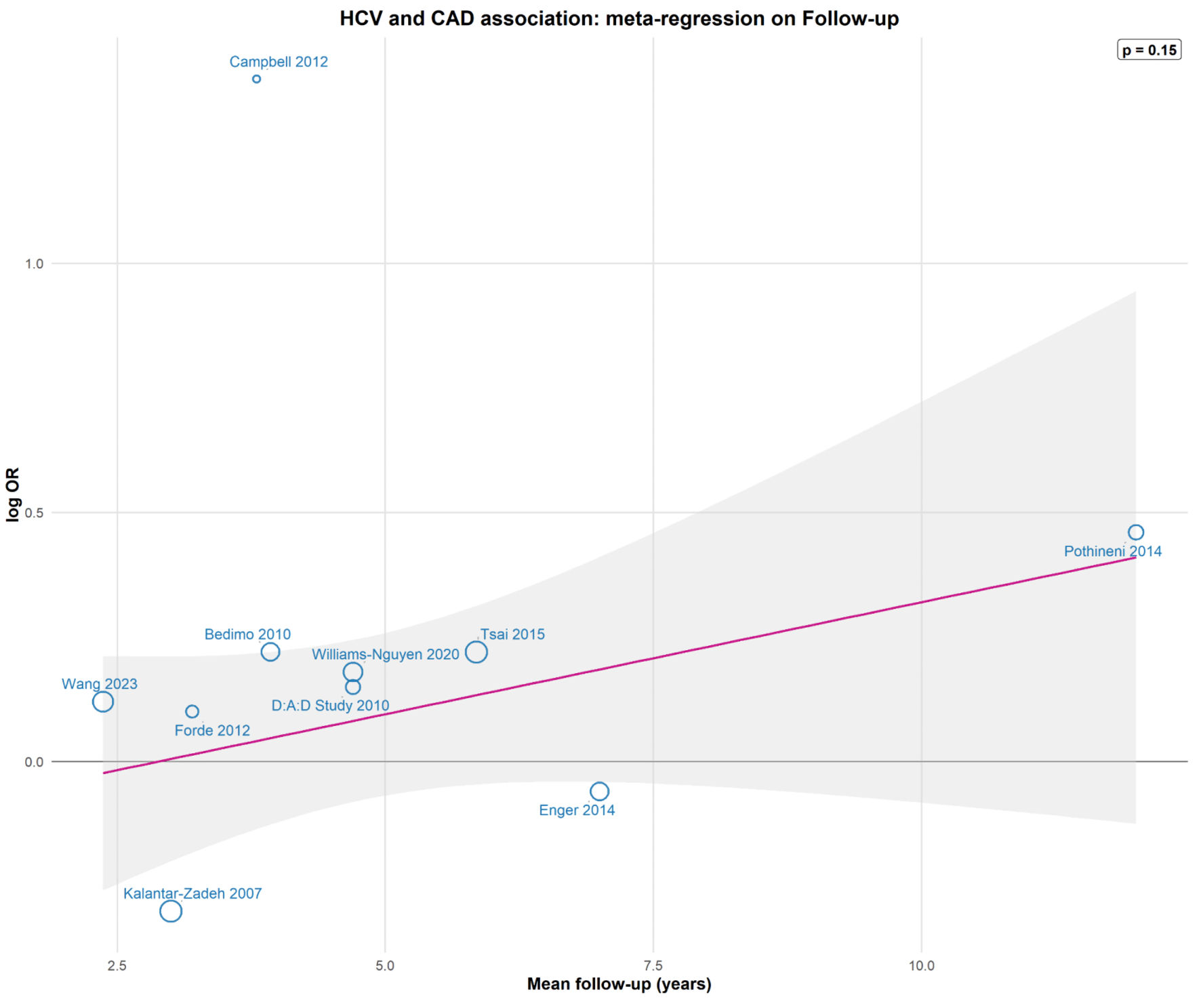
Figures
Tables
| Study | Study design | Country | Time frame | Total sample size | Type of population | HCV diagnosis | CAD outcome definition | Adjusted covariates | Follow-up, years | Conclusion |
|---|---|---|---|---|---|---|---|---|---|---|
| HCV: hepatitis C virus; CAD: coronary artery disease; PSM: propensity score matching; HIV: human immunodeficiency virus; ELISA: enzyme-linked immunosorbent assay; PCR: polymerase chain reaction; ICD-9: International Classification of Diseases, Ninth Revision; MI: myocardial infarction; CHF: congestive heart failure; CABG: coronary artery bypass grafting; PTCA: percutaneous transluminal coronary angioplasty; AMI: acute myocardial infarction; CHD: coronary heart disease; WHO: World Health Organization; MONICA criteria: Monitoring Trends and Determinants in Cardiovascular Disease criteria; UA: unstable angina; VA: Veterans Affairs; ACS: acute coronary syndrome; CVD: cardiovascular disease; CCV: cerebrocardiovascular; PVD: peripheral vascular disease; eGFR: estimated glomerular filtration rate; HDL: high-density lipoprotein; AIDS: acquired immunodeficiency syndrome; BMI: body mass index; NNRTI: non-nucleoside reverse transcriptase inhibitor; PI: protease inhibitor; NRTI: nucleoside reverse transcriptase inhibitor; DM: diabetes mellitus; TC: total cholesterol; TG: triglycerides; HTN: hypertension; Hb: hemoglobin; COPD: chronic obstructive pulmonary disease; PAOD: peripheral arterial occlusive disease; NSAIDs: nonsteroidal anti-inflammatory drugs; ACEI: angiotensin-converting enzyme inhibitor; ARB: angiotensin receptor blocker; IHD: ischemic heart disease; SMR: standardized mortality ratio; Kt/V: dialyzer clearance of urea multiplied by dialysis time and divided by volume of distribution of urea; HBV: hepatitis B virus; CKD: chronic kidney disease; IDU: injection drug use; BW: body weight; SBP: systolic blood pressure; DBP: diastolic blood pressure; HAV: hepatitis A virus; CCBs: calcium channel blockers; ECG: electrocardiogram; HAART: highly active antiretroviral therapy; T1MI: acute myocardial infarction; ART: antiretroviral therapy. | ||||||||||
| Arcari et al, 2006 [22] | Case-control study | USA | 1991–2000 | 582 | Men aged 30–50 years on active duty in the US Army | HCV-specific antibodies | MI based on ICD-9 | Age, race, education, and marital status | - | Among active-duty military personnel with a high prevalence of HCV infection, no association has been observed between HCV infection and CHD. |
| Bedimo et al, 2010 [28] | Cohort study | USA | 1996–2004 | 19,424 | HIV-infected US veterans | Diagnostic codes (ICD-9) and HCV antibody tests | MI based on ICD-9 | HTN, age, type 2 diabetes, and tobacco use | 3.93 | In the HAART era, HCV coinfection was associated with increased CVD risk and a trend toward higher AMI risk among HIV-infected individuals. |
| Butt et al, 2007 [33] | Cohort study | USA | 1999–2003 | 253,942 | US veterans between the ages of 20 and 90 | One inpatient or two outpatient ICD-9 codes | CAD based on ICD-9 | Age, race/ethnicity, sex, drug use, and alcohol use | — | HCV-infected individuals commonly present with multiple medical, psychiatric, and substance use comorbidities; however, they show lower odds of CAD and stroke. Psychiatric conditions are partly linked to substance use, and a comprehensive initial evaluation is recommended, while underlying mechanisms remain unclear. |
| Butt et al, 2009 [27] | Cohort study | USA | 2001–2006 | 171,665 | National cohort of HCV-infected veterans | HCV antibody or a positive qualitative/quantitative HCV RNA test | Incident CAD (≥ 1 inpatient or 2 outpatient ICD-9 codes for MI, CHF, CABG, or PTCA) | Age, race, sex, HTN, diabetes, hyperlipidemia, and COPD | — | HCV-infected individuals are typically younger with lower lipid levels and less HTN; however, HCV infection remains associated with an increased risk of CAD after adjustment for conventional risk factors. |
| Butt et al, 2017 [20] | Cohort study, PSM | USA | 2001–2015 | 171,726 | Male veterans | HCV antibody or HCV RNA test | Incident AMI (≥ 1 inpatient or 2 outpatient ICD-9 codes) | Age, race, BMI, and receipt of lipid-lowering agents | 6.79 | HCV-positive men have an increased risk of AMI at higher TC and LDL levels, particularly at younger ages; lipid-lowering therapy reduces this risk, with greater benefit observed compared to HCV-negative men. |
| Campbell et al, 2012 [21] | Cohort study | UK | January 2004 to December 2009 | 7,828 | HIV-positive patients (≥ 18 years) | HCV antibody status | CHD events (MI, PTCA, CABG) from records and elevated troponin | Age, ethnicity, HIV RNA, eGFR, total/HDL cholesterol ratio, and tenofovir use | 3.8 | The incidence of CHD was low in this ethnically diverse cohort; impaired renal function identified individuals at higher risk, warranting prioritization of traditional risk factor management. |
| D:A:D study, 2010 [30] | Cohort study | Europe, USA, and Australia | December 1999 to February 2007 | 33,347 | HIV-infected individuals | HCV serology (antibodies) and assessments of HCV load (RNA | Adjudicated MI (definite/possible) according to WHO MONICA criteria | Sex, age, HIV transmission risk, ethnicity, prior AIDS, smoking, family history of CVD, BMI, cumulative NNRTI/PI/NRTI exposure, prior CVD, cohort, incident DM, calendar year, latest CD4+ count, HIV RNA, TC, HDL-C, log-TG, HTN, and lipodystrophy | 4.7 | No association was observed between HBV or HCV coinfection and myocardial infarction among individuals with HIV. |
| Enger et al, 2014 [16] | Cohort study, PSM | USA | January 2000 to September 2006 | 90,931 | Patients with HCV or cirrhosis | ICD-9-CM diagnosis codes | New-onset arterial thromboembolic events (MI, UA) using ICD-9-CM codes | Age, gender, HTN, past and recent corticosteroid use | 7 | Patients with HCV and cirrhosis from various etiologies have an increased risk of thromboembolic events, which should be considered in the clinical management of liver disease. |
| Forde et al, 2012 [19] | Cohort study, PSM | UK | February 1996 to November 2008 | 76,477 | Adults (≥ 18 years) in UK general practices | Read diagnostic codes or free text comments | First occurrence of an acute MI using Read codes | Age, sex, comorbidities (HTN, diabetes, hyperlipidemia, family history of CVD and smoking), aspirin use, BMI, and tobacco use | 3.2 | HCV infection was not linked to an increased risk of incident MI. |
| Freiberg et al, 2011 [17] | Cohort study | USA | January 2000 to July 2007 | 6,154 | Veterans with and without HIV and HCV | Positive HCV antibody test or ICD-9 codes | Incident AMI and UA (CHD) via ICD-9 codes 410–411 | Age, race/ethnicity, education, BMI, HTN, DM, smoking, hypercholesterolemia, cocaine abuse/dependence, and alcohol abuse/dependence | 7.3 | HIV-positive individuals coinfected with HCV have a higher risk of CHD compared with those with HIV alone or neither infection. |
| Freiberg et al, 2013 [25] | Cohort study | USA | April 2003 to December 2009 | 82,459 | HIV-positive and matched uninfected veterans | Positive HCV antibody test or ICD-9 codes | Adjudicated incident AMI using VA, Medicare, and death certificate data | Age, sex, race/ethnicity, HTN, DM, LDL-C, HDL-C, TG, smoking, statin use, HCV, eGFR, Hb, BMI, cocaine abuse/dependence, and alcohol abuse/dependence | 5.9 | HIV infection is associated with a 50% higher risk of AMI independent of established risk factors. |
| Hsu et al, 2014 [36] | Cohort study, PSM | Taiwan | 2003–2011 | 7,055 | Diabetic patients (ages 20–70) | Specific diagnosis code (ICD-9-CM) and serum antibody measurements | ACS hospitalizations with primary ICD-9-CM codes 410-414 | HTN, dyslipidemia, COPD, PAOD, diabetes medication profile, aspirin, NSAIDs, ACEI/ARB, and statin use | 3.8 | Antiviral therapy for HCV infection is associated with improved renal and cardiovascular outcomes in patients with diabetes. |
| Kalantar-Zadeh et al, 2007 [29] | Cohort study | USA | July 2001 to June 2004 | 13,664 | Maintenance hemodialysis patients | Third-generation HCV antibody enzyme immunoassay | Cardiovascular mortality | Age, sex, race/ethnicity, DM, smoking history, dialysis vintage, insurance, marital status, clinic SMR, Kt/V, dialysis catheter, residual renal function, and baseline comorbidities (IHD, CHF, prior cardiac arrest, prior MI, pericarditis, dysrhythmia, cerebrovascular disease, PVD, COPD, cancer) | 3 | In maintenance hemodialysis patients, HCV infection is associated with distinct demographic, clinical, and laboratory features, longer dialysis duration, and increased mortality; enhanced prevention and treatment may improve outcomes. |
| Lang et al, 2022 [32] | Cohort study | USA and Canada | January 2000 to December 2017 | 23,361 | People with HIV (ages 40–79) who had initiated ART | Positive HCV antibody test, detectable RNA, or genotype result | Adjudicated T1MI event | Age, sex, race/ethnicity, HBV, DM, HTN, CKD, alcohol abuse/dependence, smoking, IDU history, statin use, HIV viral load, CD4 count, and PI use | 3.9 | HCV coinfection was not significantly associated with T1MI risk; however, the age-related increase in risk was greater among those with HCV, suggesting its relevance in cardiovascular risk assessment in aging people with HIV. |
| Lin et al, 2014 [18] | Cross-sectional study | Taiwan | December 2010 | 5,015 | Community health examination participants (> 40 years) | Immunoassay for anti-HCV antibody | Ischemic ECG findings via Minnesota Code criteria | Sex, age, BW, waist, SBP, DBP, creatinine, uric acid, fasting glucose, TC, HDL-C, LDL-C, TG, HTN history, DM history, smoking, MetS, and HBV | — | HCV infection was strongly associated with ischemic ECG abnormalities in this community-based cohort and may represent a nontraditional risk factor for CAD. |
| Pothineni et al, 2014 [24] | Cohort study | USA | January 2001 to December 2013 | 16,233 | Patients from a university-based electronic medical records database | HCV antibody (ELISA) and HCV RNA (PCR) | Incident CHD events (CAD, stable/UA, or MI) using ICD-9 codes | Age, sex, HTN, diabetes and chronic obstructive pulmonary disease | 12 | HCV seropositivity is associated with increased CHD incidence, particularly in those with detectable HCV RNA compared to antibody-positive individuals with resolved infection; lipid profile appears to have limited value for cardiovascular risk stratification in this population. |
| Satapathy et al, 2013 [26] | Case-control study | USA | May 2002 to December 2008 | 126 | HCV patients and matched controls undergoing coronary angiography | ICD-9 codes and documented positive anti-HCV antibody test | > 50% blockage in a proximal coronary artery on angiogram | Age, DM, smoking, and family history of CAD | — | HCV infection is associated with higher prevalence and severity of CAD on angiographic evaluation compared with matched controls, suggesting a potential role as a risk factor for CAD. |
| Tsai et al, 2015 [23] | Cohort study | Taiwan | 1998–2008 | 69,915 | HCV patients without antiviral treatment and non-HCV companions | ICD-9-CM codes | ACS based on hospitalizations | Age, sex, and comorbidities of HTN, diabetes, hyperlipidemia, stroke, COPD, heart failure, hepatitis B, and cirrhosis | 5.85 | HCV infection is associated with an increased risk of ACS compared with non-infected individuals, with the highest risk observed in middle-aged patients. |
| Vassalle et al, 2004 [31] | Case-control study | Italy | — | 686 | Patients with angiographically documented CAD and matched controls | Antibodies against HCV | Angiographic documentation of CAD (> 50% stenosis) | Age, sex, smoking, HTN, DM, and dyslipidemia | — | HCV seropositivity may be considered a potential risk factor for the development of CAD, with possible additive effects alongside other pathogens; further studies are required to confirm its predictive and prognostic value. |
| Wang et al, 2023 [34] | Cohort study, PSM | USA | January 2008 to August 2015 | 197,484 | Newly diagnosed HCV patients matched controls | ICD-9-CM diagnosis codes | CVD event defined by ICD-9-CM codes for CAD, CCV, or PVD | Age, sex, insurance plan type, alcohol abuse/dependence, drug abuse, HTN, dyslipidemia, DM, COPD, CKD, HIV, HBV, HAV, liver disease, and CVD-related medications (ACEIs, ARBs, alpha-beta blockers, beta-blockers, CCBs, diuretics, antihypertensives, cardiac glycosides, vasodilators, anticoagulants, antiarrhythmic drugs, lipid-lowering agents) | 2.37 | Chronic HCV infection is associated with a higher incidence of CVD, while antiviral treatment is linked to a reduced risk. |
| Williams-Nguyen et al, 2020 [35] | Cohort study | USA | 1998–2016 | 23,407 | People living with HIV | Detectable HCV RNA test | Centrally adjudicated MI is categorized as type 1 or type 2 | Age, sex at birth, race/ethnicity, study site, men who had sex with men, ever smoking, history of injecting drug use, diabetes, statin use, HTN, antihypertensive medication use, hepatitis B virus infection, ART, CD4-positive cell count nadir, BMI, TC, HDL cholesterol, and TG levels | 4.7 | Chronic HCV infection at baseline was not associated with incident T1MI but was linked to type 2 MI. |
| Study | Groups | N | Age (years), mean (SD) | Sex (male), n (%) | BMI (kg/m2), mean (SD) | Smoking, n (%) | Cirrhosis, n (%) | HTN, n (%) | DM, n (%) | Hyperlipidemia, n (%) | TC (mg/dL), n (%) | TG (mg/dL), n (%) | LDL (mg/dL), n (%) | HDL (mg/dL), n (%) |
|---|---|---|---|---|---|---|---|---|---|---|---|---|---|---|
| HCV: hepatitis C virus; BMI: body mass index; HTN: hypertension; DM: diabetes mellitus; TC: total cholesterol; TG: triglycerides; LDL: low-density lipoprotein; HDL: high-density lipoprotein; SD: standard deviation; N: number. | ||||||||||||||
| Arcari et al, 2006 [22] | HCV | 582 | — | 582 (100) | — | — | — | — | — | — | — | — | — | — |
| Control | — | — | — | — | — | — | — | — | — | — | — | |||
| Bedimo et al, 2010 [28] | HCV | 6,136 | 47 (7.31) | 6,012 (97.98) | — | 2,251 (36.69) | — | 2,689 (43.82) | 992 (16.17) | 3,413 (55.63) | 195.12 (59.63) | 275.53 (274.15) | 111.39 (44.25) | — |
| Control | 13,288 | 45.82 (11.25) | 12,926 (97.28) | — | 3,288 (24.74) | — | 4,731 (35.60) | 1,479 (11.13) | 8,692 (65.41) | 218.03 (70.60) | 331.06 (352.99) | 130.82 (45.18) | — | |
| Butt et al, 2007 [33] | HCV | 126,926 | 50.8 | 122,864 (96.8) | — | — | 6,476 (5.1) | — | 18,030 (14.2) | — | — | — | — | — |
| Control | 126,926 | 51.8 | 122,864 (96.8) | — | — | 508 (0.4) | — | 16,633 (13.1) | — | — | — | — | — | |
| Butt et al, 2009 [27] | HCV | 82,083 | 51.2 (7.3) | 75,270 (91.7) | — | — | — | 34,147 (41.6) | 17,073 (20.8) | 32,341 (39.4) | 175 (40.8) | 144 (119) | 102 (36.8) | 46 (16.8) |
| Control | 89,582 | 51.8 (7.8) | 86,895 (97) | — | — | — | 45,149 (50.4) | 19,529 (21.8) | 64,678 (72.2) | 198 (41.9) | 179 (151) | 119 (38.2) | 46 (15.2) | |
| Butt et al, 2017 [20] | HCV | 85,863 | 53.67 (6.67) | 85,863 (100) | 27.87 (4.67) | 22,582 (26.3) | — | 34,517 (40.2) | 3,177 (3.7) | — | 175 (36.7) | 121.33 (64.49) | 103.37 (32.84) | 43.67 (13.34) |
| Control | 85,863 | 53.67 (6.67) | 85,863 (100) | 27.83 (4.60) | 21,809 (25.4) | — | 32,113 (37.4) | 2,748 (3.2) | — | 193.67 (36.7) | 135.67 (77.84) | 117.82 (32.84) | 44.83 (12.97) | |
| Campbell et al, 2012 [21] | HCV | 7,828 | — | — | — | — | — | — | — | — | — | — | — | — |
| Control | — | — | — | — | — | — | — | — | — | — | — | — | ||
| D:A:D study, 2010 [30] | HCV | 5,084 | 37 (5.93) | 3,566 (70.1) | — | 3,028 (59.6) | — | 370 (7.3) | 107 (2.1) | — | — | — | — | — |
| Control | 16,731 | 39 (9.64) | 12,499 (74.7) | — | 4,864 (29.1) | — | 1,592 (9.5) | 435 (2.6) | — | — | — | — | — | |
| Enger et al, 2014 [16] | HCV | 22,733 | 49 (9.7) | 14,191 (62.4) | — | — | 2,712 (11.9) | 4,708 (20.7) | — | — | — | — | — | — |
| Control | 68,198 | 49 (9.8) | 42,573 (62.4) | — | — | 0 (0) | 9,208 (13.5) | — | — | — | — | — | — | |
| Forde et al, 2012 [19] | HCV | 4,809 | 38.95 (11.20) | 2,935 (61.03) | — | 3,574 (74.32) | — | 466 (9.69) | 259 (5.39) | 574 (11.94) | — | — | — | — |
| Control | 71,668 | 38.80 (11.16) | 43,802 (61.12) | — | 44,423 (61.98) | — | 7,168 (10) | 2,310 (3.22) | 9,421 (13.15) | — | — | — | — | |
| Freiberg et al, 2011 [17] | HCV | 701 | 47.4 (5.6) | 701 (100) | 27.1 (5) | 464 (66.2) | — | 192 (27.4) | 181 (25.8) | — | — | — | — | — |
| Control | 5,453 | 48.2 (9.9) | 5,453 (100) | 28.2 (5.3) | 2,318 (42.5) | — | 1,598 (29.3) | 1,352 (24.8) | — | — | — | — | — | |
| Freiberg et al, 2013 [25] | HCV | 82,459 | — | — | — | — | — | — | — | — | — | — | — | — |
| Control | — | — | — | — | — | — | — | — | — | — | — | — | ||
| Hsu et al, 2014 [36] | HCV | 1,411 | 55.01 (7.99) | 918 (65.1) | — | — | 322 (22.8) | 606 (42.9) | 1,411 (100) | 175 (12.4) | — | — | — | — |
| Control | 5,644 | 54.93 (8.07) | 3,680 (65.2) | — | — | 1,289 (22.8) | 2,444 (43.3) | 5,644 (100) | 718 (12.7) | — | — | — | — | |
| Kalantar-Zadeh et al, 2007 [29] | HCV | 1,590 | 54 (13) | 1,034 (65) | 25.2 (5.6) | 127 (8) | — | — | 604 (38) | — | — | — | — | — |
| Control | 12,074 | 61 (16) | 6,399 (53) | 26.4 (6.4) | 483 (4) | — | — | 5,796 (48) | — | — | — | — | — | |
| Lang et al, 2022 [32] | HCV | 4,677 | 46.67 (7.42) | 3,621 (77.4) | 25.17 (4.38) | 3,539 (75.7) | — | 1,314 (28.1) | 381 (8.1) | — | 164.33 (40.04) | — | 89 (34.85) | 42.67 (14.83) |
| Control | 18,684 | 45.33 (8.15) | 15,670 (83.9) | 25.93 (4.37) | 10,552 (56.5) | — | 4,881 (26.1) | 1,304 (7) | — | 184 (40.77) | — | 106 (33.36) | 41.67 (13.34) | |
| Lin et al, 2014 [18] | HCV | 593 | 51.48 (11.37) | 240 (40.5) | — | 153 (25.8) | — | 68 (11.5) | 48 (8.1) | — | 187.22 (38.98) | 111.72 (91.71) | 119.66 (34.7) | 58.76 (18.91) |
| Control | 4,422 | 62.49 (13.29) | 2,017 (45.6) | — | 1,027 (23.2) | — | 570 (12.9) | 277 (6.3) | — | 186.52 (35.08) | 104.68 (78.41) | 119.48 (34.45) | 59.87 (17.45) | |
| Pothineni et al, 2014 [24] | HCV | 1,434 | 48.6 (9.7) | 817 (57) | — | — | — | 443 (30.9) | 234 (16.3) | — | 156.5 (55.7) | 138.8 (105) | 87 (35.9) | 43 (19.7) |
| Control | 14,799 | 53 (16.1) | 7,992 (54) | — | — | — | 1,805 (12.2) | 755 (5.1) | — | 185.8 (49.7) | 163.3 (329.8) | 107.7 (50.9) | 47.3 (16.2) | |
| Satapathy et al, 2013 [26] | HCV | 63 | 60.9 (10.5) | 41 (65.1) | 32.2 (13.5) | 29 (46) | — | 52 (82.5) | 28 (44.4) | 33 (52.4) | 147 (40) | 125 (68) | 91 (30) | 42 (21) |
| Control | 63 | 60.8 (10.5) | 41 (65.1) | 29.8 (6.1) | 26 (41.3) | — | 51 (81) | 26 (41.3) | 43 (68.4) | 144 (43) | 102 (78) | 88 (35) | 42 (12) | |
| Tsai et al, 2015 [23] | HCV | 13,983 | 54.7 (15.8) | 35,936 | — | — | — | — | — | — | — | — | — | — |
| Control | 55,932 | 54.2 (16.1) | — | — | — | — | — | — | — | — | — | — | ||
| Vassalle et al, 2004 [31] | HCV | 491 | 66 (11.08) | 399 (81.2) | — | — | 0 (0) | — | — | — | — | — | — | — |
| Control | 195 | 61 (11.6) | 115 (58.9) | — | — | 0 (0) | — | — | — | — | — | — | — | |
| Wang et al, 2023 [34] | HCV | 49,371 | 53 (8.15) | 29,238 (59.22) | — | — | 873 (1.77) | 16,696 (33.82) | 7,046 (14.27) | 10,893 (22.06) | — | — | — | — |
| Control | 148,113 | 53 (8.15) | 88,509 (59.76) | — | — | 1994 (1.35) | 51,251 (34.6) | 21,294 (14.38) | 31,871 (21.52) | — | — | — | — | |
| Williams-Nguyen et al, 2020 [35] | HCV | 2,280 | — | 1,779 (78) | 25.6 (5) | 873 (38.3) | — | 370 (24.2) | 163 (7.1) | — | 159.5 (41) | 157.2 (124) | — | 43.5 (17) |
| Control | 21,127 | — | 17,117 (81) | 25.9 (6) | 5,160 (24.4) | — | 3,450 (23.2) | 1,030 (4.9) | — | 174.9 (46) | 170.2 (154) | — | 42.1 (15) | |