| Cardiology Research, ISSN 1923-2829 print, 1923-2837 online, Open Access |
| Article copyright, the authors; Journal compilation copyright, Cardiol Res and Elmer Press Inc |
| Journal website https://cr.elmerpub.com |
Original Article
Volume 000, Number 000, October 2026, pages 000-000

Prognostic Value of the Geriatric Nutritional Risk Index and Controlling Nutritional Status Score in Patients Aged ≥ 75 Years With Heart Failure With Preserved Ejection Fraction
Yao Lia, Hai Rui Shaoa, Ying Liua, Jing Yu Wanga, Yu Gang Yina, Chun Yanga, Xian Wanga, Yong Zhongb, Lei Lva
aDepartment of Geriatric Cardiology, Affiliated Jinling Hospital, Medical School of Nanjing University, Nanjing, Jiangsu 210002, China
bDepartment of Health Medicine, Affiliated Jinling Hospital, Medical School of Nanjing University, Nanjing, Jiangsu 210002, China
cCorresponding Authors: Lei Lv, Department of Geriatric Cardiology, Affiliated Jinling Hospital, Medical School of Nanjing University, Nanjing, Jiangsu 210002, China; Yong Zhong, Department of Health Medicine, Affiliated Jinling Hospital, Medical School of Nanjing University, Nanjing, Jiangsu 210002, China
Manuscript submitted July 2, 2026, accepted September 2, 2026, published online October 20, 2026
Short title: GNRI and CONUT in Elderly Patients With HFpEF
doi: https://doi.org/10.14740/cr2282
| Abstract | ▴Top |
Background: Malnutrition is common in elderly patients with heart failure with preserved ejection fraction (HFpEF), but its prognostic significance and the optimal screening tool remain unclear. This retrospective, single-center study aimed to compare the application of the Geriatric Nutritional Risk Index (GNRI) and the Controlling Nutritional Status (CONUT) score in assessing nutritional status in very elderly patients with HFpEF, and to evaluate the association between nutritional status and clinical outcomes.
Methods: A total of 196 patients aged ≥ 75 years (mean age 92.12 ± 4.28 years, 86.2% male) with HFpEF were enrolled. Nutritional status was categorized using CONUT and GNRI according to standard cut-offs.
Results: Patients with higher CONUT scores or lower GNRI scores (indicating worse nutritional status) had significantly longer hospital stays, lower levels of nutrition-related indices (albumin, total cholesterol, low-density lipoprotein cholesterol (LDL-C), serum ferritin, transferrin saturation), lower lymphocyte counts, and higher NT-pro-B-type natriuretic peptide (NT-proBNP) and inflammatory markers (C-reactive protein (CRP), procalcitonin (PCT), interleukin-6 (IL-6)) (all P < 0.05). Over a median follow-up of 11.5 months, 83 patients (42.3%) died. In unadjusted analyses, patients with worse nutritional status had significantly higher rates of all-cause death, all-cause readmission, and heart failure-related readmission (all P < 0.05). Multivariable Cox regression revealed that CONUT (hazard ratio (HR) = 1.366, 95% confidence interval (CI): 1.181–1.579, P < 0.001) was an independent risk factor for all-cause mortality, while GNRI (HR = 0.962, 95% CI: 0.927–0.999, P = 0.043) was a protective factor. The CONUT and GNRI showed poor consistency (κ = 0.235, P < 0.01). Using receiver operating characteristic (ROC) analysis based on vital status at the end of follow-up, the area under the curve (AUC) for predicting all-cause mortality was 0.86 (95% CI: 0.80–0.91) for CONUT, 0.79 (95% CI: 0.73–0.86) for GNRI, and 0.87 (95% CI: 0.82–0.92) for a combined model incorporating both scores via logistic regression. Net reclassification improvement (NRI) analysis showed that compared with the GNRI score, the NRI of the CONUT score was 0.580 (95% CI: 0.309–0.852), and the NRI of the combined score was 0.760 (95% CI: 0.499–1.022), both reaching statistical significance (P < 0.01). By contrast, the NRI was 0.083 (95% CI: −0.197 to 0.363, P = 0.560) for the combined score versus the CONUT score.
Conclusions: Malnutrition is common in elderly patients with HFpEF. CONUT and GNRI scores are associated with adverse outcomes. Compared with GNRI alone, the combined assessment of the two scores improves predictive performance for adverse prognosis in elderly patients with HFpEF, while no incremental benefit is observed over CONUT alone.
Keywords: Malnutrition; Geriatric Nutritional Risk Index; CONUT score; Elderly; Heart failure with preserved ejection fraction; Prognosis
| Introduction | ▴Top |
Heart failure (HF) is the severe and terminal stage of various heart diseases. Elderly HF patients usually have a poorer prognosis due to comorbidities and physiological decline [1]. Heart failure with preserved ejection fraction (HFpEF) is the most prevalent phenotype among elderly patients, characterized by left ventricular ejection fraction ≥ 50%, typical signs and/or symptoms of HF, and objective evidence [2]. Nevertheless, improving their prognosis remains a critical challenge in geriatric cardiology.
Malnutrition is common in elderly HFpEF patients and arises from metabolic disorders, gastrointestinal dysfunction, and underlying diseases. Nutritional assessment is emphasized in various diseases and has been proven to be associated with disease prognosis. The Controlling Nutritional Status (CONUT) and Geriatric Nutritional Risk Index (GNRI) scores are common tools for evaluating nutritional status [3], with the former derived from serum albumin (ALB), total cholesterol (TC), and lymphocyte count (LY) [4], and the latter from body mass index (BMI) and serum ALB [5]. Recent studies have demonstrated that GNRI, CONUT, and related nutritional scores are significantly associated with adverse outcomes in elderly patients with acute ischemic stroke [6], geriatric orthopedic trauma requiring intensive care [7], and hip fracture patients undergoing surgery [8]. Current evidence also indicates that malnutrition is linked to poor prognosis in elderly HF patients [9, 10], yet most evidence comes from general HF or heart failure with reduced ejection fraction (HFrEF) populations. Therefore, we hypothesized that both CONUT and GNRI would be significantly associated with adverse prognosis in HFpEF patients aged ≥ 75 years, and that a combined assessment of the two scores might provide incremental predictive value over either index alone. This study aimed to compare GNRI and CONUT scores for malnutrition assessment in HFpEF patients aged ≥ 75 years, and investigate the association between malnutrition and adverse prognosis, so as to identify suitable nutritional assessment tools.
| Materials and Methods | ▴Top |
Study population
This was a single-center, retrospective observational study conducted in the Geriatric Ward of Jinling Hospital. Consecutive patients aged ≥ 75 admitted to the Geriatric Ward of Jinling Hospital for cardiovascular diseases from November 2021 to June 2024 were enrolled. All participants were uniformly diagnosed with HFpEF in accordance with the 2023 ESC Guidelines [11]. The diagnosis required: (1) typical signs and/or symptoms of HF; (2) LVEF ≥ 50%; (3) objective evidence, as indicated by elevated natriuretic peptides or echocardiographic evidence of structural or functional cardiac abnormalities. Since patient enrollment began before the guidelines were published, all cases enrolled earlier were retrospectively re-adjudicated using the same 2023 ESC criteria to maintain uniform diagnostic standards throughout the study. For patients with multiple admissions during the study period, only the first hospitalization was included as the index admission. To ensure the reliability of research data, all patients were required to complete a nutritional status assessment within 24 h of admission, with complete clinical data and follow-up information available. Exclusion criteria were as follows: (1)malignant tumors, hematological diseases, end-stage hepatic or renal insufficiency, or severe infections; (2) cases with severe and non-recoverable missing core clinical data or complete loss to follow-up. The handling of missing data was standardized to eliminate internal inconsistency. Minor missing values in key variables (including nutritional assessment indices, laboratory parameters, and baseline clinical characteristics) were processed via multiple imputation by chained equations (MICE) under the missing-at-random (MAR) assumption. A total of five imputed datasets were generated, and the imputation model incorporated age, sex, comorbidities, laboratory indicators, echocardiographic parameters, and nutritional scores. In this cohort, missing data mainly occurred in individual biochemical and nutritional variables. Cases with a missing rate exceeding 20% for any critical variable were directly excluded to guarantee the validity of statistical analyses. No patients were excluded due to general incomplete information. A total of 10 patients were excluded from the final analysis because of critical missing data that could not be recovered or because they were completely lost to follow-up, and all exclusions were strictly based on the pre-defined missing data threshold.
Nutritional status assessment and clinical data collection
The general information and clinical data of the patients upon admission were documented. The former encompassed gender, age, BMI, comorbidities, and baseline medications. The latter included cardiac Doppler ultrasound findings and early morning fasting blood tests within 24 h of admission such as LY, hemoglobin (HGB), creatinine (CRE), ALB, prealbumin (PA), triglycerides (TG), high-density lipoprotein cholesterol (HDL-C), low-density lipoprotein cholesterol (LDL-C), NT-pro-B-type natriuretic peptide (NT-proBNP) and C-reactive protein (CRP).
The nutritional status of enrolled patients was assessed by CONUT score and GNRI. Patients were categorized into four groups based on their CONUT scores which ranged from 0 to 12 points [4]: normal (0–1), mild (2–4), moderate (5–8), and severe malnutrition (9–12). GNRI [5] was calculated from BMI and ALB as follows: GNRI = 1.489 × ALB (g/L) + 41.7 × actual body mass (kg)/ideal body mass (kg). Ideal body mass was calculated based on the Lorentz equation: Male: 0.75 × height (cm) − 62.5; Female: 0.6 × height (cm) − 40. If actual body mass was greater than ideal body mass, the ratio between them was defined as 1. Patients were divided into four groups: no risk of malnutrition (GNRI > 98), low (92 ≤ GNRI ≤ 98), medium (82 ≤ GNRI < 92), and high risk (GNRI < 82). Higher CONUT scores or lower GNRI scores indicated worse nutritional status. Baseline clinical characteristics of patients with different nutritional status were compared. The consistency and differences of the two tools for assessing malnutrition were analyzed.
Follow-up and endpoint events
Patients were followed up by telephone or outpatient visits, and the rates of all-cause death, cardiovascular death, all-cause readmission, and HF-related readmission were recorded. All-cause death was defined as death from any cause during the follow-up period. Cardiovascular death was defined as death directly attributable to cardiovascular causes, including death from worsening HF, acute myocardial infarction, fatal arrhythmias, or sudden cardiac death. All-cause readmission was defined as any unplanned hospitalization during the follow-up period. HF-related readmission was defined as an unplanned hospitalization with HF as the primary diagnosis. All deaths were verified through review of hospital medical records, death certificates, or contact with family members. Outcome events were adjudicated by two independent clinicians who were blinded to the patients’ nutritional status; any disagreements were resolved by consensus with a third senior cardiologist. For patients with multiple readmissions during the follow-up period, only the first HF-related readmission or the first all-cause readmission was counted as an event to avoid bias from correlated observations. Time to first event was used in the survival analysis. All-cause death was the primary outcome indicator in this study; patients who did not reach the primary endpoint were followed up until September 2024. The prognosis of elderly patients with HFpEF under different nutritional status was compared.
Ethical considerations
The study’s protocol was approved by the Ethics Committee (2023DZKY-051-01) of Affiliated Jinling Hospital, Medical School of Nanjing University, and patient enrollment was carried out according to the principles of the Declaration of Helsinki. Informed consent to participate was obtained from all of the participants in the study.
Statistical analysis
Normally distributed continuous variables were expressed as mean ± standard deviation, and intergroup comparisons were conducted via one-way analysis of variance (ANOVA). Non-normally distributed continuous variables were presented as median (interquartile range) (M (P25, P75)), with intergroup comparisons via Kruskal–Wallis test. Categorical variables were expressed as numbers (percentages) and were compared using Fisher’s exact test. Follow-up duration was reported as median with interquartile range (IQR) due to the skewed distribution. Kaplan–Meier survival analysis was used to evaluate the effect of nutritional status on the endpoint. Survival curves were compared using the two-sided log-rank test. To further assess the independent prognostic value of nutritional scores, multivariable Cox proportional hazards regression was performed to estimate the risk of all-cause mortality associated with CONUT and GNRI. Both scores were entered into the model as continuous variables. Hazard ratios (HRs) with 95% confidence intervals (CIs) were reported for all variables in the final model. The proportional-hazards assumption was tested using Schoenfeld residuals. Agreement between diagnoses of the two tools for assessing malnutrition was assessed using the κ coefficient. The diagnostic performance of each nutritional indicator for clinical outcomes was assessed by receiver operating characteristic (ROC) curves, and the differences in diagnostic performance were compared using the area under the curve (AUC); the results were further validated using net reclassification improvement (NRI) analysis. Predicted probabilities for each model were generated using binary logistic regression. Statistical analyses were performed with the software SPSS 26.0. P values < 0.05 were considered statistically significant.
| Results | ▴Top |
Characteristics of patients
A total of 196 patients over 75 years with HFpEF were enrolled, including 182 males and 14 females, with a mean age of 92.12 ± 4.28 years. The patient flowchart is as shown in Figure 1.
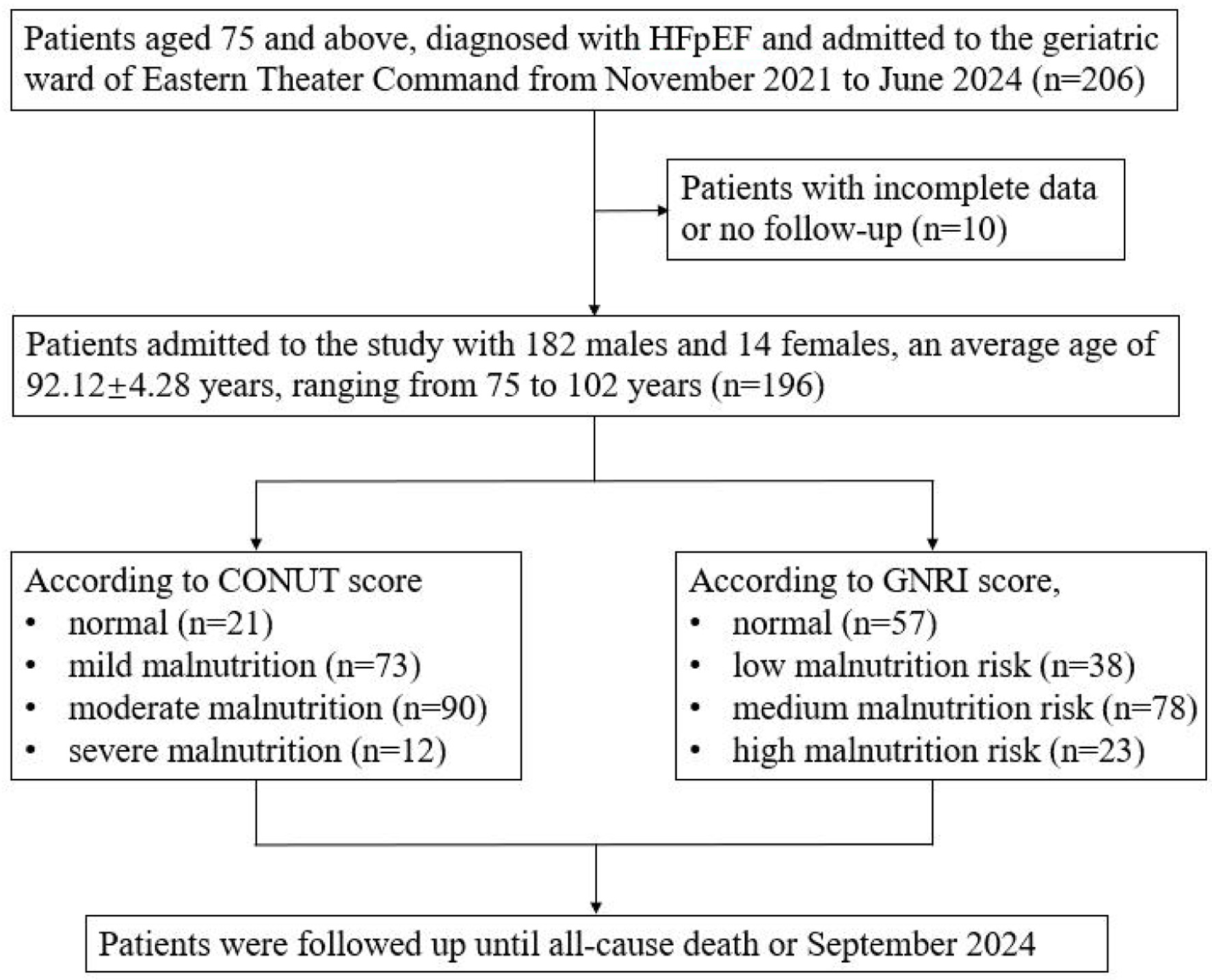 Click for large image | Figure 1. Patient flowchart. HFpEF: heart failure with preserved ejection fraction; CONUT: Controlling Nutritional Status; GNRI: Geriatric Nutritional Risk Index. |
Clinical data of different groups of patients under CONUT score and GNRI score
Patients in the higher CONUT group had longer hospital stays, higher proportions of patients with anemia, and receiving nutritional support therapy. Nutrition-related indicators (e.g., ALB, PA, HGB, total cholesterol, LDL-C, serum ferritin (SF), transferrin saturation (TSAT)), and immune indicators (lymphocytes) were significantly lower, while inflammatory indicators (CRP, PCT, IL-6) and cardiac function indicators (NT-proBNP) were significantly higher (all P < 0.05). No significant differences were observed in echocardiographic parameters among CONUT groups. A similar trend in clinical characteristics was observed with decreasing GNRI scores (higher nutritional risk), consistent with CONUT groups. However, distinct differences included smaller left atrial diameter (LAD) and left ventricular diastolic diameter (LVDD) in the high nutritional risk group (P < 0.05), as well as significant variations in HDL-C, interventricular septum (IVS), and left ventricular posterior wall (LVPW) across GNRI groups (P < 0.05), as shown in Table 1.
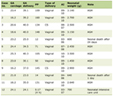 Click to view | Table 1. Clinical Data of Patients Stratified by CONUT Score and GNRI Score |
Prognosis of different groups of patients under CONUT score and GNRI score
Over a median follow-up of 11.5 months, 83 (42.3%) patients died. As the CONUT scores increased, the rates of all-cause death, cardiovascular death, all-cause readmission, and HF-related readmission rose significantly (P < 0.05). Patients in the higher nutritional risk group based on the GNRI scores had notably higher rates of all-cause death, all-cause readmission, and HF-related readmission (P < 0.05), whereas no significant inter-group difference was observed for cardiovascular death (P = 0.136), as shown in Table 2.
Click to view | Table 2. Prognosis Outcomes of Patients Stratified by CONUT and GNRI Score |
Survival analysis of different groups of patients under CONUT score and GNRI score
For CONUT scores, higher scores were linked to increased all-cause mortality risk and decreased survival probability, and for GNRI scores, lower scores were associated with increased all-cause mortality risk and decreased survival probability, as shown in Figure 2.
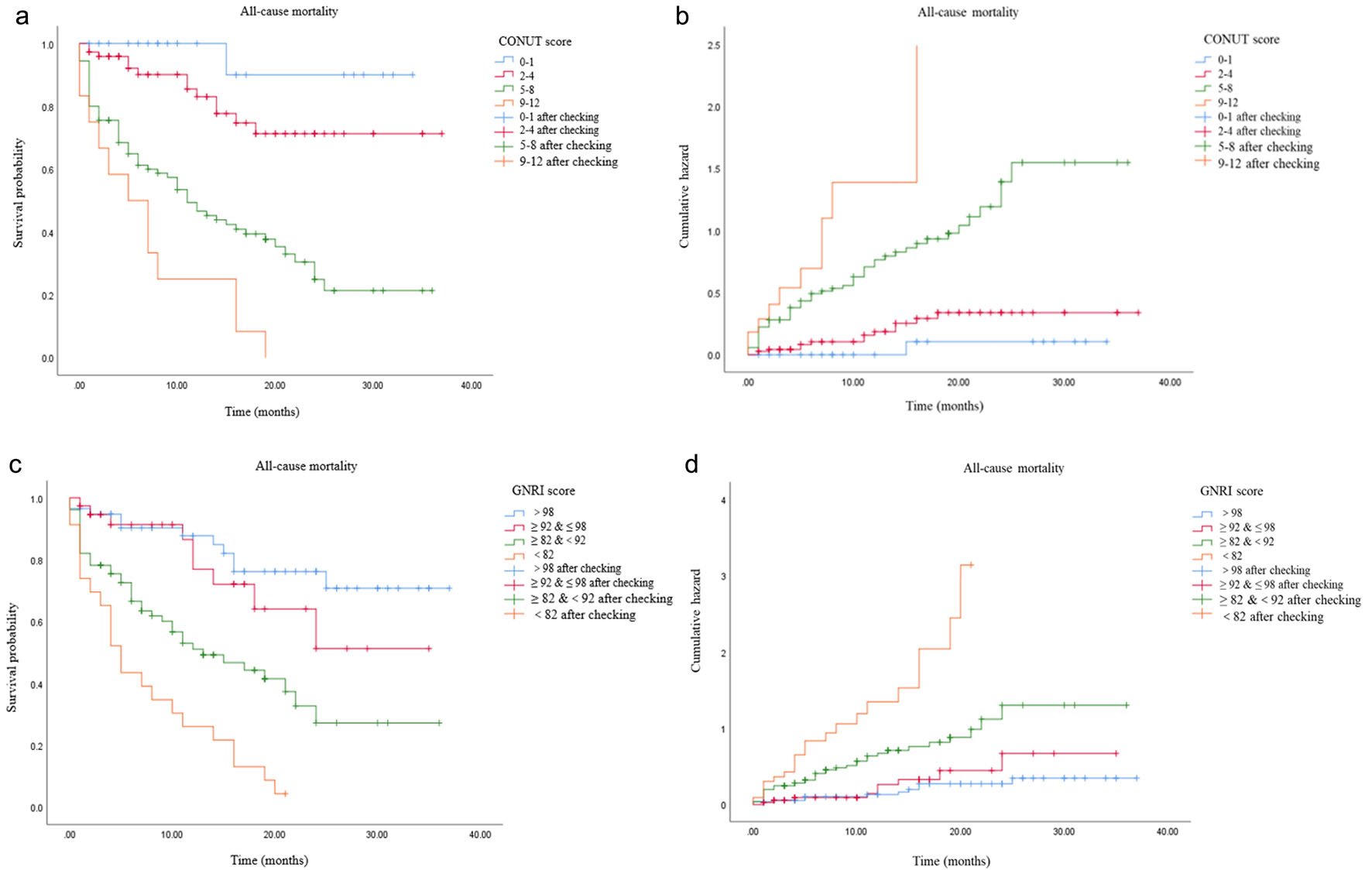 Click for large image | Figure 2. Kaplan–Meier survival curves. (a) Survival probability stratified by CONUT score. (b) Cumulative hazard stratified by CONUT score. (c) Survival probability stratified by GNRI score. (d) Cumulative hazard stratified by GNRI score. CONUT: Controlling Nutritional Status; GNRI: Geriatric Nutritional Risk Index. |
Multivariable Cox proportional-hazards regression was performed with all-cause mortality as the dependent variable, adjusting for age, hypertension, diabetes, chronic renal insufficiency, GNRI score, CONUT score, and NT-proBNP. The analysis revealed that CONUT score and NT-proBNP were independently associated with higher all-cause mortality. By contrast, GNRI score was independently associated with lower mortality, indicating that better nutritional status correlated with reduced death risk. No significant associations were observed for age, hypertension, diabetes, or renal insufficiency (all P > 0.05), as shown in Table 3.
Click to view | Table 3. Multivariable Cox Proportional Hazards Regression for All-Cause Mortality in Elderly Patients With HFpEF |
Consistency and difference between CONUT score and GNRI score in evaluating nutritional status of elderly patients with HFpEF
The two scores showed poor consistency in assessing nutritional status of elderly HFpEF patients (P < 0.01, κ = 0.235). Both scores showed predictive capacity for all-cause mortality. The AUC was 0.86 (95% CI 0.80–0.91) for CONUT (optimal cut-off: 5.5, maximum Youden’s index: 0.593), 0.79 (95% CI 0.73–0.86) for GNRI (optimal cut-off: 83.83, maximum Youden’s index: 0.498), and 0.87 (95% CI 0.82–0.92) for the combined score. The predictive performance of CONUT alone and the combined score was significantly better than that of GNRI alone (P < 0.01), whereas no statistically significant difference was observed between CONUT alone and the combined score (P = 0.078), as shown in Figure 3.
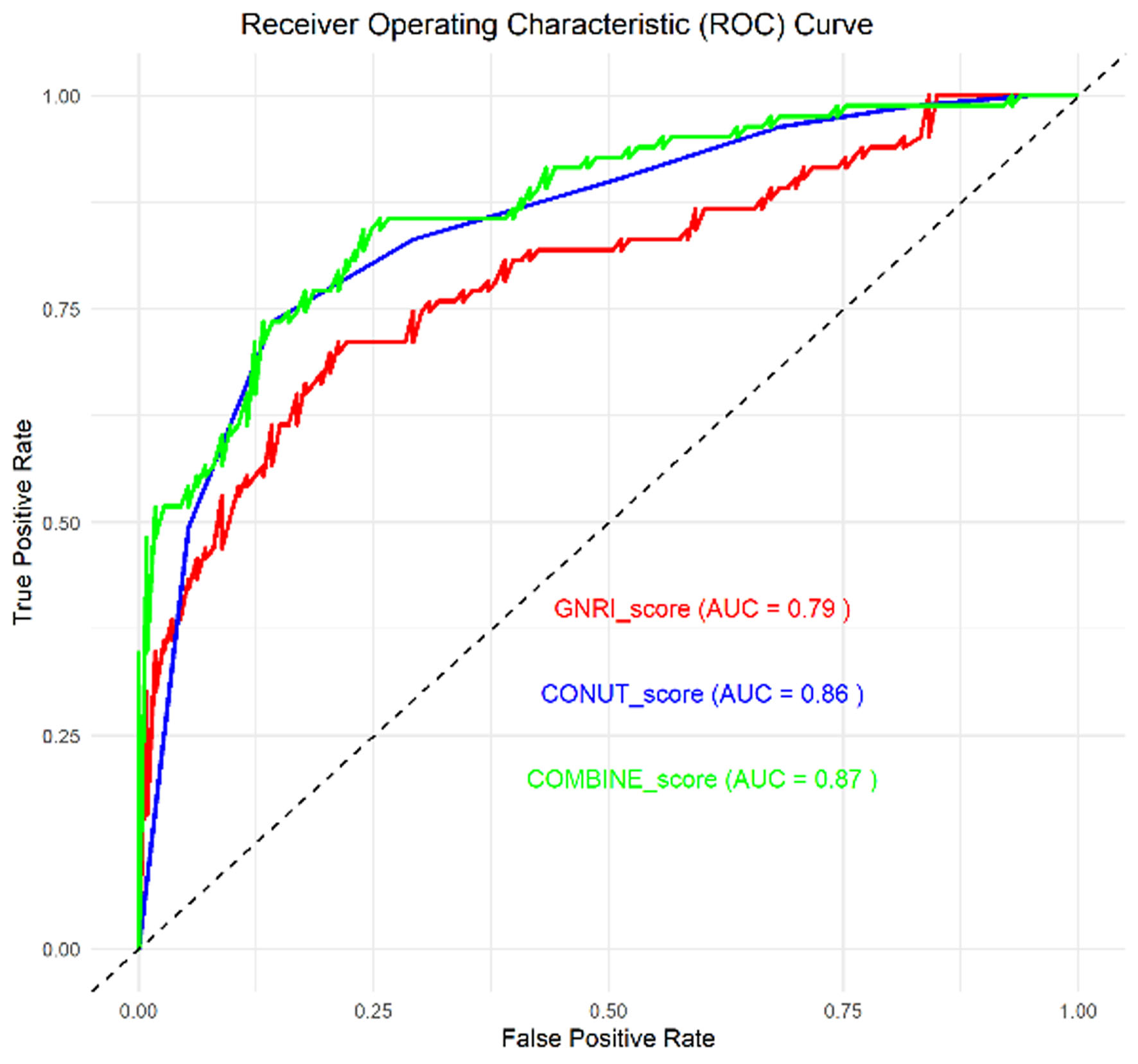 Click for large image | Figure 3. Receiver operating characteristic (ROC) curve of CONUT score, GNRI score, and the combined scores. AUC: area under the curve; CONUT: Controlling Nutritional Status; GNRI: Geriatric Nutritional Risk Index. |
Similarly, NRI analysis showed that compared with the GNRI score, the NRI of the CONUT score was 0.580 (95% CI: 0.309–0.852, P = 0.001), and the NRI of the combined score was 0.760 (95% CI: 0.499–1.022, P = 0.001), both reaching statistical significance. By contrast, the NRI was 0.083 (95% CI: −0.197 to 0.363, P = 0.560) for the combined score versus the CONUT score, without statistical significance.
| Discussion | ▴Top |
HFpEF is the most prevalent subtype of HF in the elderly population and a major contributor to mortality among hospitalized elderly patients [2]. Malnutrition is common in this population, driven by multifactorial mechanisms including systemic metabolic alterations, diminished gastrointestinal function, and underlying comorbidities [12]. Accumulating evidence suggests that malnutrition is associated with adverse outcomes in HF patients, potentially through its effects on myocardial energy metabolism and immune function [9, 10, 13]. However, previous studies have mostly focused on the overall HF population or HFrEF, whereas the association between nutritional status and prognosis in elderly patients with HFpEF remains relatively under-explored.
Currently, various clinical tools are available for nutritional risk screening [14, 15]. The Nutritional Risk Screening 2002 (NRS 2002) is widely used for inpatients but significantly influenced by the reliability of patient medical history. Subjective Global Assessment (SGA) and Mini Nutritional Assessment (MNA) require professional medical intervention and involve subjective questions, making it challenging to obtain accurate data from patients with unclear expressions, particularly the elderly [16, 17]. In contrast, CONUT and GNRI are objective, laboratory-based scoring systems that are less affected by subjective factors. The CONUT score integrates serum ALB, TC, and LY to reflect protein reserves, caloric status, and immune function [4], while the GNRI is derived from serum ALB and BMI [5]. Both tools have been validated as prognostic predictors in various clinical settings, including cardiovascular disease [6–8, 18].
Regarding the pathophysiological links between malnutrition and HF, several mechanisms have been proposed in the literature. Fluid retention may contribute to intestinal edema and anorexia, affecting nutrient intake and absorption [3]. Chronic inflammation and neurohormonal activation may promote protein and adipose tissue catabolism, leading to weight loss and cachexia [19–21]. In our study, patients with poorer nutritional status had higher levels of inflammatory markers and lower lipid metabolism indices, which aligns with these previously described associations. However, as this study is purely observational and did not assess pathways such as intestinal barrier function, inflammatory cytokine signaling, or neurohormonal activation, the available data cannot establish mechanistic causality between the two.
Previous studies have demonstrated that the CONUT and GNRI scores were associated with readmission and all-cause mortality in patients with HF [22, 23]. A meta-analysis has also indicated that malnutrition, defined by a CONUT score ≥ 2, is associated with an elevated risk of all-cause mortality, with HF patients experiencing a 1.92-fold increased risk of death from any cause [24]. However, these studies neither stratified analyses by age (i.e., focusing on the elderly) nor distinguished HF subtypes. This study investigated the association between the two scores and prognosis in elderly patients with HFpEF. The results revealed that the CONUT score was an independent risk factor for all-cause mortality in elderly patients with HFpEF; each one-point increase in the CONUT score was associated with a 36.6% higher risk of all-cause mortality. The GNRI score was an independent protective factor. Higher GNRI scores, reflecting better nutritional status, were associated with lower mortality risk, which is consistent with previous findings in the overall HF population [25].
Notably, we observed that the high-nutritional-risk group (defined by GNRI) had smaller left atrial diameter (LAD) and left ventricular diastolic diameter (LVDD), and that interventricular septum (IVS) and left ventricular posterior wall (LVPW) differed across GNRI categories. One possible explanation is that patients with poor nutritional status more often exhibit a non-obese HFpEF phenotype, with smaller body surface area and lower preload, leading to smaller absolute cardiac chamber dimensions. This observation may reflect the known heterogeneity of HFpEF, but our cross-sectional data cannot determine whether nutritional status is directly associated with cardiac remodeling. These findings are hypothesis-generating and require confirmation in dedicated mechanistic or longitudinal studies.
Poor consistency was observed between the CONUT and GNRI scores, indicating that the two nutritional-assessment tools focus on different dimensions and cannot substitute for one another in clinical practice. ROC and NRI analyses in the present study demonstrated that the combined-score model showed significantly better predictive performance for all-cause mortality among elderly patients with HFpEF compared with the GNRI score; however, no obvious incremental benefit was observed relative to CONUT alone. These findings suggest that the prognostic value of the combined model is mainly derived from the CONUT score. We speculate that this result may be attributed to water-sodium retention in HF patients, which disturbs BMI and further leads to the weaker predictive performance of GNRI.
As the aging population increases, greater attention should be paid to elderly patients with HFpEF complicated by malnutrition. Current HF guidelines [2] recommend that all HF patients undergo nutritional risk assessment. Future prospective, multicenter studies with larger sample sizes and comprehensive multivariable adjustment are warranted to validate the prognostic value of CONUT and GNRI in elderly HFpEF patients. The dynamic changes in nutritional status and the potential impact of nutritional interventions on clinical outcomes should also be explored. Additionally, given the heterogeneity of HFpEF, nutritional indicators may aid in subtype identification, although their clinical utility in this regard needs to be confirmed by dedicated studies.
Limitations
This study was a single-center retrospective analysis with a relatively small sample size, especially for subgroup analyses. Given that most of the consecutively enrolled participants were male, selection bias may exist. Nutritional status was assessed solely based on admission laboratory data; therefore, the prognostic associations of temporal changes in nutritional status and nutritional intervention could not be evaluated. This study only confirmed that there was no significant difference in the prevalence of coronary heart disease among groups. Given the lack of comparison of lipid-lowering medication use, the confounding effect of lipid-lowering drugs cannot be fully excluded. We used standard ROC based on binary endpoint rather than time-dependent ROC for survival outcomes. Further large-sample prospective studies are needed to validate our findings.
Conclusions
Malnutrition is a prevalent complication among elderly patients with HFpEF, significantly associated with prolonged hospital stays, all-cause death, and higher rates of HF-related readmission. The CONUT and GNRI scores are widely used in clinical nutritional assessment and cannot fully substitute for one another. Compared with the GNRI score alone, combined evaluation of the two scores showed improved predictive performance for adverse prognosis in elderly patients with HFpEF, whereas no incremental predictive value was observed relative to the CONUT score alone.
Acknowledgments
None to declare.
Financial Disclosure
This study was funded by Jiangsu Provincial Health Committee (LKZ 2023011), Clinical Diagnosis and Treatment New Technology Projects of Affiliated Jinling Hospital, Medical School of Nanjing University (2023LCZLXB042) and General Project of the Basic Research Program of Affiliated Jinling Hospital, Medical School of Nanjing University (22JCYYYB48).
Conflict of Interest
The authors declare no competing interests.
Informed Consent
Not applicable.
Author Contributions
Y Li conceived and designed the study, collected and analyzed the data, drafted the original manuscript. HRS assisted in data collection and statistical analysis. Y Liu contributed to data management and patient information collection. JYW helped with patient recruitment and data interpretation. YGY, CY, XW provided clinical resources and critically revised the manuscript. YZ revised the manuscript critically, and gave intellectual input. LL revised the manuscript critically, and gave intellectual input, and supervised the project. All authors read and approved the final manuscript.
Data Availability
The datasets used and analyzed during the current study are available from the corresponding author on reasonable request.
Abbreviations
ACEI: angiotensin-converting-enzyme inhibitor; AOD: aortic diameter; ARB: angiotensin II receptor blocker; ARNI: angiotensin-receptor-neprilysin inhibitor; AUC: area under the curve; BMI: body mass index; CONUT: Controlling Nutritional Status; COPD: chronic obstructive pulmonary disease; GNRI: Geriatric Nutritional Risk Index; HDL-C: high-density lipoprotein cholesterol; HFpEF: heart failure with preserved ejection fraction; IL-6: interleukin-6; IVS: interventricular septum; LAD: left atrial diameter; LDL-C: low-density lipoprotein cholesterol; LVDD: left ventricular diastolic diameter; LVEF: left ventricular ejection fraction; LVPW: left ventricular posterior wall; NT-proBNP: N-terminal pro-B-type natriuretic peptide; PCT: procalcitonin; ROC: receiver operating characteristic; RVD: right ventricular diameter; SF: serum ferritin; SGLT2i: sodium-glucose cotransporter 2 inhibitor; TIBC: total iron-binding capacity; TSAT: transferrin saturation; UIBC: unsaturated iron-binding capacity
| References | ▴Top |
- Heidenreich PA, Bozkurt B, Aguilar D, Allen LA, Byun JJ, Colvin MM, Deswal A, et al. 2022 AHA/ACC/HFSA guideline for the management of heart failure: a report of the American College of Cardiology/American Heart Association Joint Committee on Clinical Practice Guidelines. J Am Coll Cardiol. 2022;79(17):e263-e421.
doi pubmed - Cardiovascular Group, Geriatrics Branch, Chinese Medical Association, Editing Group of Chinese Expert Consensus on the Diagnosis and Treatment of Chronic Heart Failure in the Elderly. Chinese experts consensus on the diagnosis and treatment of chronic heart failure in the elderly. Chin J Geriatr. 2021;40(5):550-561.
- Driggin E, Cohen LP, Gallagher D, Karmally W, Maddox T, Hummel SL, Carbone S, et al. Nutrition assessment and dietary interventions in heart failure: JACC review topic of the week. J Am Coll Cardiol. 2022;79(16):1623-1635.
doi pubmed - Ignacio de Ulibarri J, Gonzalez-Madrono A, de Villar NG, Gonzalez P, Gonzalez B, Mancha A, Rodriguez F, et al. CONUT: a tool for controlling nutritional status. First validation in a hospital population. Nutr Hosp. 2005;20(1):38-45.
pubmed - Bouillanne O, Morineau G, Dupont C, Coulombel I, Vincent JP, Nicolis I, Benazeth S, et al. Geriatric Nutritional Risk Index: a new index for evaluating at-risk elderly medical patients. Am J Clin Nutr. 2005;82(4):777-783.
doi pubmed - Arslan K, Arslan HC, Sultan Sahin A. The prognostic role of prognostic nutritional score, geriatric nutritional risk index, and controlling nutritional status score in critically ischemic geriatric patients with acute ischemic stroke: A retrospective cohort study. Medicine (Baltimore). 2026;105(18):e48568.
doi pubmed - Arslan K, Sahin AS. Prognostic value of geriatric nutritional risk index and prognostic nutritional index in geriatric orthopedic trauma patients in the surgical intensive care unit. Duzce Med J. 2025;27(1):11-16.
- Arslan K, Celik S, Arslan HC, Sahin AS, Genc Y, Erturk C. Predictive value of prognostic nutritional index on postoperative intensive care requirement and mortality in geriatric hip fracture patients. North Clin Istanb. 2024;11(3):249-257.
doi pubmed - Xu D, Shen R, Hu M, Fan Q, Wu J. Prognostic impact of CONUT score in older patients with chronic heart failure. BMC Geriatr. 2024;24(1):738.
doi pubmed - Ishikawa Y, Sattler ELP. Nutrition as treatment modality in heart failure. Curr Atheroscler Rep. 2021;23(4):13.
doi pubmed - McDonagh TA, Metra M, Adamo M, et al. 2023 Focused Update of the 2021 ESC Guidelines for the diagnosis and treatment of acute and chronic heart failure: Developed by the task force for the diagnosis and treatment of acute and chronic heart failure of the European Society of Cardiology (ESC) With the special contribution of the Heart Failure Association (HFA) of the ESC. European Heart Journal. 2023;44(37):3627-3639.
- Liao L, Pant A, Marschner S, et al. A focus on heart failure management through diet and nutrition: a comprehensive review. Hearts. 2024;5(3):293-307.
- Akbulut M, Halil G, Emre O, Seda T, Volkan K, Kerim E, Irem D. A novel echocardiographic index for prediction of malnutrition in acute heart failure. Acta Cardiol. 2023;78(2):260-266.
doi pubmed - Fan X, He Q, Zhang K, Lan X, Li Y, Zhang H. Comparison of the value of four objective nutritional indices in assessing the long-term prognosis of elderly patients with heart failure with preserved ejection fraction. Rev Cardiovasc Med. 2024;25(6):201.
doi pubmed - Tirandi A, Montecucco F, Liberale L. Malnutrition predicts mortality in heart failure patients. Intern Emerg Med. 2023;18(4):979-980.
doi pubmed - Kinugasa Y, Sota T, Kamitani H, Nakayama N, Nakamura K, Hirai M, Yanagihara K, et al. Diagnostic performance of nutritional indicators in patients with heart failure. ESC Heart Fail. 2022;9(4):2096-2106.
doi pubmed - Carbone S, Billingsley HE, Rodriguez-Miguelez P, Kirkman DL, Garten R, Franco RL, Lee DC, et al. Lean mass abnormalities in heart failure: the role of sarcopenia, sarcopenic obesity, and cachexia. Curr Probl Cardiol. 2020;45(11):100417.
doi pubmed - Zhang S, Liu Y, Feng Z, et al. A review of the application of nutritional assessment tools in elderly patients with heart failure. Chinese General Practice Nursing. 2023;21(2):1342-1346.
- Prokopidis K, Irlik K, Ishiguchi H, Rietsema W, Lip GYH, Sankaranarayanan R, Isanejad M, et al. Natriuretic peptides and C-reactive protein in in heart failure and malnutrition: a systematic review and meta-analysis. ESC Heart Fail. 2024;11(5):3052-3064.
doi pubmed - Stumpf F, Keller B, Gressies C, Schuetz P. Inflammation and nutrition: friend or foe? Nutrients. 2023;15(5):1159.
doi pubmed - Muscaritoli M, Imbimbo G, Jager-Wittenaar H, Cederholm T, Rothenberg E, di Girolamo FG, Amabile MI, et al. Disease-related malnutrition with inflammation and cachexia. Clin Nutr. 2023;42(8):1475-1479.
doi pubmed - Liu J, Liu J, Wang J, Yan Z, Liang Q, Wang X, Wang Z, et al. Prevalence and impact of malnutrition on readmission among hospitalized patients with heart failure in China. ESC Heart Fail. 2022;9(6):4271-4279.
doi pubmed - Ni J, Fang Y, Zhang J, Chen X. Predicting prognosis of heart failure using common malnutrition assessment tools: A systematic review and meta-analysis. Scott Med J. 2022;67(4):157-170.
doi pubmed - Li H, Zhou P, Zhao Y, Ni H, Luo X, Li J. Prediction of all-cause mortality with malnutrition assessed by controlling nutritional status score in patients with heart failure: a systematic review and meta-analysis. Public Health Nutr. 2022;25(7):1799-1806.
doi pubmed - Liang WH, Dong YG, Liu C. [Exploration of the role of nutritional status scores in heart failure prognosis]. Zhonghua Xin Xue Guan Bing Za Zhi. 2024;52(11):1296-1301.
doi pubmed
This article is distributed under the terms of the Creative Commons Attribution 4.0 International License (CC BY 4.0), which permits unrestricted use, distribution, and reproduction in any medium, including commercial use, provided the original work is properly cited.
Cardiology Research is published by Elmer Press Inc.