| Cardiology Research, ISSN 1923-2829 print, 1923-2837 online, Open Access |
| Article copyright, the authors; Journal compilation copyright, Cardiol Res and Elmer Press Inc |
| Journal website https://cr.elmerpub.com |
Original Article
Volume 000, Number 000, November 2026, pages 000-000

Global Burden, Temporal Trends, Inequalities, and Future Projections of Aortic Aneurysm Attributable to Smoking, Dietary, and Environmental Risks: Findings From the Global Burden of Disease Study 2021
Quan Lin Yanga, b, c, e, Yu Bin Zhonga, b, e, Jin Hua Laia, b, Bao Xing Wua, b, Song Yi Qiana, b, Li Min Xiaa, b, d, Ben Huangd, f, Sun Pana, b, d, f
aDepartment of Cardiac Surgery, Zhongshan Hospital Xiamen Branch, Fudan University, Xiamen 361015, China
bXiamen Key Laboratory of Precision Diagnosis and Treatment for Panvascular Diseases, Xiamen 361015, China
cKey Laboratory of Cardio-Thoracic Surgery (Fujian Medical University), Fujian Province University, Fuzhou 350108, Fujian, China
dDepartment of Cardiac Surgery, Zhongshan Hospital, Fudan University, Shanghai 200032, China
eThese authors contributed equally to this work.
fCorresponding Author: Ben Huang, Department of Cardiac Surgery, Zhongshan Hospital, Fudan University, Shanghai 200032, China; Sun Pan, Department of Cardiac Surgery, Zhongshan Hospital Xiamen Branch, Fudan University, Xiamen 361015, China
Manuscript submitted July 27, 2026, accepted October 7, 2026, published online November 18, 2026
Short title: Aortic Aneurysm Burden by Risk Factors
doi: https://doi.org/10.14740/cr2302
| Abstract | ▴Top |
Background: Aortic aneurysm (AA) remains a major vascular disease associated with substantial mortality worldwide. Although smoking, dietary factors, and selected environmental exposures are included in model-based assessments of AA-attributable burden, their long-term global patterns and socioeconomic disparities have not been comprehensively characterized. This study aimed to evaluate the global, regional, and national burden of AA attributable to these risk factors and to assess temporal trends, inequalities, and future trajectories from 1990 to 2021.
Methods: Model-based estimates of AA burden attributable to smoking, dietary risks, and environmental risks were obtained from the Global Burden of Disease Study 2021. Deaths, disability-adjusted life years (DALYs), and age-standardized rates (ASRs) were analyzed across 204 countries and territories from 1990 to 2021. Temporal trends were assessed using estimated annual percentage changes (EAPCs). Burden differences according to socio-demographic index (SDI), sex, age, and geographic location were evaluated. Decomposition analysis was performed to quantify contributions from population growth, aging, and epidemiological changes. Future trends through 2050 were predicted using autoregressive integrated moving average and exponential smoothing models.
Results: From 1990 to 2021, absolute numbers of AA deaths and DALYs attributable to smoking, dietary risks, and environmental risks increased globally, whereas ASRs generally declined. Among the three risk categories examined, smoking accounted for the largest estimated AA-attributable burden. These comparisons do not establish the relative importance of all AA etiologies. High-SDI regions experienced substantial reductions in smoking- and dietary-related age-standardized burden, while low-middle and low-SDI regions showed increasing trends for several risk factors. Eastern Europe exhibited the highest burden associated with smoking and dietary risks, whereas Australasia showed the greatest reductions. Men consistently experienced higher burdens than women across risk categories. Decomposition analysis indicated that population aging and growth were major contributors to increasing absolute burden. Future projections suggested continued increases in absolute deaths and DALYs despite declining ASRs.
Conclusions: The global burden of AA attributable to the three selected risk categories remains substantial, with pronounced socioeconomic and geographic inequalities. Declining age-standardized burden coexists with demographic pressures that may increase absolute burden. These findings can inform region-specific prevention priorities, but they do not quantify the independent contribution of atherosclerosis or establish a hierarchy of all AA causes.
Keywords: Global Burden of Disease Study; Aortic aneurysm; Risk factors; Smoking; Dietary risks; Environmental risks; Disease burden
| Introduction | ▴Top |
Aortic aneurysm (AA) is a progressive vascular disorder characterized by irreversible dilation and structural weakening of the aortic wall, representing a major cause of cardiovascular morbidity and mortality worldwide. Rupture of AA is associated with extremely poor outcomes, with reported mortality exceeding 80% in untreated acute cases [1]. According to estimates from the Global Burden of Disease (GBD) study, AA remains an important contributor to global cardiovascular disease burden, with substantial variations observed across regions, socioeconomic levels, and demographic groups [2]. Although advances in imaging surveillance, endovascular repair, and surgical management have improved clinical outcomes, a considerable proportion of AA cases remain asymptomatic until advanced disease stages or acute rupture occurs, highlighting the importance of identifying and addressing preventable risk factors [3].
The development of AA involves complex interactions among genetic susceptibility, vascular inflammation, extracellular matrix remodeling, and environmental exposures [4, 5]. Recent mechanistic studies have highlighted the role of oxidative stress, mitochondrial dysfunction, and impaired vascular smooth muscle cell homeostasis in aortic wall degeneration, suggesting potential biological links between metabolic stress and aneurysm progression [5]. Beyond genetic and biological determinants, modifiable behavioral and environmental factors, including tobacco exposure, dietary patterns, and environmental pollution, have been increasingly recognized as important contributors to cardiovascular disease development [6]. Within the GBD framework, smoking, dietary risks, and environmental risks are quantified as major attributable risk factors for cardiovascular diseases, providing an opportunity to describe modeled AA-attributable burden for the risk–outcome pairs included in GBD [7]. However, the global distribution and temporal evolution of AA burden attributable to these modifiable risks remain insufficiently characterized.
Smoking is one of the most consistently identified modifiable risk factors associated with AA development and adverse clinical outcomes. Tobacco exposure may contribute to aortic wall degeneration through multiple biological pathways, including oxidative stress, chronic inflammation, endothelial dysfunction, and extracellular matrix degradation [8]. Epidemiological studies have demonstrated a strong association between smoking intensity and increased risk of abdominal aortic aneurysm (AAA), with current smokers exhibiting substantially higher incidence and rupture risks compared with never smokers [9]. Recent analyses based on the GBD framework have further indicated that smoking accounts for a considerable proportion of AA-attributable disability-adjusted life years (DALYs) globally, although the magnitude of burden varies substantially across regions due to differences in tobacco exposure patterns, demographic structures, and prevention strategies [10]. These findings highlight smoking control as a major component of global AA prevention.
Dietary patterns represent another important group of potentially modifiable factors associated with vascular disease burden [6]. Within GBD, dietary risks form an aggregate category of dietary exposures rather than a single dietary pattern or an individual diet-quality score. Cause-specific estimates depend on the risk–outcome pairs included for that cause and should not be interpreted as estimates for every component of the broader dietary category [11]. Although direct evidence linking individual dietary components to AA remains less extensive than that for smoking, several biological pathways, including hypertension, systemic inflammation, oxidative stress, and metabolic dysfunction, provide plausible links between dietary exposures and vascular wall injury [12, 13]. Population-based studies have demonstrated that dietary transitions accompanying urbanization and economic development are associated with increasing cardiovascular risk profiles, particularly in regions undergoing rapid nutritional changes [14]. Therefore, evaluating the contribution of dietary risks to AA burden is essential for understanding regional disparities and developing comprehensive prevention strategies.
Research on environmental exposures provides context for AA epidemiology, but mechanistic plausibility, observational associations, and GBD risk attribution represent different types of evidence. A prospective study reported associations between air pollutants and AAA risk [15], and experimental work has investigated particulate matter exposure in a mouse model of thoracic AA and dissection [16]. Other studies have examined metals in experimental vascular injury and temperature or noise in relation to cardiovascular outcomes [17–19]. These findings provide broader context; they do not establish which exposures are represented by the environmental risk estimates analyzed here. The present study describes GBD model-based burden for included risk–outcome pairs and does not directly test pollutant-specific mechanisms or the effects of reducing an environmental exposure [7].
Although previous GBD analyses have comprehensively characterized cardiovascular disease burden and attributable risk factors, several knowledge gaps remain regarding AA specifically [20]. First, previous investigations have primarily focused on overall cardiovascular diseases or individual AA-related risk factors, whereas a comprehensive assessment integrating multiple modifiable risks at global, regional, and national levels is lacking. Second, the extent to which socioeconomic development, demographic transition, and changing risk exposure patterns influence AA burden disparities remains unclear. Third, future trajectories of AA burden attributable to these modifiable risks require further evaluation to support long-term prevention planning.
To address these gaps, we utilized data from the GBD 2021 study to systematically evaluate the global, regional, and national burden of AA attributable to smoking, dietary risks, and environmental risks from 1990 to 2021. We analyzed temporal trends, socioeconomic disparities, demographic patterns, decomposition factors, and future burden projections through 2050. We examined whether age-standardized attributable burden and absolute burden followed different temporal patterns and whether those patterns varied across socioeconomic and demographic groups. The analysis was descriptive and did not test the causal effects of prevention policies or specific environmental exposures.
| Materials and Methods | ▴Top |
Data sources
The GBD study constitutes a systematic scientific collaboration coordinated by the Institute for Health Metrics and Evaluation (IHME) at the University of Washington. This initiative quantifies health loss from diseases, injuries, and risk factors across global, regional, and national levels through dynamically updated databases. Data sources integrate vital registration systems, disease surveillance networks, national censuses, health facility records, disease registries, epidemiological studies, and datasets from international organizations including World Health Organization (WHO) and the World Bank. Advanced statistical modeling techniques were employed, encompassing spatiotemporal Gaussian process regression, Cause of Death Ensemble modeling (CODEm), and DisMod-Meta Regression (DisMod-MR). All estimates report 95% uncertainty intervals (UIs) accounting for variations in source data quality and modeling methodologies, establishing a foundational evidence base for global health policy [6, 21–25].
This study was a secondary analysis of aggregate GBD estimates for three selected risk categories: smoking, dietary risks, and environmental risks. GBD comparative risk assessment combines exposure distributions, risk–outcome relative risks, and theoretical minimum risk exposure levels to estimate population-attributable fractions and attributable burden, with mediation adjustments for specified risk pathways [7]. We compared the resulting population-level burden estimates rather than estimating independent individual-level effects. The aggregate data used in this analysis did not include linked individual measurements of atherosclerotic plaque burden, genotype, and dietary exposure. We therefore did not estimate a separate atherosclerosis-attributable AA burden or perform analyses of genetic–dietary interactions or mediation through atherosclerosis.
Risk factors were interpreted according to the GBD 2021 classification and cause-specific attribution framework. Smoking refers to exposure to smoked tobacco products; the IHME definition includes daily and occasional smoking, and this category should not be conflated with second-hand smoke or smokeless tobacco [7, 26]. Dietary risks denote the GBD aggregate of dietary exposures, with intake modeled relative to risk-specific theoretical minimum risk exposure levels; this is not a measured individual dietary score [7, 11]. Environmental risks refer to the GBD environmental risk estimates reported for AA, restricted to the risk–outcome pairs represented in that cause-specific output. This label does not establish that every environmental pollutant discussed in the literature was included. Throughout this manuscript, “attributable” denotes the burden assigned under the GBD comparative risk assessment model and its assumptions, rather than a new causal effect estimated by this secondary analysis [7].
Statistical analysis
Health burden metrics were calculated using standardized GBD methodologies. DALYs generally combine years of life lost (YLLs) and years lived with disability (YLDs). However, GBD 2021 does not estimate non-fatal prevalence, incidence, or YLDs for AA; its AA DALYs represent the fatal burden measured by YLLs [27]. Age-standardized rates (ASRs) were applied to enable population comparisons using the GBD reference age structure. The socio-demographic index (SDI; range 0–1) stratified analyses across five development levels: low, low-middle, middle, high-middle, and high. Temporal trends were characterized by estimated annual percentage change (EAPC), calculated as EAPC = 100 × (exp(β) – 1), where β is the regression slope coefficient, with trend significance determined by 95% confidence intervals (CI) (significant increase: entire CI > 0; decrease: entire CI < 0; stable: CI includes 0) [28, 29]. The EAPC was employed to assess trends in age-standardized mortality rate (ASMR) and age-standardized DALY rate (ASDR) from 1990 to 2021.
Using GBD 2021 data, we analyzed AA burden attributable to smoking, dietary risks, and environmental risks. Temporal trends (1990–2021) of global DALYs and deaths were examined with ASDR and ASMR, as well as EAPC derivation. Stratified analyses assessed 2021 burden distributions by sex, age group, SDI region, GBD geographical region, and country. Decomposition analyses quantified sex-specific contributions and SDI-driven burden variations. Health inequalities were systematically evaluated. Finally, burden projections through 2050 were generated using autoregressive integrated moving average (ARIMA) and exponential smoothing (ES) forecasting models.
Ethical approval statement: not applicable.
| Results | ▴Top |
Attributable burden across the three selected risk categories
In 2021, smoking accounted for the largest estimated AA-attributable burden among the three risk categories examined globally, with 1,157,488 DALYs (95% UI, 989,966–1,325,831) and 47,538 deaths (95% UI, 39,480–56,008), with an ASDR of 13.35 per 100,000. Among these categories, dietary risks had the second-largest estimated burden, with 232,454 DALYs (ASDR, 2.72 per 100,000), while environmental risks contributed the smallest absolute burden, with 20,362 DALYs (ASDR, 0.24 per 100,000) (Table 1, Fig. 1).
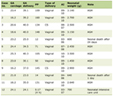 Click to view | Table 1. Death Cases, ASMR in 2021 and EAPCs From 1990 to 2021 of AA Attributed to Smoking, Dietary Risks and Environmental Risks |
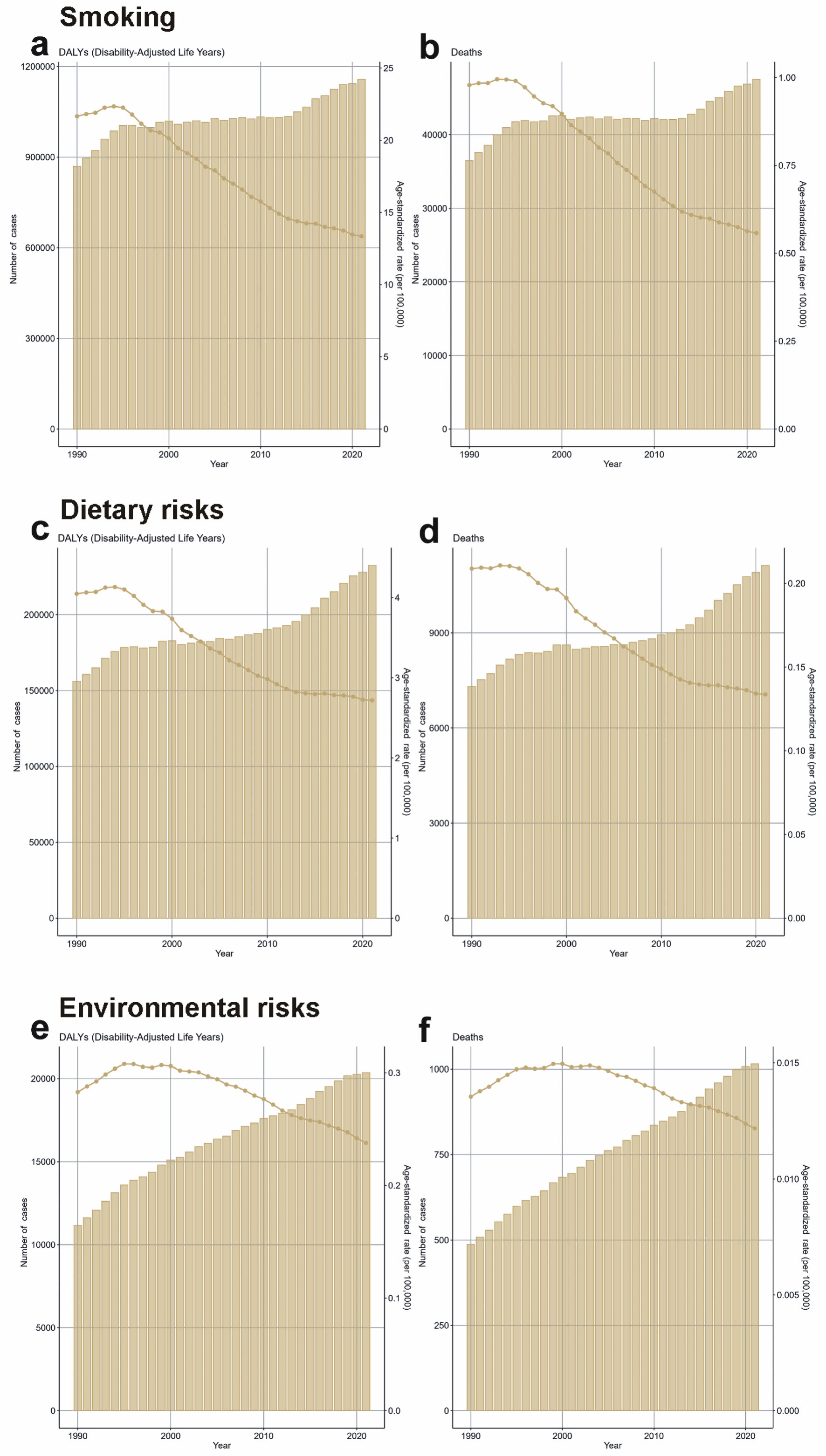 Click for large image | Figure 1. DALY and mortality patterns of aortic aneurysm attributable to smoking (a, b), dietary risks (c, d), and environmental risks (e, f) from 1990 to 2021. DALY: disability-adjusted life year. |
However, the temporal trends revealed striking divergences. From 1990 to 2021, smoking-attributable ASDR declined substantially (EAPC, −1.90; 95% CI, −2.01 to −1.78), and diet-attributable ASDR showed a similar decrease (EAPC, −1.61; 95% CI, −1.72 to −1.49). In contrast, the decline for environmental risks was markedly slower (EAPC, −0.74; 95% CI, −0.89 to −0.59) (Supplementary Material 1, cr.elmerpub.com). These estimates describe differing trends in attributable burden and do not directly measure changes in exposure or the effects of prevention programs.
Environmental burden by SDI and its divergence from behavioral risks
When stratified by SDI, the environmental risk-attributable AA burden in 2021 had its highest point estimates in low-SDI regions, with an ASDR of 0.37 per 100,000 (95% UI, −0.06 to 1.05) and ASMR of 0.02 per 100,000 (95% UI, 0.00–0.05) (Supplementary Material 2, cr.elmerpub.com). This differs descriptively from smoking and dietary risks, which showed the highest ASDR point estimates in high-SDI regions (Supplementary Material 2, cr.elmerpub.com).
From 1990 to 2021, environmental burden declined in high-SDI regions (EAPC for ASDR, −2.23; 95% CI, −2.46 to −2.00) but exhibited upward trends in low- and low-middle-SDI regions (Fig. 2e, 2f). Notably, this environmental burden increase in disadvantaged settings occurred during the same period when smoking- and diet-attributable burdens were declining across most SDI strata (Fig. 2a–d). These estimates indicate differing temporal patterns across risk categories and SDI strata. They do not directly establish changes in environmental exposure or the effectiveness of behavioral risk-control policies.
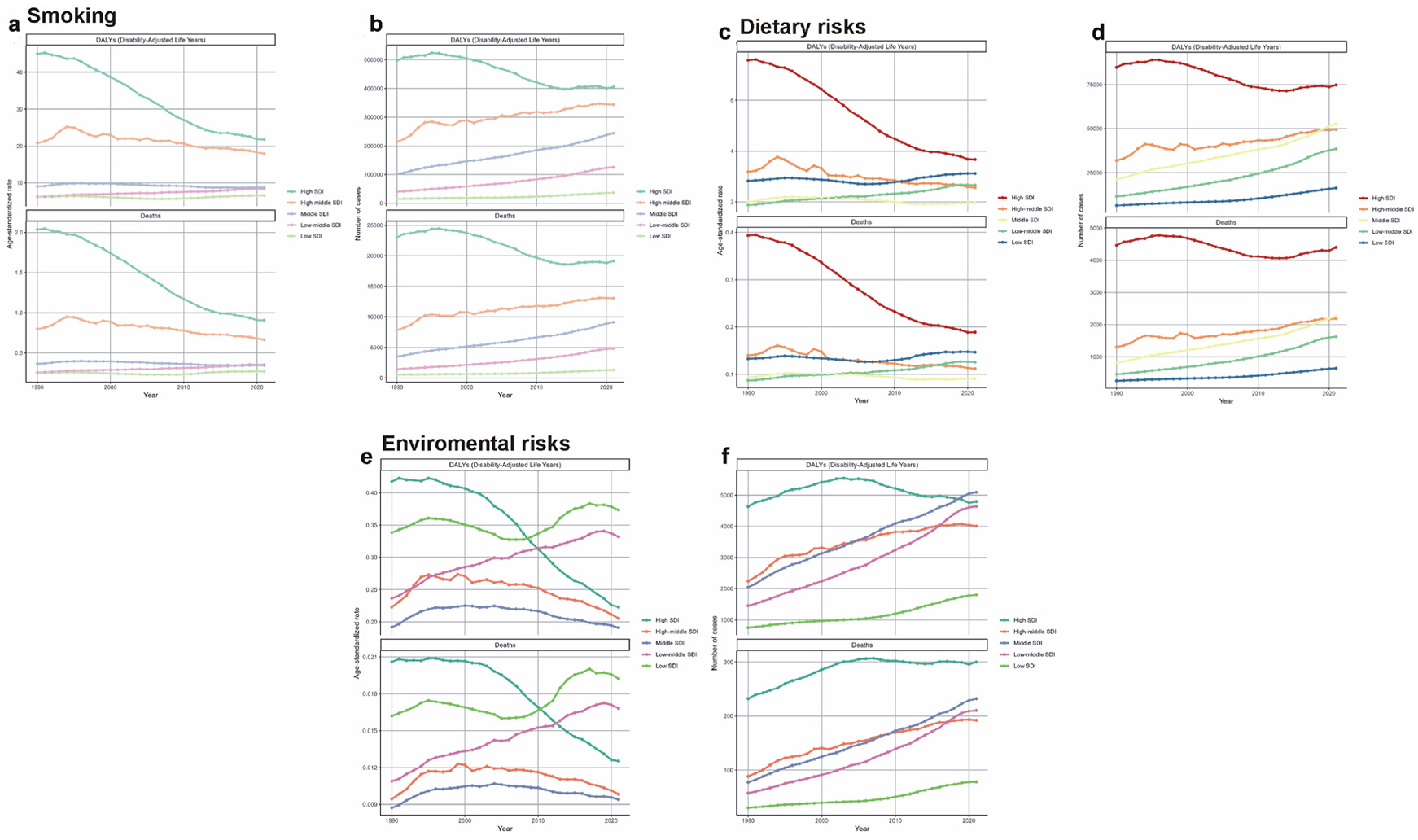 Click for large image | Figure 2. DALY and mortality patterns of aortic aneurysm attributable to smoking (a, b), dietary risks (c, d) and environmental risks (e, f), by SDI from 1990 to 2021. DALY: disability-adjusted life year. |
Geographic variation in risk-attributable AA burden
At the regional level, the highest point estimate of environmental risk-attributable ASDR in 2021 was recorded in Tropical Latin America (0.66; 95% UI, −0.09 to 1.66), followed by the Caribbean and Central Sub-Saharan Africa (Supplementary Material 3, cr.elmerpub.com). From 1990 to 2021, Central Asia exhibited the steepest upward trend (EAPC, 3.14; 95% CI, 2.91 to 3.38), while High-income North America had the most negative EAPC (EAPC, −3.77; 95% CI, −4.04 to −3.50) (Table 1).
Country-level patterns in age-standardized rates and changes in absolute burden for smoking and dietary risks are shown in Figure 3a and 3b, respectively. At the national level, estimated environmental risk-attributable burden varied across countries (Fig. 3c). India had the highest environmental-attributable DALYs (3,850; 95% UI, 0–10,779) and deaths (176; 95% UI, 0–485). Armenia stood out with the highest ASDR (0.97; 95% UI, −0.12 to 2.59) and tied for the highest ASMR (0.05). From 1990 to 2021, Georgia experienced the most rapid increase in environmental burden (EAPC for ASMR: 8.88; 95% CI, 7.61–10.16), while Australia and Guam showed the steepest declines (Fig. 3c). These estimates indicate geographic heterogeneity but do not identify the exposure sources or mechanisms responsible for it.
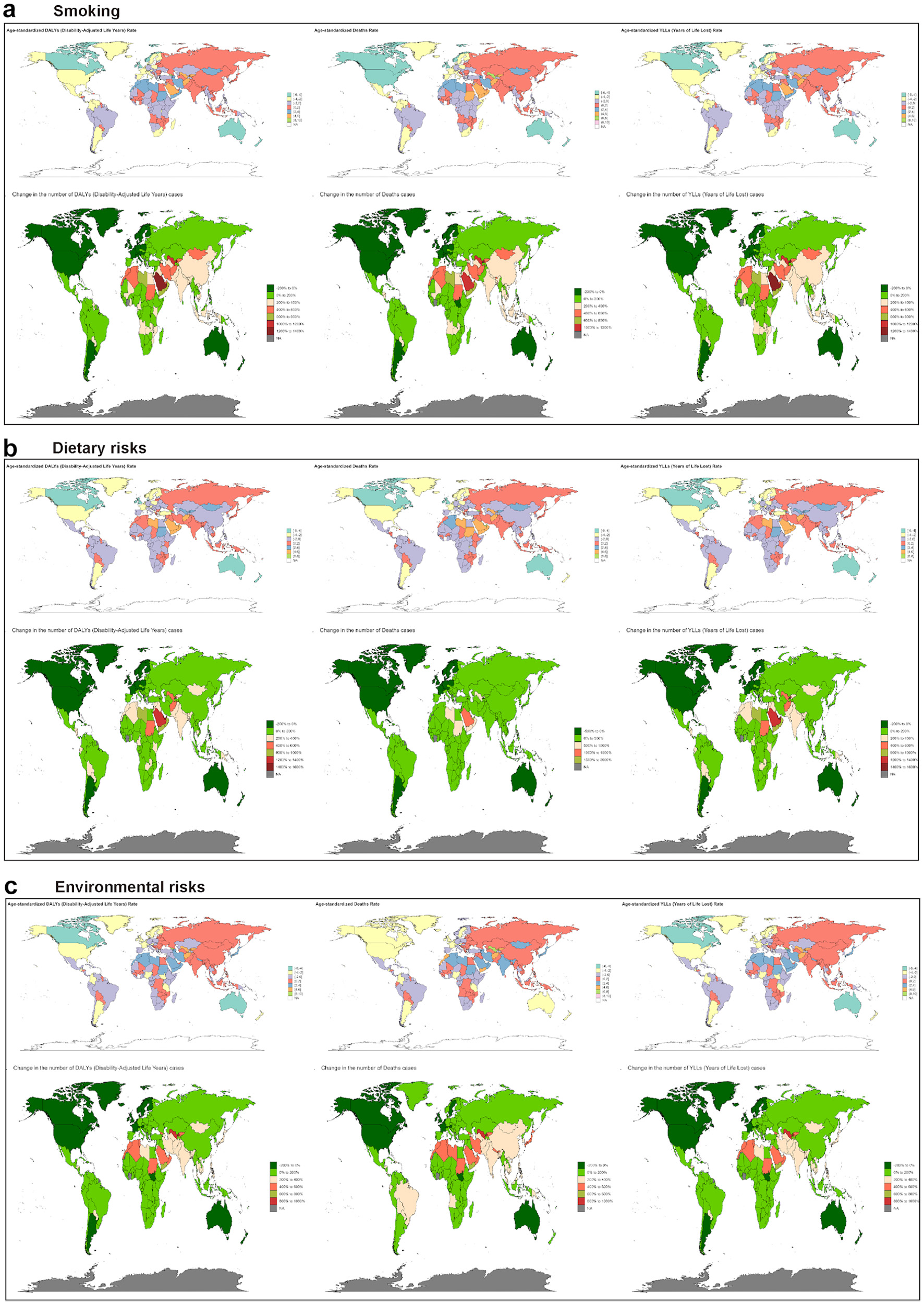 Click for large image | Figure 3. Country-level patterns of aortic aneurysm burden attributable to smoking (a), dietary risks (b), and environmental risks (c), 1990–2021. Within each risk category, the upper row presents geographical patterns of change in age-standardized rates, and the lower row presents percentage changes in absolute burden. Columns show DALYs, deaths, and years of life lost (YLLs), from left to right. DALYs: disability-adjusted life years. |
Age- and sex-specific patterns
The burden estimates for the three selected risk categories varied by age. In 2021, environmental risk-attributable age-specific mortality and DALY rates increased with age, peaking in the over-95 age group (Supplementary Material 4, cr.elmerpub.com). Absolute environmental risk-attributable DALYs peaked at 70–74 years, whereas deaths peaked at 75–79 years (Fig. 4e, f). These different peaks do not demonstrate a longer period of disability in exposed individuals; the AA DALY estimates quantify YLLs and weight deaths at younger ages more heavily [27]. From 1990 to 2021, smoking-attributable burden declined across all age groups, most steeply in the 75–79 group (EAPC for mortality rate, −3.04; 95% CI, −3.22 to −2.86) (Fig. 4a, b). The decline was less pronounced in the oldest-old (≥ 85 years), but the aggregate data do not identify the underlying cohort or exposure mechanisms. For dietary risks, age-specific declines were less steep (EAPC for mortality rate in the 75–79 group, −2.24) (Fig. 4c, d).
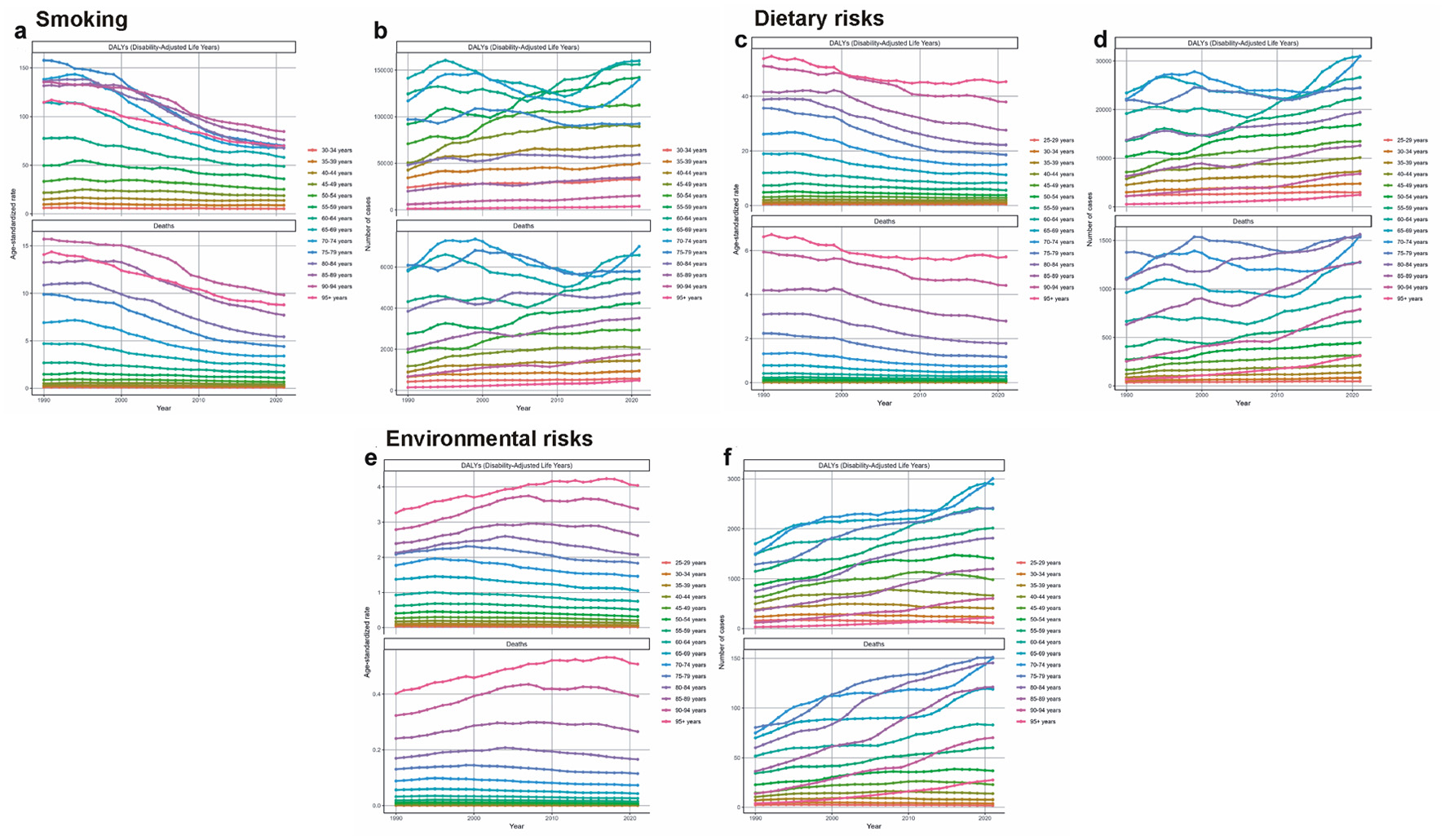 Click for large image | Figure 4. Age-specific DALY and mortality patterns of aortic aneurysm attributable to smoking (a, b), dietary risks (c, d), and environmental risks (e, f), 1990–2021. Panels a, c, and e show age-specific rates; panels b, d, and f show absolute DALYs and deaths. Within each panel, DALYs are shown above deaths, and colored lines represent age groups. DALYs: disability-adjusted life years. |
Males had higher estimated burden than females across the three selected risk categories. In 2021, the environmental risk-attributable ASMR for males was approximately twice that for females (0.02 vs. 0.01 per 100,000), and the ASDR was also higher (0.36 vs. 0.13 per 100,000) (Supplementary Material 5, cr.elmerpub.com). The male-to-female ratio of environmental risk-attributable ASMR (2:1) was smaller than the corresponding ratio for smoking (5.6:1). These descriptive differences do not identify occupational exposure, hormonal mechanisms, or interactions between smoking and environmental exposures.
Temporal trends differed by sex and risk category. For smoking, age-standardized DALY and mortality rates declined overall in both sexes, while absolute DALYs and deaths increased more markedly in males than in females (Fig. 5a, b). For dietary risks, age-standardized DALY and mortality rates also declined overall in both sexes, whereas absolute DALYs and deaths increased (Fig. 5c, d). For environmental risks, males showed a significant downward trend in ASMR (EAPC, −0.86; 95% CI, −1.03 to −0.69), whereas the estimate for females was compatible with a stable trend (EAPC, 0.13; 95% CI, −0.02 to 0.28) (Fig. 5e, f). These trends in estimated attributable burden do not establish sex-specific changes in environmental exposure or identify household air pollution as their explanation. In the age-stratified estimates, females exceeded males in environmental risk-attributable burden only in the over-95 age group (Supplementary Material 6, cr.elmerpub.com). This pattern does not constitute a formal test of an age–sex interaction or demonstrate differential biological susceptibility.
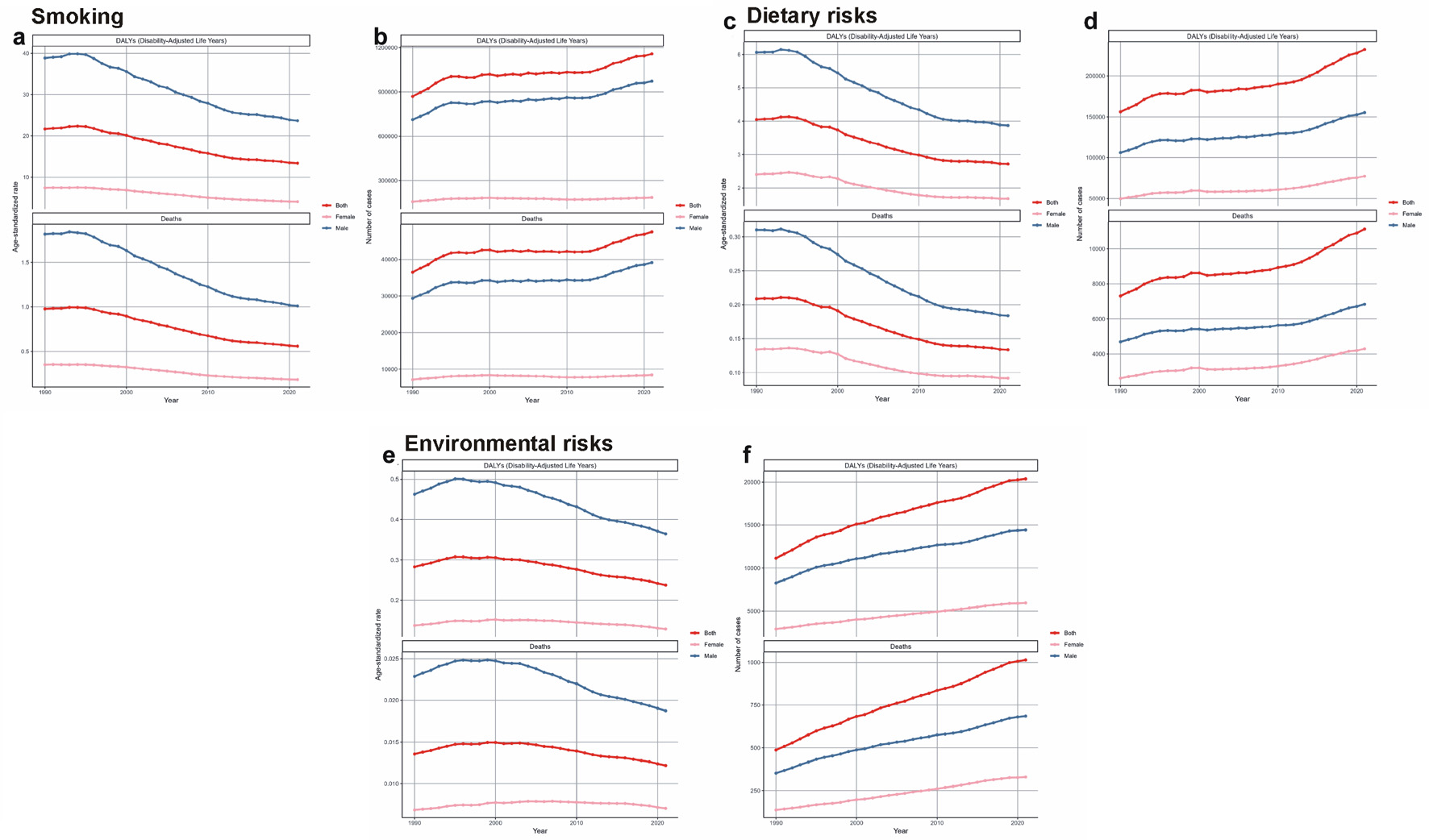 Click for large image | Figure 5. Sex-specific trends in aortic aneurysm burden attributable to smoking (a, b), dietary risks (c, d), and environmental risks (e, f), 1990–2021. Panels a, c, and e show age-standardized DALY and mortality rates; panels b, d, and f show absolute DALYs and deaths. Within each panel, DALYs are shown above deaths. Red, pink, and blue lines represent both sexes combined, females, and males, respectively. DALYs: disability-adjusted life years. |
Decomposition analysis
To quantify drivers of temporal changes in AA burden, we conducted a decomposition analysis. For smoking-attributable AA, population aging, population growth, and epidemiological changes contributed 134.84%, 142.02%, and −176.86% of the net increase in DALYs and 170.63%, 155.23%, and −225.86% of the net increase in deaths, respectively. For dietary risk-attributable AA, the corresponding contributions were 103.26%, 101.26%, and −104.52% for DALYs and 117.29%, 96.44%, and −113.74% for deaths, respectively. For environmental risk-attributable AA, the corresponding contributions were 66.64%, 65.42%, and −32.06% for DALYs and 64.32%, 53.60%, and −17.92% for deaths, respectively. These percentages represent contributions relative to the net change from 1990 to 2021 (Supplementary Material 7, cr.elmerpub.com).
Cross-country inequalities in AA from 1990 to 2021
We quantified multinational health disparities across population subgroups by measuring differentials in mortality and DALYs using the slope index of inequality (SII) and the concentration index. Specifically, smoking-attributable AA disparities widened substantially: DALY differentials between extreme-SDI nations increased from −0.88 (1990) to −5.93 (2021), while death differentials expanded from −0.04 to −0.21. Dietary risk-attributable disparities similarly increased, with DALY differentials rising from −0.50 to −1.61 and death differentials from −0.02 to −0.07. Environmentally attributable disparities showed DALY differential progression from −0.02 to −0.06, though death differentials remained stable at 0 throughout 1990–2021. Concentration index values consistently remained below 0.1 during this period (Supplementary Material 8, cr.elmerpub.com).
The prediction of disease burden for AA from 2022 to 2050
To inform future prevention strategies for AA, we projected disease burden through 2050 using ARIMA and ES models. For smoking-attributable AA, ARIMA modeling indicated annual increases in male absolute burden concurrent with declining ASR, while female burden remained stable; ES models showed consistent but less pronounced trends. For dietary and environmental risk-attributable AA, both models predicted rising absolute deaths and DALYs accompanied by declining ASR. These projections describe extrapolated burden trajectories and do not estimate the effects of future exposure reductions or preventive interventions (Fig. 6a–c).
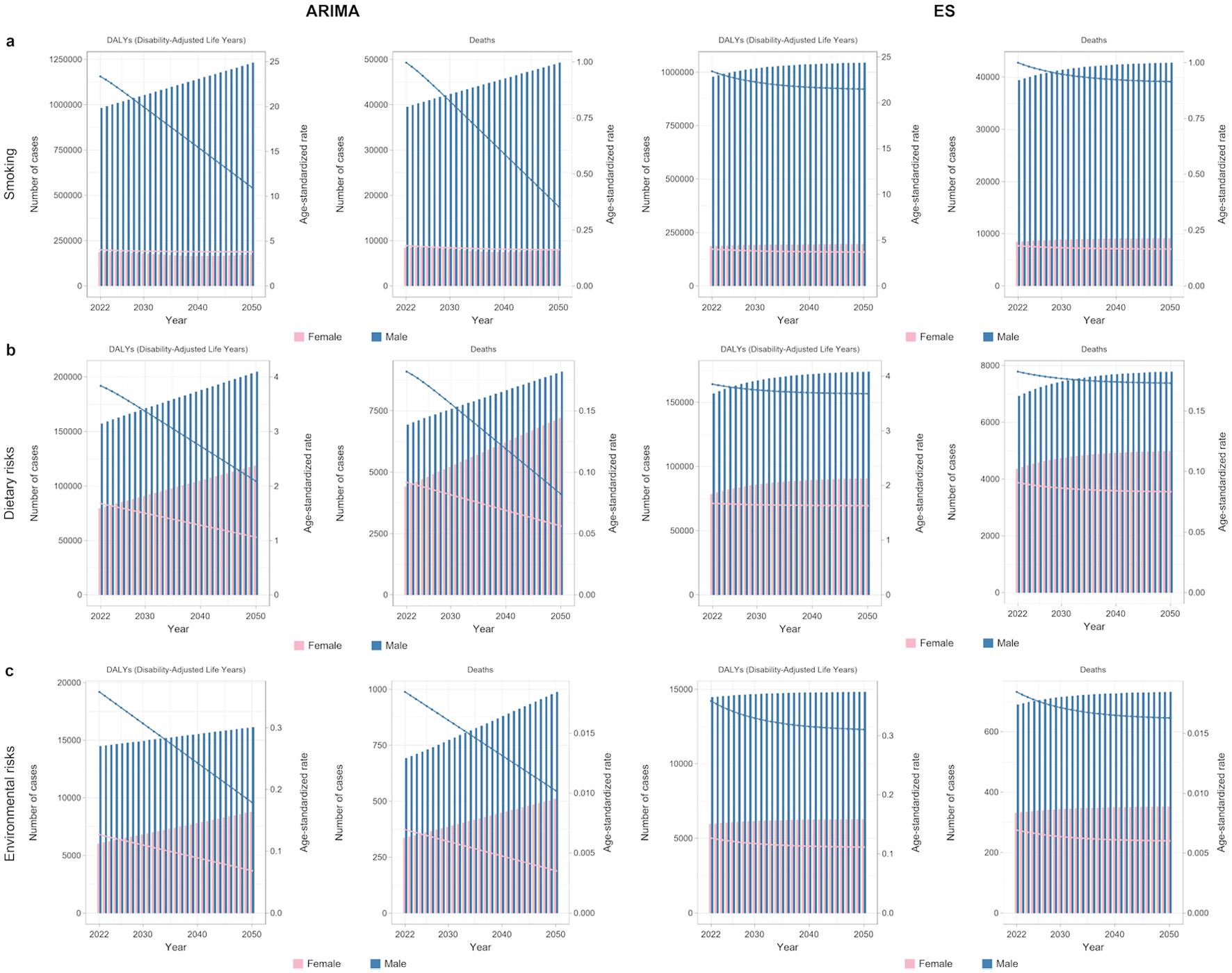 Click for large image | Figure 6. Prediction of DALY and mortality trends of aortic aneurysm attributable to smoking (a), dietary risks (b) and environmental risks (c) using ARIMA (left panel) and ES (right panel) model from 2022 to 2050. DALY: disability-adjusted life year; ARIMA: autoregressive integrated moving average. |
| Discussion | ▴Top |
In this global analysis based on the GBD 2021 study, we identified distinct epidemiological patterns in AA burden attributable to three selected risk categories: smoking, dietary risks, and environmental risks. Age-standardized burdens attributable to smoking and dietary risks declined substantially over the study period, whereas the environmental risk-attributable burden showed less favorable trends in several lower-SDI settings. These comparisons describe population-level patterns within the selected categories; they do not provide a comprehensive etiologic assessment or establish the relative importance of atherosclerosis compared with the exposures examined.
Atherosclerosis is an important consideration when interpreting these findings, particularly for AAA. In the prospective ARIC study, carotid atherosclerosis was associated with subsequent clinical AAA [30]. However, the Tromso study did not identify a consistent dose–response relationship between carotid atherosclerotic burden and abdominal aortic diameter, leaving uncertainty about whether atherosclerosis precedes aneurysm formation, develops alongside it, or occurs secondarily [31]. A large genome-wide association meta-analysis also implicated lipid metabolism, inflammation, and vascular remodeling in AAA susceptibility [32]. These findings support biological overlap and a possible contributory role, but evidence for lipid-related pathways does not by itself establish that atherosclerotic plaque burden independently causes aneurysm formation or progression. The independent causal contribution of atherosclerosis, as distinct from shared risk factors and genetic susceptibility, remains incompletely resolved. Moreover, atherosclerotic involvement differs across aortic segments; evidence relating to AAA should not be generalized without qualification to aortic root and ascending AAs [33].
The relative burden estimates reported here should consequently be interpreted within the selected GBD risk categories. A larger attributable burden depends on population exposure, the modeled risk–outcome relationship, and the underlying disease burden; it is not a direct measure of an exposure’s independent biological effect [7]. Atherosclerosis may also lie along pathways involving some of the exposures under study rather than represent a wholly separate, competing exposure. The absence of a separate atherosclerosis estimate in this analysis therefore does not imply that all atherosclerosis-related pathways are absent from the GBD estimates. Conversely, those estimates cannot identify how much AA burden operates through atherosclerosis or establish whether its contribution is greater or smaller than that of smoking, dietary risks, or environmental risks. Separate risk-attributable burdens should not be interpreted as mutually exclusive etiologic shares or summed to quantify an independent contribution of atherosclerosis.
Environmental risk-attributable estimates require particular caution. They reflect the exposure inputs, risk–outcome functions, mediation assumptions, and disease estimates in GBD; this secondary analysis cannot independently validate the causal relationships underlying that framework [7]. Several environmental burden estimates have wide UIs that include zero, so rankings based on point estimates should not be treated as precise evidence of differences between populations. The observed geographic, age, and sex patterns do not establish the effects of household air pollution, occupational exposure, or interactions with smoking. Similarly, extrapolated trends from ARIMA and ES models are not intervention scenarios and cannot quantify the benefit of reducing any specific pollutant. These results can identify patterns for further investigation, but pollutant-specific prevention claims require exposure-specific and individual-level evidence.
The contrasting temporal patterns observed between behavioral and environmental risks may partly reflect differences in exposure patterns, prevention, and healthcare. During recent decades, comprehensive tobacco control programs, dietary improvement initiatives, and advances in cardiovascular prevention may have contributed to reductions in the age-standardized burden attributable to smoking and dietary risks, particularly in high-income settings [34]. Nevertheless, increases in absolute deaths and DALYs indicate that population ageing and population growth continue to offset these epidemiological gains. In addition, the slower improvement observed in lower-SDI regions suggests that disparities in healthcare resources and preventive capacity remain important barriers to reducing AA burden [34]. The present aggregate analysis cannot isolate the effects of these interventions or determine the pathways responsible for the observed trends.
Considerable geographical heterogeneity was observed across SDI regions and countries. Smoking- and dietary-attributable burdens remained highest in many high-SDI regions, which may be consistent with historical smoking prevalence and long-term dietary patterns [35–37]. By contrast, lower-SDI regions experienced slower reductions or increasing burdens, potentially reflecting rapid urbanization, nutritional transition, limited healthcare accessibility, and unequal implementation of preventive policies [38, 39]. National socioeconomic development, healthcare systems, and tobacco control may also be relevant contextual factors [40–42]. These explanations remain hypotheses and were not tested by the present analysis.
Consistent with previous cardiovascular epidemiology, AA burden increased markedly with advancing age, highlighting ageing as a major determinant of future disease burden [43, 44]. Biological ageing is accompanied by progressive vascular degeneration, chronic inflammation, and metabolic alterations that may further increase susceptibility to aneurysm development, potentially involving diet-related metabolic pathways [45]. Men consistently experienced higher burden than women across most age groups, while sex-specific trends differed across risk categories. Differences in behavioral exposure, hormonal factors, healthcare utilization, and prevention may be relevant contextual explanations [46, 47]. These mechanisms cannot be distinguished using the aggregate burden estimates.
The decomposition analysis further revealed that aging, population growth, and epidemiological changes played significant roles in driving the temporal changes in AA burden. Our analysis showed that aging contributed to a substantial increase in DALYs and deaths, particularly in high-SDI regions, while epidemiological changes led to reductions in ASRs for smoking- and dietary risk-attributable AA. The epidemiological component is a residual change in rates and should not be equated with an independently measured change in environmental exposure or an intervention effect. This decomposition analysis is particularly useful for understanding how different factors contribute to the observed trends and can inform future health projections and interventions [48].
Cross-country inequalities analysis showed that disparities in AA burden widened between high- and low-SDI regions. This highlights the importance of addressing health inequalities in the fight against AA. Our results suggest that high-SDI regions, despite showing declines in ASRs, continue to bear a substantial share of the AA burden in absolute terms. On the other hand, low-SDI regions, particularly in Sub-Saharan Africa and parts of Asia, showed increasing burdens, particularly for dietary risk-attributable AA. These disparities underscore the need for targeted interventions in low-income countries, where access to healthcare and preventive services is limited. Our findings align with the growing body of literature on health inequalities and provide compelling evidence for the need to address these disparities in AA prevention strategies [49].
The prediction of future disease burden through 2050 suggests that smoking-related AA may continue to rise in absolute burden, particularly in males. This projection highlights the ongoing challenge of addressing smoking as a major risk factor for AA, despite the observed declines in ASR. Furthermore, the rising burden of AA attributable to dietary and environmental risks suggests a continuing need to examine prevention opportunities within these selected risk categories.
Limitations
A major limitation is that this analysis could not directly quantify atherosclerotic burden or evaluate the influences of genetic susceptibility, dietary exposure, and their potential interactions on that burden. The aggregate GBD estimates used here do not provide the linked individual-level plaque measurements, genetic information, and dietary data needed to examine these relationships. We therefore could not estimate the independent association of atherosclerosis with AA, distinguish effects mediated through atherosclerosis from other pathways, or compare its relative effect size with those of the selected exposures. This limitation does not establish that GBD estimates exclude every atherosclerosis-related pathway; it means that the contribution of atherosclerosis cannot be separately identified in our analysis. Accordingly, the reported ordering of attributable burdens is restricted to the three risk categories examined and should not be interpreted as a ranking of all causes of AA. Future longitudinal studies integrating individual-level atherosclerosis imaging, detailed dietary assessment, genetic data, and multi-omics measurements could help disentangle shared susceptibility, potential genetic–dietary interactions, and mediation, with analyses distinguishing relevant AA subtypes.
Additional limitations should also be considered. The accuracy of GBD estimates depends on the quality and completeness of underlying data, which vary across regions. Reporting gaps and diagnostic misclassification may affect estimates, particularly in settings with limited surveillance. The selected risk categories do not encompass all determinants of AA, and the aggregate national and regional estimates cannot resolve individual-level confounding or local heterogeneity. The risk definitions and attributable estimates are inherited from GBD, and potential exposure misclassification and uncertainty in the risk–outcome models constrain interpretation. Ecological comparisons cannot establish individual causal effects or identify specific pollution sources. This analysis also does not distinguish the contribution of atherosclerosis across aneurysm locations or etiologic subtypes. Finally, projections to 2050 extrapolate historical patterns and may not capture future changes in prevention, clinical care, or exposure. The findings should therefore be interpreted as model-based estimates of burden associated with selected risks rather than a complete account of AA pathogenesis.
Conclusions
The GBD estimates indicate persistent geographic and socioeconomic differences in AA burden attributable to the three selected risk categories. Less favorable environmental risk-attributable trends in some lower-SDI settings warrant further investigation and consideration in prevention planning. However, these results do not establish independent causal effects or determine the relative importance of atherosclerosis and other unmeasured etiologic pathways. Prevention priorities should therefore consider these population-level estimates alongside clinical, mechanistic, and individual-level epidemiological evidence.
| Supplementary Material | ▴Top |
Suppl 1. DALYs, ASDR in 2021 and EAPCs from 1990 to 2021 of AA attributed to smoking, dietary risks and environmental risks.
Suppl 2. Age-standardized (left panel) and number (right panel) of DALY and mortality of aortic aneurysm attributable to smoking (a), dietary risks (b) and environmental risks (c), by SDI in 2021.
Suppl 3. Age-standardized (left panel) and number (right panel) of DALY and mortality of aortic aneurysm attributable to smoking (a), dietary risks (b) and environmental risks (c), by GBD region in 2021.
Suppl 4. Age-specific rates (left) and absolute numbers (right) of DALYs and deaths from aortic aneurysm attributable to smoking (a), dietary risks (b), and environmental risks (c) in 2021.
Suppl 5. Age-standardized (left panel) and number (right panel) of DALY and mortality of aortic aneurysm attributable to smoking (a), dietary risks (b) and environmental risks (c), by sex in 2021.
Suppl 6. Absolute burden and age-specific rates of aortic aneurysm attributable to smoking (a), dietary risks (b), and environmental risks (c), by sex and age in 2021.
Suppl 7. Decomposition of changes in aortic aneurysm DALYs and deaths attributable to smoking, dietary risks, and environmental risks between 1990 and 2021.
Suppl 8. Cross-country inequalities in aortic aneurysm burden attributable to smoking (a), dietary risks (b), and environmental risks (c).
Acknowledgments
The authors would like to thank the staff of the Department of Cardiovascular Surgery, Fujian Medical University Union Hospital, Key Laboratory of Cardio-Thoracic Surgery (Fujian Medical University), for their support and cooperation during data collection. We also express our sincere gratitude to all the study participants for their time and willingness to take part in this study. We acknowledge the guidance and support received from the Xiamen Key Laboratory of Precision Diagnosis and Treatment for Panvascular Diseases during the course of this research.
Financial Disclosure
This work was supported by the Xiamen Healthcare Guidance Project (grant number 3502Z20254ZD1197), the Key Laboratory Foundation of Cardio-Thoracic Surgery (Fujian Medical University), Fujian Province University (grant number XHZDSYS202406), and the National Engineering Research Center of Science and Technology Information STI Digital Health Laboratory (grant number 2025STI203), all awarded to the first author, Quan Lin Yang.
Conflict of Interest
The authors declare that they have no competing interests.
Informed Consent
Not applicable.
Author Contributions
Conceptualization: QLY and SP; methodology, formal analysis, and investigation: BH; investigation (data analysis): YBZ, JHL, BXW, SYQ, and LMX; writing – original draft preparation: QLY and YBZ; writing –review and editing: BH; supervision: SP; funding acquisition: QLY. All authors have read and agreed to the published version of the manuscript. All authors have read and approved the final manuscript and agree to be accountable for all aspects of the work.
Data Availability
The data underlying this article are available at https://ghdx.healthdata.org/gbd-2021.
Abbreviations
AA: aortic aneurysm; AAA: abdominal aortic aneurysm; ARIMA: autoregressive integrated moving average; ASDR: age-standardized DALY rate; ASMR: age-standardized mortality rate; ASR: age-standardized rate; CI: confidence interval; CODEm: Cause of Death Ensemble modeling; DALY: disability-adjusted life year; DisMod-MR: DisMod-Meta Regression; EAPC: estimated annual percentage change; ES: exponential smoothing; GBD: Global Burden of Disease; IHME: Institute for Health Metrics and Evaluation; SDI: socio-demographic index; SII: slope index of inequality; UI: uncertainty interval; YLLs: years of life lost; YLDs: years lived with disability
| References | ▴Top |
- Siika A, Lindquist Liljeqvist M, Zommorodi S, Nilsson O, Andersson P, Gasser TC, Roy J et al. A large proportion of patients with small ruptured abdominal aortic aneurysms are women and have chronic obstructive pulmonary disease. PLoS One. 2019;14(5):e0216558.
doi pubmed - Wei L, Bu X, Wang X, Liu J, Ma A, Wang T. Global burden of aortic aneurysm and attributable risk factors from 1990 to 2017. Glob Heart. 2021;16(1):35.
doi pubmed - Mazzolai L, Teixido-Tura G, Lanzi S, Boc V, Bossone E, Brodmann M, Bura-Riviere A et al. 2024 ESC Guidelines for the management of peripheral arterial and aortic diseases. Eur Heart J. 2024;45(36):3538-3700.
doi pubmed - Quintana RA, Taylor WR. Cellular Mechanisms of Aortic Aneurysm Formation. Circ Res. 2019;124(4):607-618.
doi pubmed - Kazaleh M, Gioscia-Ryan R, Ailawadi G, Salmon M. Oxidative Stress and the Pathogenesis of Aortic Aneurysms. Biomedicines. 2023;12(1):3.
doi pubmed - GBD 2021 Diseases and Injuries Collaborators. Global incidence, prevalence, years lived with disability (YLDs), disability-adjusted life-years (DALYs), and healthy life expectancy (HALE) for 371 diseases and injuries in 204 countries and territories and 811 subnational locations, 1990-2021: a systematic analysis for the Global Burden of Disease Study 2021. Lancet. 2024;403(10440):2133-2161.
doi pubmed - GBD 2021 Risk Factors Collaborators. Global burden and strength of evidence for 88 risk factors in 204 countries and 811 subnational locations, 1990-2021: a systematic analysis for the Global Burden of Disease Study 2021. Lancet. 2024;403(10440):2162-2203.
doi pubmed - Hadzikadunic H, Sjaelland TB, Lindholt JS, Steffensen LB, Beck HC, Kavaliunaite E, Rasmussen LM, et al. Nicotine administration augments abdominal aortic aneurysm progression in rats. Biomedicines. 2023;11(5):1417.
doi pubmed - Norman PE, Curci JA. Understanding the effects of tobacco smoke on the pathogenesis of aortic aneurysm. Arterioscler Thromb Vasc Biol. 2013;33(7):1473-1477.
doi pubmed - Wang Z, You Y, Yin Z, Bao Q, Lei S, Yu J, Xie C et al. Burden of Aortic Aneurysm and Its Attributable Risk Factors from 1990 to 2019: An Analysis of the Global Burden of Disease Study 2019. Front Cardiovasc Med. 2022;9:901225.
doi pubmed - Institute for Health Metrics and Evaluation. GBD 2021 dietary risks-Level 2 risk [fact sheet]. https://www.healthdata.org/sites/default/files/disease_and_injury/gbd_2021/topic_pdf/risk/110.pdf. Accessed September 28, 2026.
- Johnson LS, Mente A, Joseph P, Conen D, Benz AP, McIntyre WF, Drake I, et al. Sodium intake and incident atrial fibrillation in individuals with vascular disease. JAMA Netw Open. 2024;7(7):e2421589.
doi pubmed - Chai W, Morimoto Y, Cooney RV, Franke AA, Shvetsov YB, Le Marchand L, Haiman CA, et al. Dietary red and processed meat intake and markers of adiposity and inflammation: the multiethnic cohort study. J Am Coll Nutr. 2017;36(5):378-385.
doi pubmed - Yusuf S, Joseph P, Rangarajan S, Islam S, Mente A, Hystad P, Brauer M, et al. Modifiable risk factors, cardiovascular disease, and mortality in 155 722 individuals from 21 high-income, middle-income, and low-income countries (PURE): a prospective cohort study. Lancet. 2020;395(10226):795-808.
doi pubmed - Ma Y, Li D, Cui F, Wang J, Tang L, Yang Y, Liu R, et al. Air pollutants, genetic susceptibility, and abdominal aortic aneurysm risk: a prospective study. Eur Heart J. 2024;45(12):1030-1039.
doi pubmed - Ming Y, Zhou X, Liu G, Abudupataer M, Zhu S, Xiang B, Yin X, et al. PM2.5 exposure exacerbates mice thoracic aortic aneurysm and dissection by inducing smooth muscle cell apoptosis via the MAPK pathway. Chemosphere. 2023;313:137500.
doi pubmed - Arbi S, Bester MJ, Pretorius L, Oberholzer HM. Adverse cardiovascular effects of exposure to cadmium and mercury alone and in combination on the cardiac tissue and aorta of Sprague-Dawley rats. J Environ Sci Health A Tox Hazard Subst Environ Eng. 2021;56(6):609-624.
doi pubmed - Huang HN, Li X, Peng Z, Liao YF, Li L, Nardocci AC, Ou CQ, et al. Mortality risk and burden of aortic aneurysm and dissection attributable to low temperatures: A nationwide case-crossover analysis in Brazil, a predominantly tropical country. Environ Int. 2024;190:108895.
doi pubmed - Munzel T, Daiber A, Engelmann N, Roosli M, Kuntic M, Banks JL. Noise causes cardiovascular disease: it's time to act. J Expo Sci Environ Epidemiol. 2025;35(1):24-33.
doi pubmed - Vaduganathan M, Mensah GA, Turco JV, Fuster V, Roth GA. The global burden of cardiovascular diseases and risk: a compass for future health. J Am Coll Cardiol. 2022;80(25):2361-2371.
doi pubmed - Foreman KJ, Lozano R, Lopez AD, Murray CJ. Modeling causes of death: an integrated approach using CODEm. Popul Health Metr. 2012;10:1.
doi pubmed - GBD 2017 Disease and Injury Incidence and Prevalence Collaborators. Global, regional, and national incidence, prevalence, and years lived with disability for 354 diseases and injuries for 195 countries and territories, 1990-2017: a systematic analysis for the Global Burden of Disease Study 2017. Lancet. 2018;392(10159):1789-1858.
doi pubmed - Collaborators GBDCoD. Global burden of 288 causes of death and life expectancy decomposition in 204 countries and territories and 811 subnational locations, 1990-2021: a systematic analysis for the Global Burden of Disease Study 2021. Lancet. 2024;403(10440):2100-2132.
doi pubmed - GBD 2019 Diseases and Injuries Collaborators. Global burden of 369 diseases and injuries in 204 countries and territories, 1990-2019: a systematic analysis for the Global Burden of Disease Study 2019. Lancet. 2020;396(10258):1204-1222.
doi pubmed - Collaborators GBDD. Global age-sex-specific mortality, life expectancy, and population estimates in 204 countries and territories and 811 subnational locations, 1950-2021, and the impact of the COVID-19 pandemic: a comprehensive demographic analysis for the Global Burden of Disease Study 2021. Lancet. 2024;403(10440):1989-2056.
doi pubmed - Institute for Health Metrics and Evaluation. GBD 2021 smoking-Level 3 risk [fact sheet]. https://www.healthdata.org/sites/default/files/disease_and_injury/gbd_2021/topic_pdf/risk/99.pdf. Accessed September 28, 2026.
- Institute for Health Metrics and Evaluation. GBD 2021 aortic aneurysm-Level 3 cause [fact sheet]. https://www.healthdata.org/sites/default/files/disease_and_injury/gbd_2021/topic_pdf/cause/501.pdf. Accessed September 28, 2026.
- Golabi P, Paik JM, AlQahtani S, Younossi Y, Tuncer G, Younossi ZM. Burden of non-alcoholic fatty liver disease in Asia, the Middle East and North Africa: Data from Global Burden of Disease 2009-2019. J Hepatol. 2021;75(4):795-809.
doi pubmed - Liu Z, Jiang Y, Yuan H, Fang Q, Cai N, Suo C, Jin L, et al. The trends in incidence of primary liver cancer caused by specific etiologies: results from the Global Burden of Disease Study 2016 and implications for liver cancer prevention. J Hepatol. 2019;70(4):674-683.
doi pubmed - Yao L, Folsom AR, Alonso A, Lutsey PL, Pankow JS, Guan W, Cheng S, et al. Association of carotid atherosclerosis and stiffness with abdominal aortic aneurysm: The atherosclerosis risk in communities (ARIC) study. Atherosclerosis. 2018;270:110-116.
doi pubmed - Johnsen SH, Forsdahl SH, Singh K, Jacobsen BK. Atherosclerosis in abdominal aortic aneurysms: a causal event or a process running in parallel? The Tromso study. Arterioscler Thromb Vasc Biol. 2010;30(6):1263-1268.
doi pubmed - Roychowdhury T, Klarin D, Levin MG, Spin JM, Rhee YH, Deng A, Headley CA, et al. Genome-wide association meta-analysis identifies risk loci for abdominal aortic aneurysm and highlights PCSK9 as a therapeutic target. Nat Genet. 2023;55(11):1831-1842.
doi pubmed - Isselbacher EM, Preventza O, Hamilton Black J, 3rd, Augoustides JG, Beck AW, Bolen MA, Braverman AC, et al. 2022 ACC/AHA guideline for the diagnosis and management of aortic disease: a report of the American Heart Association/American College of Cardiology Joint Committee on Clinical Practice Guidelines. Circulation. 2022;146(24):e334-e482.
doi pubmed - Visseren FLJ, Mach F, Smulders YM, Carballo D, Koskinas KC, Back M, Benetos A et al. 2021 ESC Guidelines on cardiovascular disease prevention in clinical practice. Eur Heart J. 2021;42(34):3227-3337.
doi pubmed - Wilcox NS, Amit U, Reibel JB, Berlin E, Howell K, Ky B. Cardiovascular disease and cancer: shared risk factors and mechanisms. Nat Rev Cardiol. 2024;21(9):617-631.
doi pubmed - Graham IM. Estimating risk of cardiovascular disease in Eastern Europe. Eur Heart J. 2020;41(35):3334-3335.
doi pubmed - Joshy G, Soga K, Thurber KA, Egger S, Weber MF, Sarich P, Welsh J, et al. Relationship of tobacco smoking to cause-specific mortality: contemporary estimates from Australia. BMC Med. 2025;23(1):115.
doi pubmed - Yusuf S, Rangarajan S, Teo K, Islam S, Li W, Liu L, Bo J et al. Cardiovascular risk and events in 17 low-, middle-, and high-income countries. N Engl J Med. 2014;371(9):818-827.
doi pubmed - Roth GA, Mensah GA, Johnson CO, Addolorato G, Ammirati E, Baddour LM, Barengo NC, et al. Global burden of cardiovascular diseases and risk factors, 1990-2019: update from the GBD 2019 study. J Am Coll Cardiol. 2020;76(25):2982-3021.
doi pubmed - Rosengren A, Smyth A, Rangarajan S, Ramasundarahettige C, Bangdiwala SI, AlHabib KF, Avezum A et al. Socioeconomic status and risk of cardiovascular disease in 20 low-income, middle-income, and high-income countries: the Prospective Urban Rural Epidemiologic (PURE) study. Lancet Glob Health. 2019;7(6):e748-e760.
doi pubmed - Gravely S, Giovino GA, Craig L, Commar A, D'Espaignet ET, Schotte K, Fong GT. Implementation of key demand-reduction measures of the WHO Framework Convention on Tobacco Control and change in smoking prevalence in 126 countries: an association study. Lancet Public Health. 2017;2(4):e166-e174.
doi pubmed - Moller AL, Andersson C. Importance of smoking cessation for cardiovascular risk reduction. Eur Heart J. 2021;42(40):4154-4156.
doi pubmed - Tyrrell DJ, Chen J, Li BY, Wood SC, Rosebury-Smith W, Remmer HA, Jiang L, et al. Aging alters the aortic proteome in health and thoracic aortic aneurysm. Arterioscler Thromb Vasc Biol. 2022;42(8):1060-1076.
doi pubmed - Wang MS, Deng JW, Geng WY, Zheng R, Xu HL, Dong Y, Huang WD, et al. Temporal trend and attributable risk factors of cardiovascular disease burden for adults 55 years and older in 204 countries/territories from 1990 to 2021: an analysis for the Global Burden of Disease Study 2021. Eur J Prev Cardiol. 2025;32(7):539-552.
doi pubmed - Fontana L. Interventions to promote cardiometabolic health and slow cardiovascular ageing. Nat Rev Cardiol. 2018;15(9):566-577.
doi pubmed - Betai D, Ahmed AS, Saxena P, Rashid H, Patel H, Shahzadi A, Mowo-Wale AG, et al. Gender disparities in cardiovascular disease and their management: a review. Cureus. 2024;16(5):e59663.
doi pubmed - Sandek A, Hasenfuss G. [Gender-specific differences in cardiology]. Inn Med (Heidelb). 2023;64(8):727-735.
doi pubmed - Li Y, Cao GY, Jing WZ, Liu J, Liu M. Global trends and regional differences in incidence and mortality of cardiovascular disease, 1990-2019: findings from 2019 global burden of disease study. Eur J Prev Cardiol. 2023;30(3):276-286.
doi pubmed - Deng P, Fu Y, Chen M, Wang D, Si L. Temporal trends in inequalities of the burden of cardiovascular disease across 186 countries and territories. Int J Equity Health. 2023;22(1):164.
doi pubmed
This article is distributed under the terms of the Creative Commons Attribution 4.0 International License (CC BY 4.0), which permits unrestricted use, distribution, and reproduction in any medium, including commercial use, provided the original work is properly cited.
Cardiology Research is published by Elmer Press Inc.