

Total Regurgitant Fraction to Predict Aortic Valve Surgery in Patients With Concomitant Aortic and Mitral Regurgitation
DOI:
https://doi.org/10.14740/cr2068Keywords:
Aortic regurgitation, Mitral regurgitation, Cardiac magnetic resonance, Total regurgitation fractionAbstract
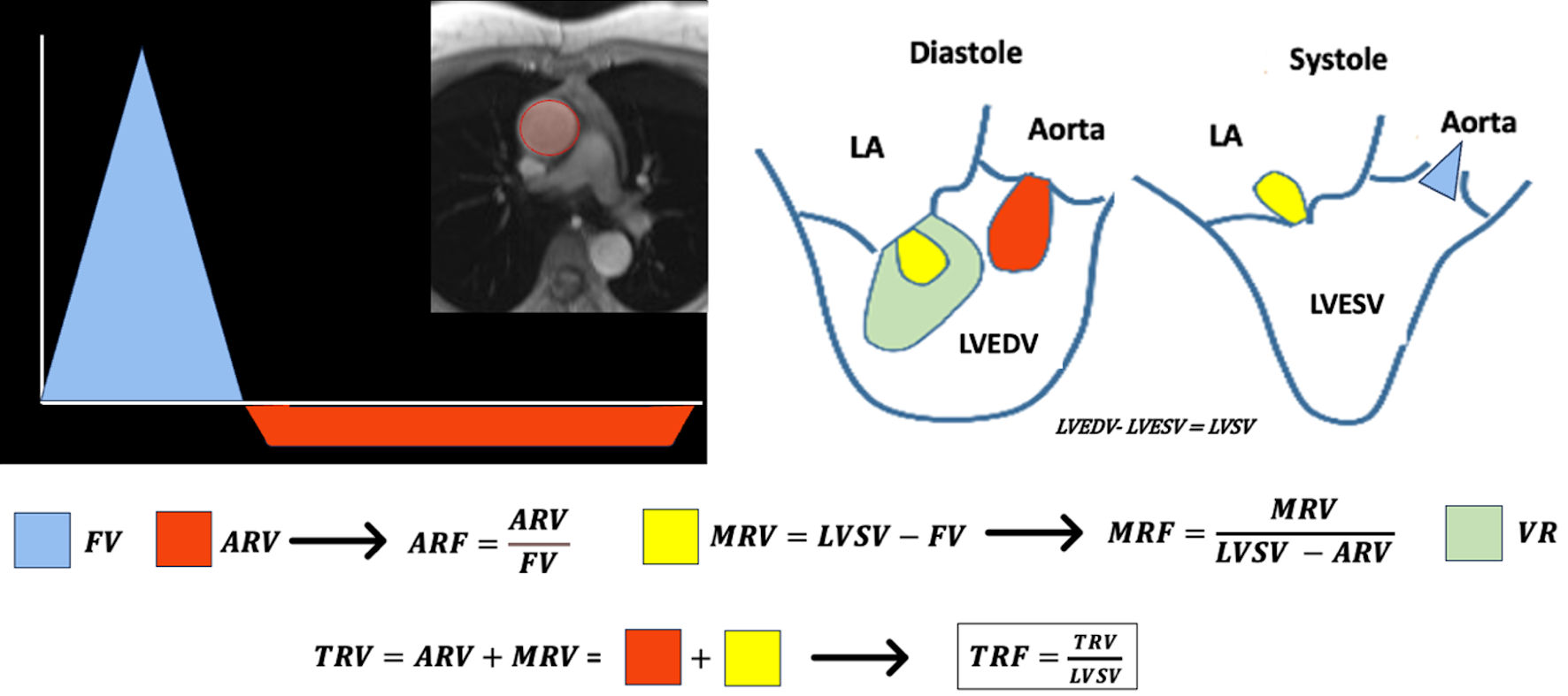
Background: Concomitant aortic and mitral regurgitation (CAMR) is associated with poorer outcome compared with isolated aortic regurgitation (AR). Current prognostic assessment of AR does not include the magnitude of mitral regurgitation (MR). Cardiac magnetic resonance (CMR) can integrate volumetric data to obtain a novel combined parameter, total regurgitant fraction (TRF), which could have the potential ability to measure the combined effects of AR and MR on left ventricle (LV) overload. The aim of our study was to explore the usefulness of TRF in predicting the future need of aortic valve surgery in patients with CAMR.
Methods and Results: Patients with CAMR and prior CMR studies were retrospectively recruited. A total of 45 patients were included, of whom 10 (22%) developed surgery indications. At the median follow-up time point (3.2 years), survival without surgery indication was 95% in the group with TRF < 40% compared to 90% in the group with aortic regurgitant fraction (ARF) < 29%. In contrast, 67% of patients with TRF ≥ 40% developed surgery indications after 3.2 years compared to 55% of patients with ARF ≥ 29%. In the multivariate analysis, the model including binary TRF had the highest hazard ratio of 13.846 (2.822 to 67.939, P = 0.001).
Conclusions: TRF is a promising CMR parameter that could improve the prediction of the need for surgery in patients with CAMR. Further studies with larger populations should be performed to confirm these findings.
Published
Issue
Section
License
Copyright (c) 2025 The authors

This work is licensed under a Creative Commons Attribution-NonCommercial 4.0 International License.