

Prognostic Value of Serum Albumin in Elderly Cardiovascular Disease Management
DOI:
https://doi.org/10.14740/cr2286Keywords:
Serum albumin, Prognosis, Cardiovascular disease, Hypoalbuminemia, ElderlyAbstract
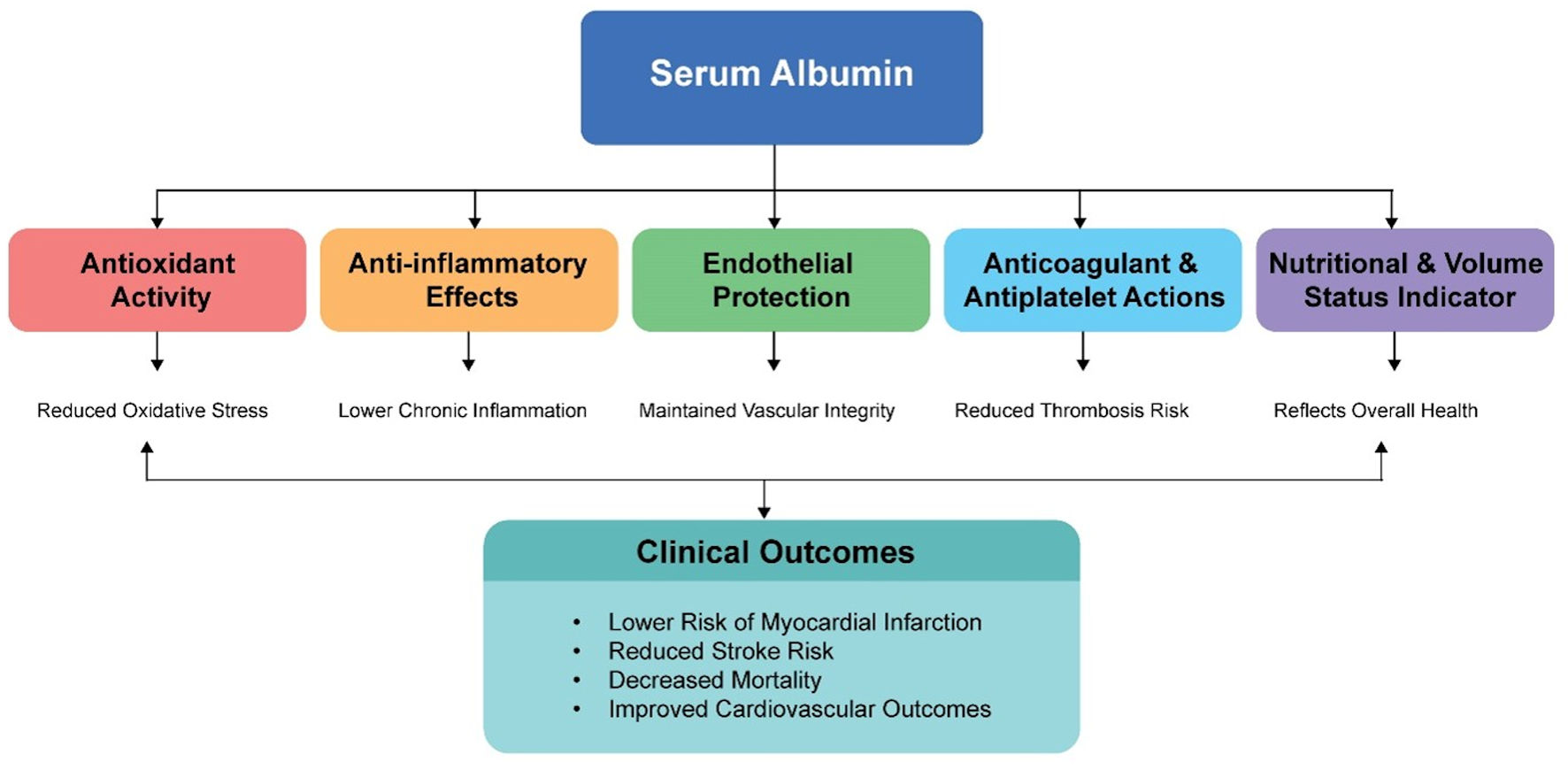
Cardiovascular disease (CVD) is the leading cause of morbidity and mortality worldwide and represents a major contributor to disability and poor health among elderly individuals, particularly those aged ≥ 65 years. Age-related physiological changes, endothelial dysfunction, inflammation, and oxidative stress play critical roles in the development and progression of CVD. Identifying reliable prognostic biomarkers is therefore essential to improve risk stratification and clinical management in this vulnerable population. Serum albumin (SA), the most abundant plasma protein, has emerged as a potential prognostic marker in elderly patients with CVD. Accumulating evidence from observational studies indicates that hypoalbuminemia is associated with increased all-cause mortality across a wide spectrum of CVDs, including coronary artery disease, heart failure, hypertension, atrial fibrillation, stroke, peripheral artery disease, and in patients undergoing various cardiovascular interventions. Importantly, low SA levels have been shown to remain an independent prognostic marker of adverse outcomes in observational studies after adjustment for confounding factors, such as malnutrition, inflammation, and comorbid conditions, although these associations may partly reflect underlying disease burden and other clinical factors. Proposed mechanisms linking hypoalbuminemia to poor outcomes include impaired antioxidant capacity, increased inflammation, endothelial dysfunction, and altered fluid balance. This review also highlights substantial heterogeneity in SA threshold values reported across studies, which may limit its standardized application in clinical practice. Although albumin supplementation has been suggested as a potential therapeutic strategy, current evidence regarding its clinical benefit remains inconclusive. SA may provide additional prognostic information in elderly patients with CVD and may support improved risk stratification across diverse clinical settings. At present, management strategies should prioritize identifying and addressing the underlying causes of hypoalbuminemia rather than routine albumin supplementation. Further well-designed studies are needed to establish standardized SA cut-off values and to clarify its role in guiding clinical decision-making in elderly cardiovascular populations.
Published
Issue
Section
License
Copyright (c) 2026 The authors

This work is licensed under a Creative Commons Attribution 4.0 International License.