

Cardiovascular Autonomic Dysfunction in Cancer Therapy: Clinical Manifestations and Management
DOI:
https://doi.org/10.14740/cr2242Keywords:
Cardiovascular autonomic dysfunction, Cardio-oncology, Heart rate variability, Orthostatic hypotension, Sinus tachycardia, Mindfulness, Exercise, YogaAbstract
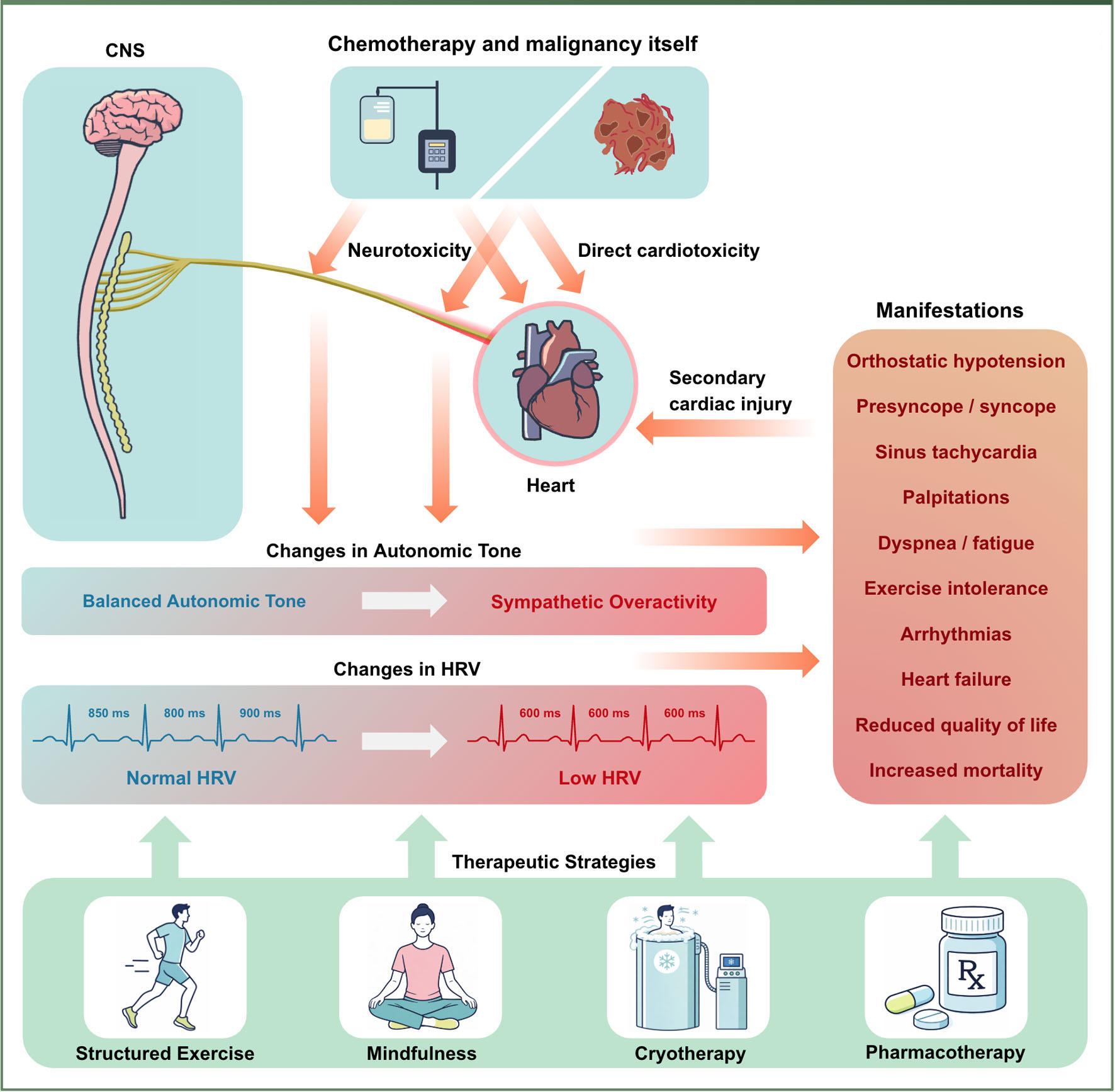
Cardiovascular autonomic dysfunction is an underrecognized manifestation of cancer therapy–related cardiotoxicity with important clinical implications. Disruption of autonomic regulation during chemotherapy most commonly manifests as orthostatic hypotension, inappropriate sinus tachycardia, and reduced heart rate variability, often occurring in the absence of overt structural heart disease. These abnormalities may contribute to symptom burden, impaired functional capacity, and increased cardiovascular risk in patients undergoing cancer treatment. Emerging data indicate that autonomic dysfunction in this setting may be modifiable. Among available interventions, structured exercise programs demonstrate the strongest and most consistent improvements in autonomic indices, alongside established benefits in functional capacity, fatigue, and quality of life. Relaxation and mindfulness-based interventions, including yoga, offer low-risk adjunctive benefits, whereas cryotherapy remains exploratory. Pharmacologic therapies play a symptom-directed role, particularly for orthostatic hypotension, but are often constrained by comorbid cardiovascular disease and limited oncology-specific evidence. This review evaluates current evidence on the clinical manifestations and therapeutic strategies for chemotherapy-associated cardiovascular autonomic dysfunction, highlighting opportunities to improve patient-centered outcomes in cardio-oncology care.
Published
Issue
Section
License
Copyright (c) 2026 The authors

This work is licensed under a Creative Commons Attribution 4.0 International License.