

Clinically Actionable Prevention and Management of Major Complications During Durable Left Ventricular Assist Device Support: A Contemporary Narrative Review
DOI:
https://doi.org/10.14740/cr2283Keywords:
Durable left ventricular assist device, Advanced heart failure, Right heart failure, Hemocompatibility, Bleeding, Multidisciplinary follow-upAbstract
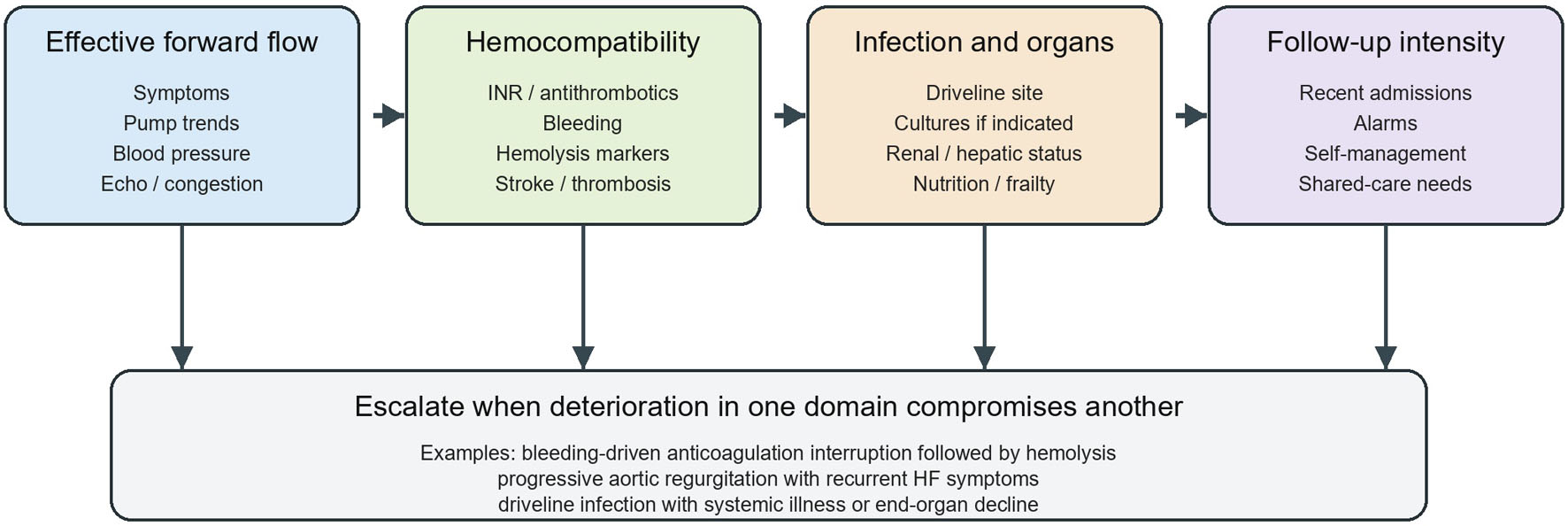
Durable left ventricular assist devices (LVADs) have become an established therapy for selected patients with advanced heart failure as bridge-to-transplant or destination therapy. Despite major progress in continuous-flow pump design and perioperative care, long-term benefit remains constrained by a recurrent burden of right heart failure, aortic regurgitation, pump thrombosis, stroke, bleeding, infection, and end-organ dysfunction. Because these events often arise from the interaction of altered hemodynamics, hemocompatibility-related injury, chronic antithrombotic exposure, and the practical complexity of longitudinal device care, a complication-centered management framework is clinically useful. This contemporary narrative review focuses on actionable prevention, surveillance, and treatment strategies for the major complications encountered during durable LVAD support. Rather than providing a broad device-oriented overview, we emphasize clinically relevant decision points across the perioperative and long-term course, including right ventricular protection, antithrombotic balance, structured monitoring for aortic regurgitation and hemolysis, prevention of driveline infection, and multidisciplinary outpatient follow-up. By organizing current evidence around practical management pathways, this review aims to support earlier recognition of adverse events and more durable long-term support.
Published
Issue
Section
License
Copyright (c) 2026 The authors

This work is licensed under a Creative Commons Attribution 4.0 International License.