

Septal Reduction Therapy: Thinking Beyond the Conventional
DOI:
https://doi.org/10.14740/cr2332Keywords:
Obstructive hypertrophic cardiomyopathy, Alcohol septal ablation, Ethylene-vinyl alcohol copolymer, Ablation of marginal branch, Septal reduction therapyAbstract
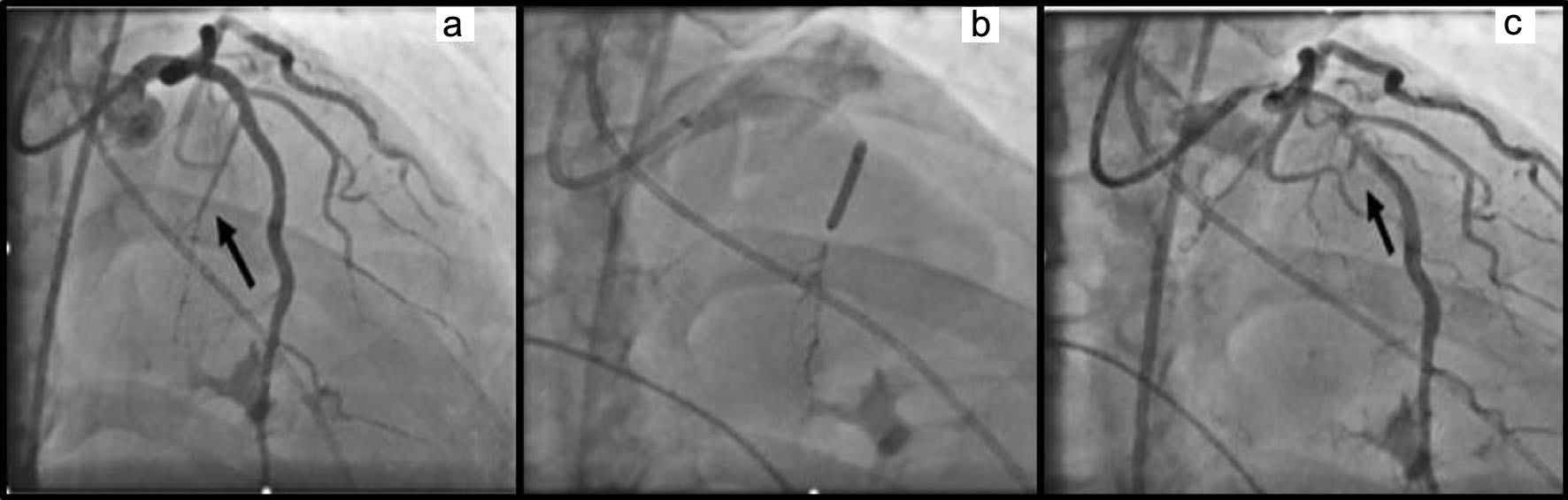
For patients with obstructive hypertrophic cardiomyopathy who are refractory to medical treatment, the surgical myectomy is the treatment of choice, but for some patients, alcohol septal ablation (ASA) is an alternative. In the following case report, we described a patient that underwent ASA, but during the follow-up, the gradient came back. This patient did not have septal branches from left anterior descending artery; therefore, she underwent ablation of a marginal branch of the left circumflex artery using an ethylene-vinyl alcohol copolymer guided by evaluation of the invasive gradient (echocardiogram was not performed during the procedure). One year later, the patient presented with refractory symptoms, and color Doppler echocardiography revealed a mean resting left ventricle outflow tract (LVOT) gradient of 72 mm Hg, a basal septum thickness of 21 mm, and a mid- and apical-septal thickness of 10 mm. Coronary angiography showed a pattern similar to that observed at the end of the marginal branch occlusion procedure. A transcatheter treatment attempt was proposed to identify the vessel supplying the basal septum for potential ablation; however, the patient opted for surgical myomectomy, which was performed successfully and without complications. She was discharged on the fifth day of hospitalization. Based on this case, we conclude that septal ablation should not be performed without an echocardiographic assessment during the procedure, other branches than the septal branches may supply the interventricular septum (if ablation of these branches is performed, it must be as selective as possible), and the reduction of the invasive LVOT gradient should not be used as the sole criterion for deciding which branch to occlude.
Published
Issue
Section
License
Copyright (c) 2026 The authors

This work is licensed under a Creative Commons Attribution 4.0 International License.