

Personalized Prevention of Cardiovascular Diseases Through Measurement of Plaque Burden in the Carotid Artery
DOI:
https://doi.org/10.14740/cr2325Keywords:
Personalized medicine, Atherosclerosis, Cardiovascular risk, Carotid ultrasoundAbstract
Background: This study provides an overview of the results of carotid screening for the prevention of cardiovascular disease.
Methods: Between 2009 and 2026, 11,540 individuals, 45% of whom were women, aged 20–65 years without clinical signs of cardiovascular disease, underwent carotid ultrasound examinations. Over 8,800 follow-up examinations were also performed. The total plaque area (TPA) and maximum plaque thickness were measured.
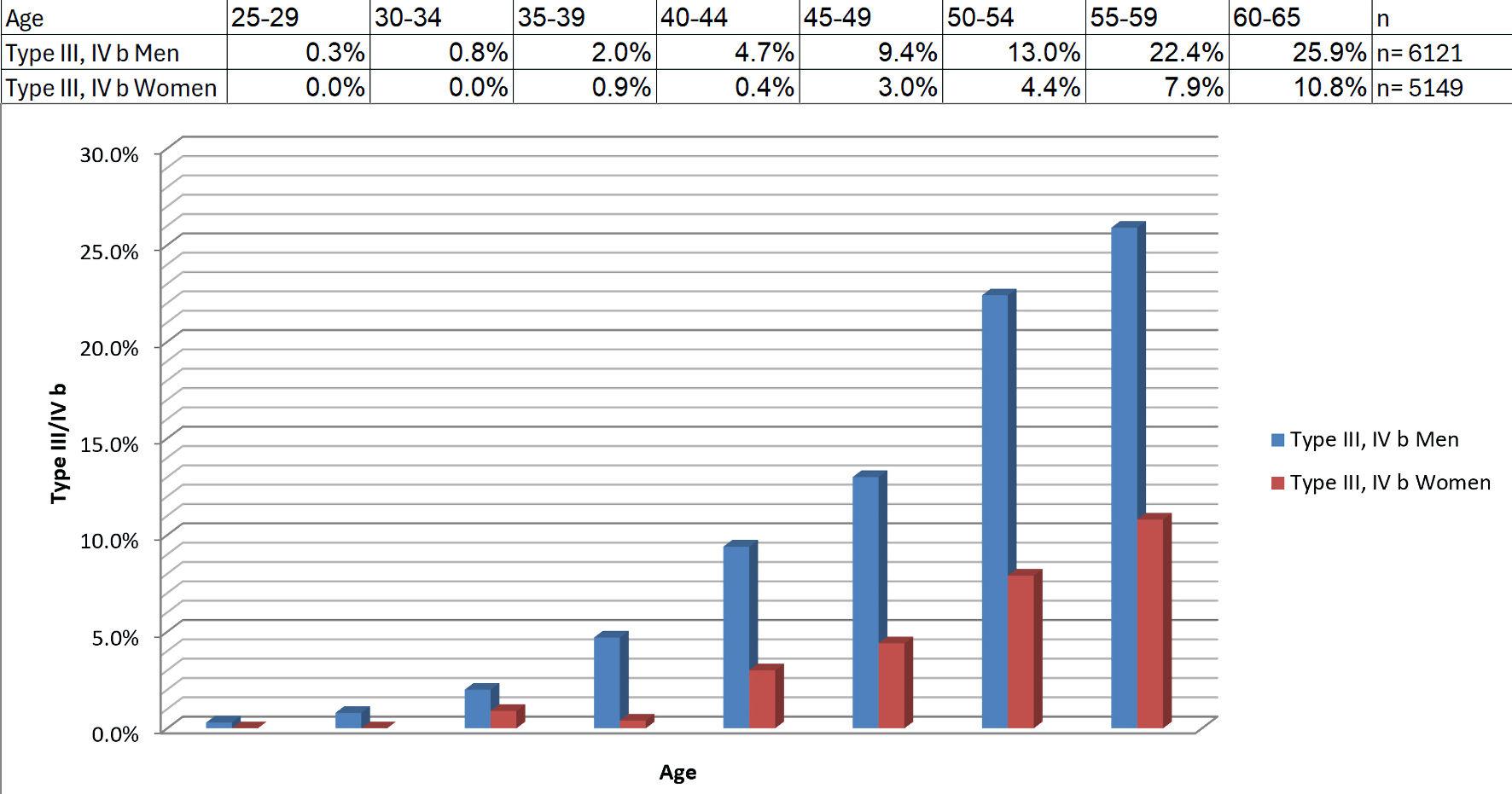
Results: TPA was presented as percentile curves according to age and sex. In a second cohort, age-related TPA thresholds for coronary stenosis ≥ 50% were determined. Advanced atherosclerosis (type III/IVb) is associated with a high risk of cardiovascular disease. Early treatment with statins improves the prognosis of these patients. The individual course of the disease with rapid progression of plaque burden could not be predicted based on classic risk factors. Of 75 patients with advanced atherosclerosis who suffered a myocardial infarction or ischemic stroke, 35% had a low PROCAM risk (< 10%) and only 27% had a high PROCAM risk. Mortality (from any cause) was significantly lower in men treated with statins.
Conclusions: Measuring plaque burden in the carotid artery allows for a good estimation of an individual’s risk of a cardiovascular event. In this non-randomized observational study, statin treatment significantly improved the prognosis in subjects with advanced carotid artery atherosclerosis (type III-IVb findings on ultrasound).
Published
Issue
Section
License
Copyright (c) 2026 The authors

This work is licensed under a Creative Commons Attribution 4.0 International License.