

Changes in Lipoprotein Fractions and Lipoprotein-Associated Alpha-Tocopherol After Sleeve Gastrectomy in Patients With Severe Obesity
DOI:
https://doi.org/10.14740/cr2244Keywords:
Obesity, Lipoprotein, Sleeve gastrectomyAbstract
Background: Sleeve gastrectomy (SG) improves obesity-related metabolic abnormalities, including dyslipidemia. However, postoperative changes in individual lipoprotein fractions and lipoprotein-associated antioxidants remain incompletely understood. This exploratory study aimed to characterize changes in serum lipoprotein fraction profiles after SG in Japanese patients with severe obesity using anion-exchange high-performance liquid chromatography (AEX-HPLC).
Methods: Patients who underwent SG at Ohama Daiichi Hospital between July and December 2020 were enrolled. Clinical data and serum samples were obtained before and after surgery. Serum low-density lipoprotein cholesterol (LDL-C), high-density lipoprotein cholesterol (HDL-C), and triglycerides (TGs) were measured by enzymatic assays, and small dense LDL-C (sdLDL-C) was estimated using Sampson’s equation. Lipoprotein fractions were evaluated by AEX-HPLC. α-tocopherol concentrations in HDL, LDL, and very low-density lipoprotein (VLDL) fractions were measured by reverse-phase high-performance liquid chromatography. Overall changes over time were assessed using the Friedman test, followed by post hoc Wilcoxon signed-rank tests with Benjamini-Hochberg false discovery rate adjustment.
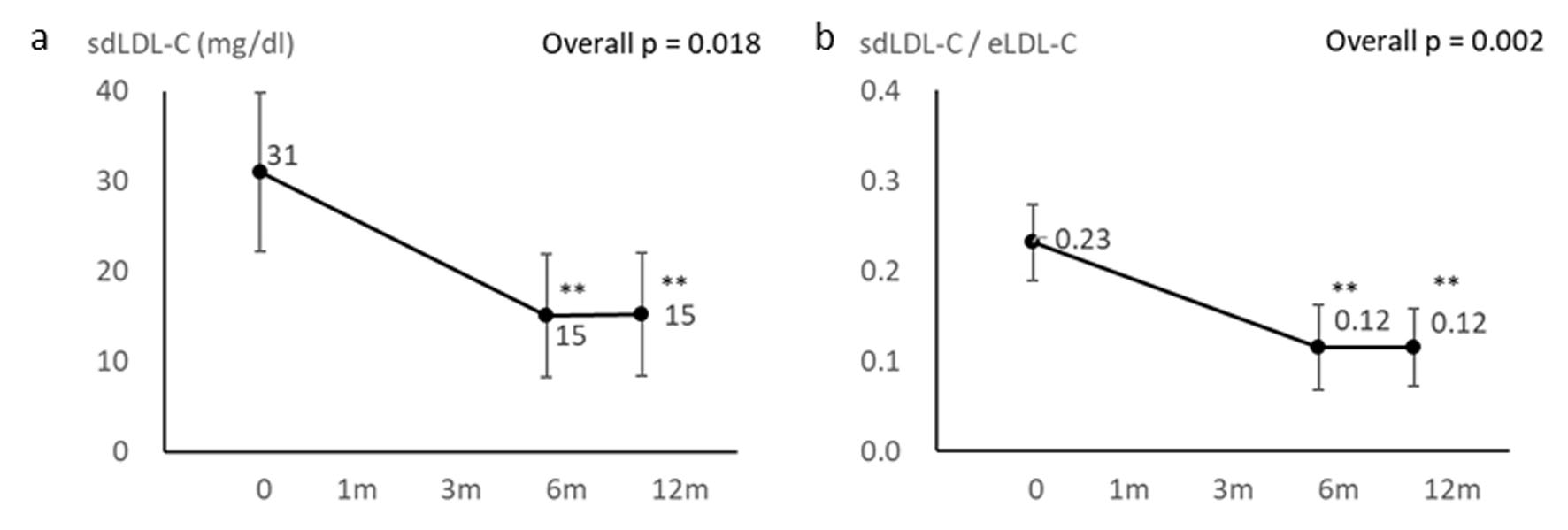
Results: Of 20 patients who underwent SG, 12 were analyzed after excluding eight with inadequate stored serum quality. Mean age and body mass index were 45.3 ± 10.5 years and 43.4 ± 5.9 kg/m2, respectively. SG significantly reduced body weight, hemoglobin A1c, and enzymatically measured TG, while HDL-C increased significantly. No significant changes were observed in LDL-C or non-HDL-C. Estimated sdLDL-C levels and the sdLDL-C/LDL-C ratio decreased significantly after SG. AEX-HPLC revealed significant increases in HDL and LDL fractions and a significant decrease in the VLDL fraction. α-Tocopherol content in HDL and LDL fractions increased significantly after SG, whereas no significant changes were observed in α-tocopherol-LDL/LDL or α-tocopherol-HDL/HDL. In contrast, α-tocopherol-VLDL/VLDL increased significantly after SG.
Conclusions: SG was associated with improvements in body weight and conventional lipid parameters, including reduced TG and increased HDL-C, together with a reduction in estimated sdLDL-C, in Japanese patients with severe obesity. AEX-HPLC revealed complex postoperative changes in lipoprotein fractions, including reduced VLDL and increased HDL and LDL fractions. Lipoprotein-associated α-tocopherol distribution also changed after SG; however, the clinical significance of these changes requires further investigation.
Published
Issue
Section
License
Copyright (c) 2026 The authors

This work is licensed under a Creative Commons Attribution 4.0 International License.