

Comparative Efficacy and Safety of P2Y12 Inhibitors in Patients With Diabetes Mellitus and Coronary Artery Disease: A Systematic Review and Network Meta-Analysis of Randomized Controlled Trials
DOI:
https://doi.org/10.14740/cr2254Keywords:
Diabetes mellitus, Coronary artery disease, Prasugrel, TicagrelorAbstract
Background: Patients with diabetes mellitus (DM) and coronary artery disease (CAD) are at high risk of thrombotic events and exhibit reduced responsiveness to conventional antiplatelet therapy. While newer P2Y12 inhibitors such as ticagrelor and prasugrel provide more potent platelet inhibition, the optimal therapeutic strategy in this population remains uncertain.
Methods: A systematic review and network meta-analysis of randomized controlled trials (RCTs) was conducted in accordance with PRISMA guidelines. Electronic databases were searched through April 2026 to identify RCTs comparing clopidogrel, prasugrel, ticagrelor, and placebo in patients with DM and CAD receiving background aspirin therapy. Random-effects models were used to estimate pooled risk ratios (RRs) with 95% confidence intervals (CIs). The primary efficacy outcome was major adverse cardiovascular events (MACEs), while safety outcomes included major bleeding.
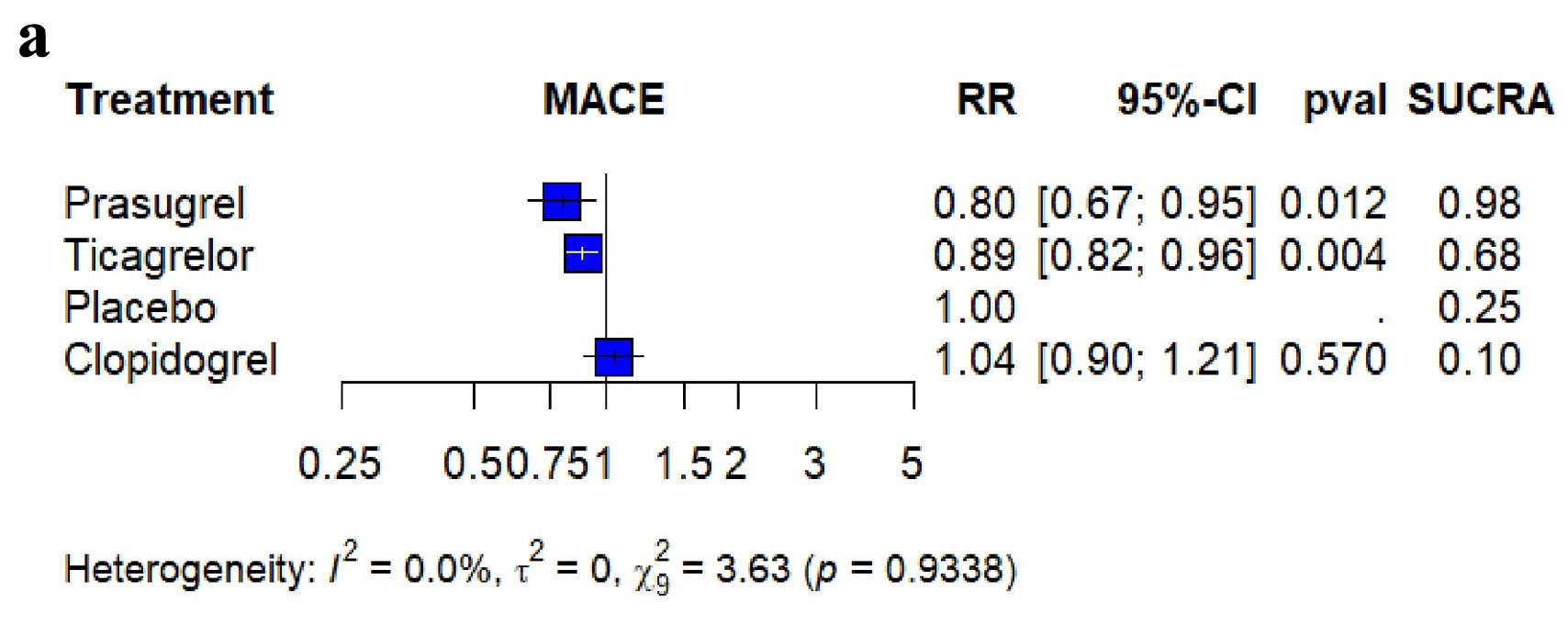
Results: Seventeen RCTs, including 40,919 patients, were identified, with 15 trials included in the quantitative synthesis. Compared with placebo, prasugrel and ticagrelor were associated with significant reductions in MACEs, whereas clopidogrel showed no significant benefit. No significant differences were observed in cardiovascular or all-cause mortality across treatment strategies. Prasugrel was associated with a lower risk of myocardial infarction, while ticagrelor was associated with a lower risk of stroke. Both agents increased major bleeding versus placebo, and ticagrelor was also associated with a higher risk of dyspnea. Ranking analysis suggested that prasugrel was the most effective strategy for ischemic outcomes, whereas placebo was the safest strategy overall.
Conclusions: In patients with DM and CAD, prasugrel and ticagrelor provide superior protection against ischemic events compared with clopidogrel but are associated with an increased bleeding risk compared with placebo. Prasugrel appears to offer the greatest overall efficacy, while ticagrelor shows a distinct benefit in stroke prevention. These findings support individualized antiplatelet strategies that balance ischemic and bleeding risks in this high-risk population.
Published
Issue
Section
License
Copyright (c) 2026 The authors

This work is licensed under a Creative Commons Attribution 4.0 International License.