

Hydroxychloroquine Attenuates Atherosclerosis in Apolipoprotein E Knockout Mice: Role of Endothelial Nitric Oxide Synthase and Hypoxia-Inducible Factor 1-Alpha
DOI:
https://doi.org/10.14740/cr2186Keywords:
Apolipoprotein E deficient mice, Atherosclerosis, Hydroxychloroquine, Endothelial nitric oxide synthase, Hypoxia-inducible factor-1 alpha, LipidsAbstract
Background: We aimed to test the effect of hydroxychloroquine (HCQ) treatment on atherosclerosis and plasma lipids in apolipoprotein E deficient (ApoE−/−) mice, defining the aortic expression of endothelial nitric oxide synthase (eNOS) and hypoxia inducible factor-1 alpha (HIF-1α).
Methods: Forty-seven (47) mice were divided into two treatment groups: an HCQ group administered 10 mg/kg/day in drinking water for 16 weeks and a control group with no HCQ. All mice were maintained on a standard chow diet containing 5% fat and had free access to water. At 32 weeks of age, blood was drawn for plasma lipid determination and the proximal aorta was removed to measure the atherosclerotic area and evaluate the expression of eNOS and HIF-1α by immunohistochemistry.
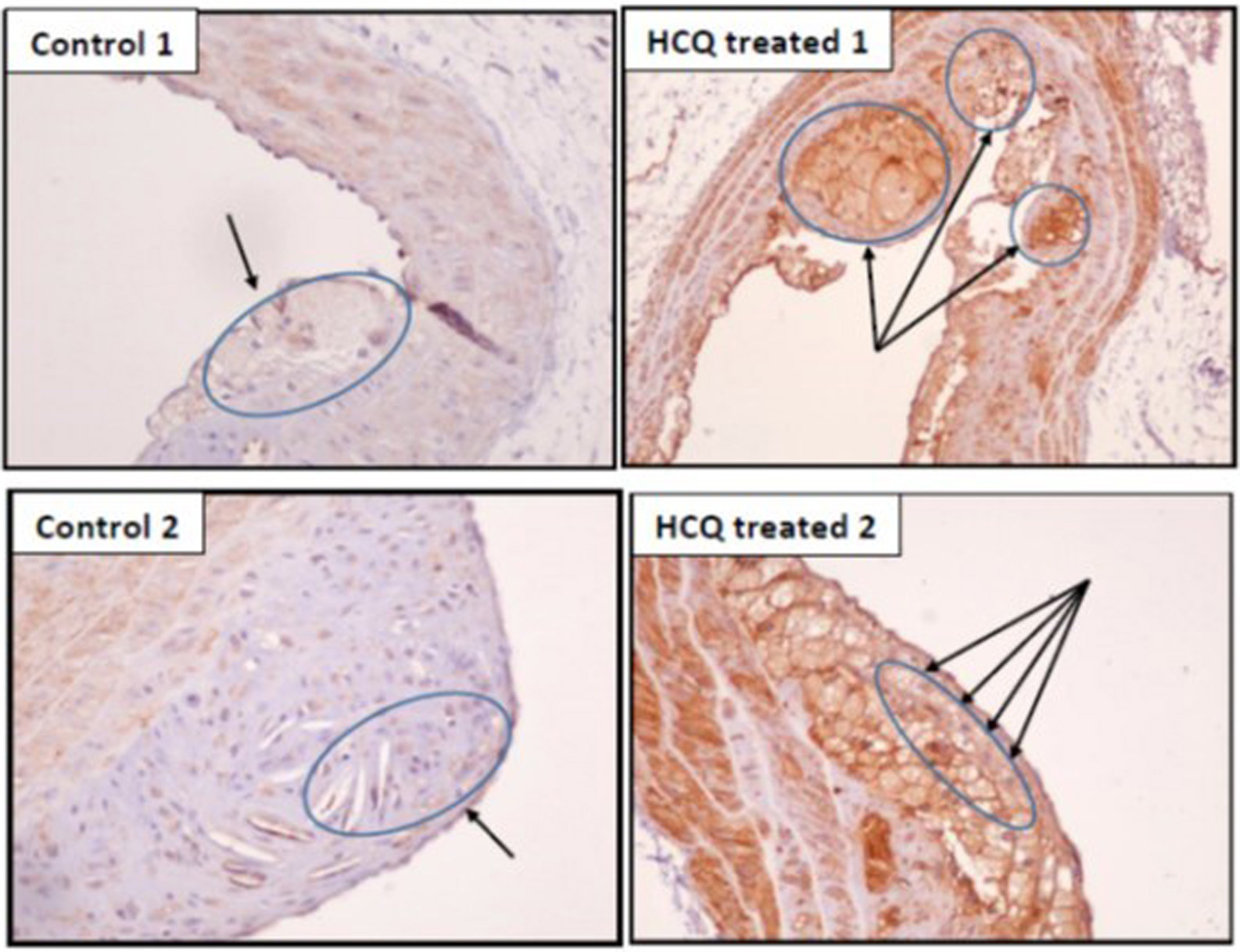
Results: The HCQ group consisted of 16 mice (10 males, six females), while the control group consisted of 31 mice (17 males, 14 females). HCQ significantly reduced the atherosclerotic area (mm2 ± SEM) in treated mice compared to controls, both in males (0.0456 ± 0.0140 vs. 0.1920 ± 0.0284, P < 0.001, respectively) and females (0.0278 ± 0.005 vs. 0.1765 ± 0.025, P = 0.003, respectively). eNOS expression was significantly increased, whereas HIF-1α expression was significantly decreased in the aortas of HCQ-treated male and female mice compared to controls. No significant reduction in plasma cholesterol levels was observed in HCQ-treated mice compared with controls.
Conclusion: HCQ reduces aortic atherosclerosis in ApoE−/− mice, potentially through modulation of eNOS and HIF-1α expression, without exerting a beneficial effect on plasma cholesterol levels.
Published
Issue
Section
License
Copyright (c) 2026 The authors

This work is licensed under a Creative Commons Attribution 4.0 International License.