


Association of Circulating Brain-Derived Neurotrophic Factor With Coronary Risk Factors and Coronary Artery Disease in Patients Who Have Undergone Coronary Computed Tomography Angiography
DOI:
https://doi.org/10.14740/cr2201Keywords:
Brain-derived neurotrophic factor, Computed tomography angiography, Coronary artery diseaseAbstract
Background: Previous studies have reported low circulating brain-derived neurotrophic factor (BDNF) concentrations in patients with coronary artery disease (CAD), but findings have been inconsistent and may be influenced by platelet-related factors. This study evaluated the association between plasma BDNF and CAD in patients undergoing coronary computed tomography angiography (CCTA).
Methods: We prospectively enrolled 402 consecutive patients who underwent CCTA for CAD screening at Fukuoka University Hospital and who were either clinically suspected of having CAD or had at least one cardiovascular risk factor. CAD was defined as coronary artery stenosis of 50% or greater. Plasma BDNF was measured and its association with CAD and clinical variables was examined using multivariate linear regression and logistic regression. The effect of covariate adjustment on the association between BDNF and CAD was assessed using the change-in-estimate method.
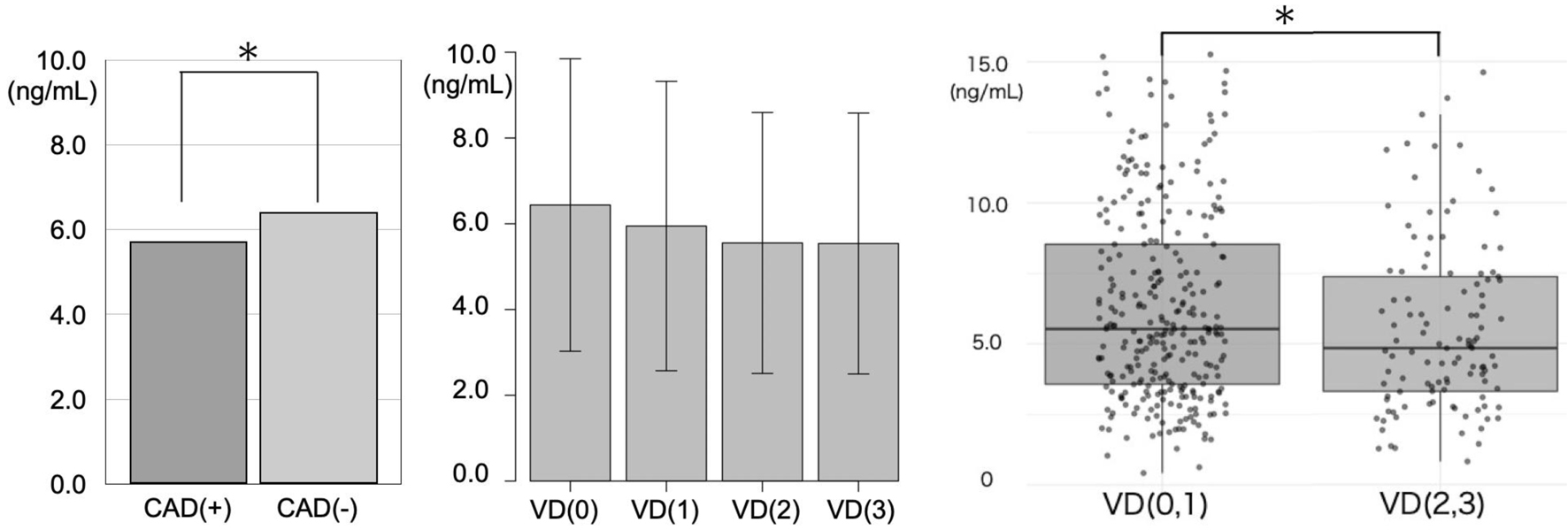
Results: Patients with CAD (n = 186) had lower plasma BDNF levels compared with patients without CAD (n = 216) (5.73 ± 3.16 vs. 6.41 ± 3.42 ng/mL, P = 0.039). Multivariate linear regression analysis revealed that platelet count was the strongest determinant of plasma BDNF levels (β = 0.027, P < 0.001). Unadjusted logistic regression analysis showed that higher BDNF levels were associated with a lower prevalence of CAD (odds ratio (OR) 0.94, 95% confidence interval (CI) 0.88–1.00, P = 0.039). However, after adjusting for platelet count, this association weakened and became non-significant (OR 0.976, 95% CI 0.909–1.05, P = 0.49). Further adjustment for age and coronary artery calcification score did not significantly alter the results.
Conclusions: In a cohort undergoing CCTA with a relatively intermediate pre-test probability of CAD, plasma BDNF levels were lower in patients with CAD, but this crude correlation was primarily explained by platelet-related confounding factors. Platelet count should be considered when evaluating BDNF as a cardiovascular biomarker in patients with intermediate cardiovascular risks.
Published
Issue
Section
License
Copyright (c) 2026 The authors

This work is licensed under a Creative Commons Attribution 4.0 International License.