Progressive Shifts in Oral Plaque Microbiota From Health to Coronary Artery Disease and Acute Myocardial Infarction
DOI:
https://doi.org/10.14740/cr2232Keywords:
Microbiome, Myocardial infarction, Coronary artery diseaseAbstract
Background: Growing evidence links oral microbial dysbiosis to atherosclerotic cardiovascular disease (ASCVD), yet its role in acute myocardial infarction (AMI) and the transition from stable coronary artery disease (CAD) to acute events remains unclear. We aimed to characterize taxonomic and functional alterations of the oral plaque microbiome across cardiovascular health states and explore their clinical relevance.
Methods: We enrolled 60 age- and sex-matched adults, 20 in each group. Supragingival plaque underwent 16S rRNA sequencing and functional inference. Alpha and beta diversity were assessed, and differential features were identified by Linear Discriminant Analysis Effect Size (LEfSe). The metabolic pathway predictions were using Kyoto Encyclopedia of Genes and Genomes (KEGG) pathway.
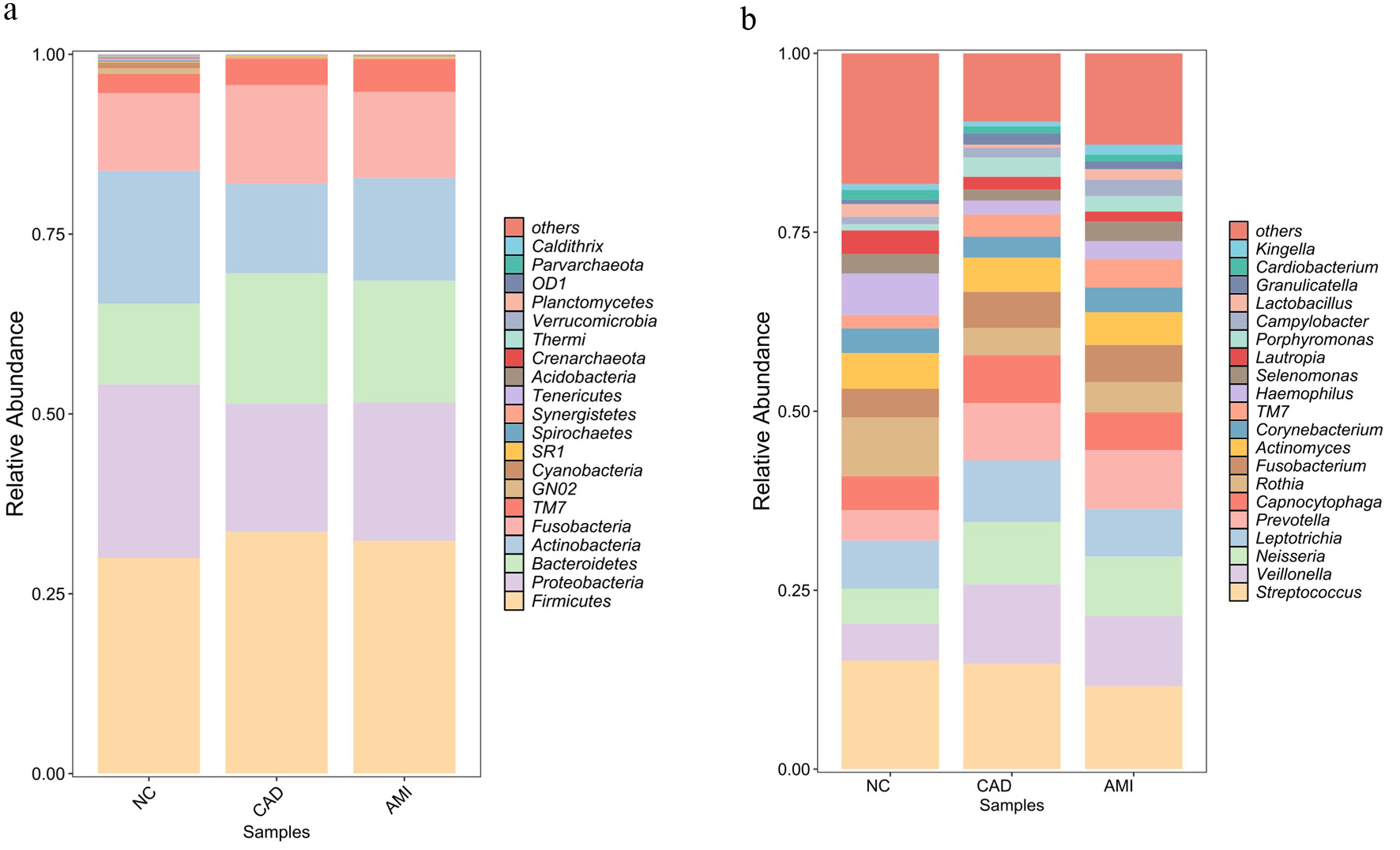
Results: Alpha and beta diversity showed no significant differences in overall microbial richness, evenness, or global community structure among groups. However, marked taxonomic shifts were observed. AMI patients exhibited enrichment of pro-inflammatory genera (Veillonella, Porphyromonas, Dialister, Megasphaera, and Acidaminococcus) and depletion of commensal taxa (Haemophilus and Lautropia). LEfSe identified disease-specific microbial signatures distinguishing healthy control, CAD, and AMI. Functional prediction revealed enrichment of arachidonic acid, pyrimidine, and D-glutamine/D-glutamate metabolism in CAD, with further increases in necroptosis-, proteasome-, and inflammation-related pathways in AMI, whereas two-component signaling systems were enriched in healthy controls.
Conclusions: The oral microbiome exhibits progressive taxonomic and functional shifts from health to CAD and AMI, supporting an oral–cardiovascular axis and highlighting oral microbial profiles as potential noninvasive biomarkers for ASCVD risk stratification.
Published
Issue
Section
License
Copyright (c) 2026 The authors

This work is licensed under a Creative Commons Attribution 4.0 International License.