

Type B Lactic Acidosis: Diagnosis, Etiology and Treatment – An Educational Review
DOI:
https://doi.org/10.14740/cr2265Keywords:
Lactic acidosis, Anaerobic metabolism, Type B lactic acidosis, Glycolysis, HypoxiaAbstract
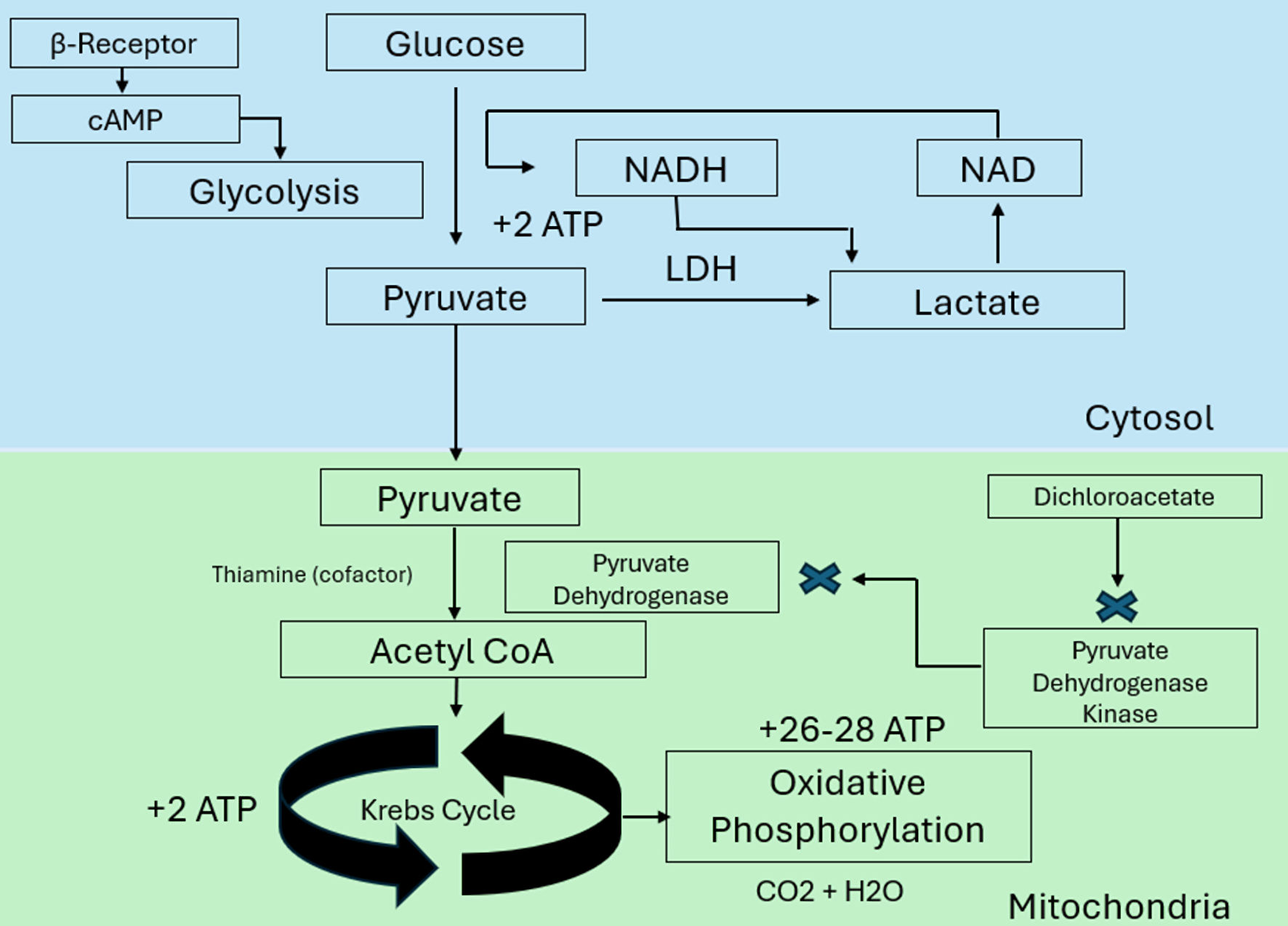
Lactate elevation is commonly interpreted as a marker of tissue hypoxia; however, hyperlactatemia may occur despite adequate oxygen delivery and reflect diverse abnormalities in lactate production or clearance. Type B lactic acidosis is traditionally classified into three categories: underlying comorbid diseases, medication- and toxin-induced causes, and inborn errors of metabolism, making its recognition and management challenging. D-lactic acidosis represents a distinct disorder of lactate metabolism that may be overlooked by standard lactate assays. This educational review summarizes the pathophysiology and classification of type B lactic acidosis, reviews its major etiologies, and discusses D-lactic acidosis and hyperlactatemia during mechanical circulatory support. We propose a practical diagnostic algorithm for unexplained hyperlactatemia and review current therapeutic strategies, emphasizing treatment of the underlying cause. A structured approach may facilitate recognition of the mechanisms contributing to hyperlactatemia and guide targeted management, particularly in critically ill patients.
Published
Issue
Section
License
Copyright (c) 2026 The authors

This work is licensed under a Creative Commons Attribution 4.0 International License.