


Prognostic Value of the Geriatric Nutritional Risk Index and Controlling Nutritional Status Score in Patients Aged ≥ 75 Years With Heart Failure With Preserved Ejection Fraction
DOI:
https://doi.org/10.14740/cr2282Keywords:
Malnutrition, Geriatric Nutritional Risk Index, CONUT score, Elderly, Heart failure with preserved ejection fraction, PrognosisAbstract
Background: Malnutrition is common in elderly patients with heart failure with preserved ejection fraction (HFpEF), but its prognostic significance and the optimal screening tool remain unclear. This retrospective, single-center study aimed to compare the application of the Geriatric Nutritional Risk Index (GNRI) and the Controlling Nutritional Status (CONUT) score in assessing nutritional status in very elderly patients with HFpEF, and to evaluate the association between nutritional status and clinical outcomes.
Methods: A total of 196 patients aged ≥ 75 years (mean age 92.12 ± 4.28 years, 86.2% male) with HFpEF were enrolled. Nutritional status was categorized using CONUT and GNRI according to standard cut-offs.
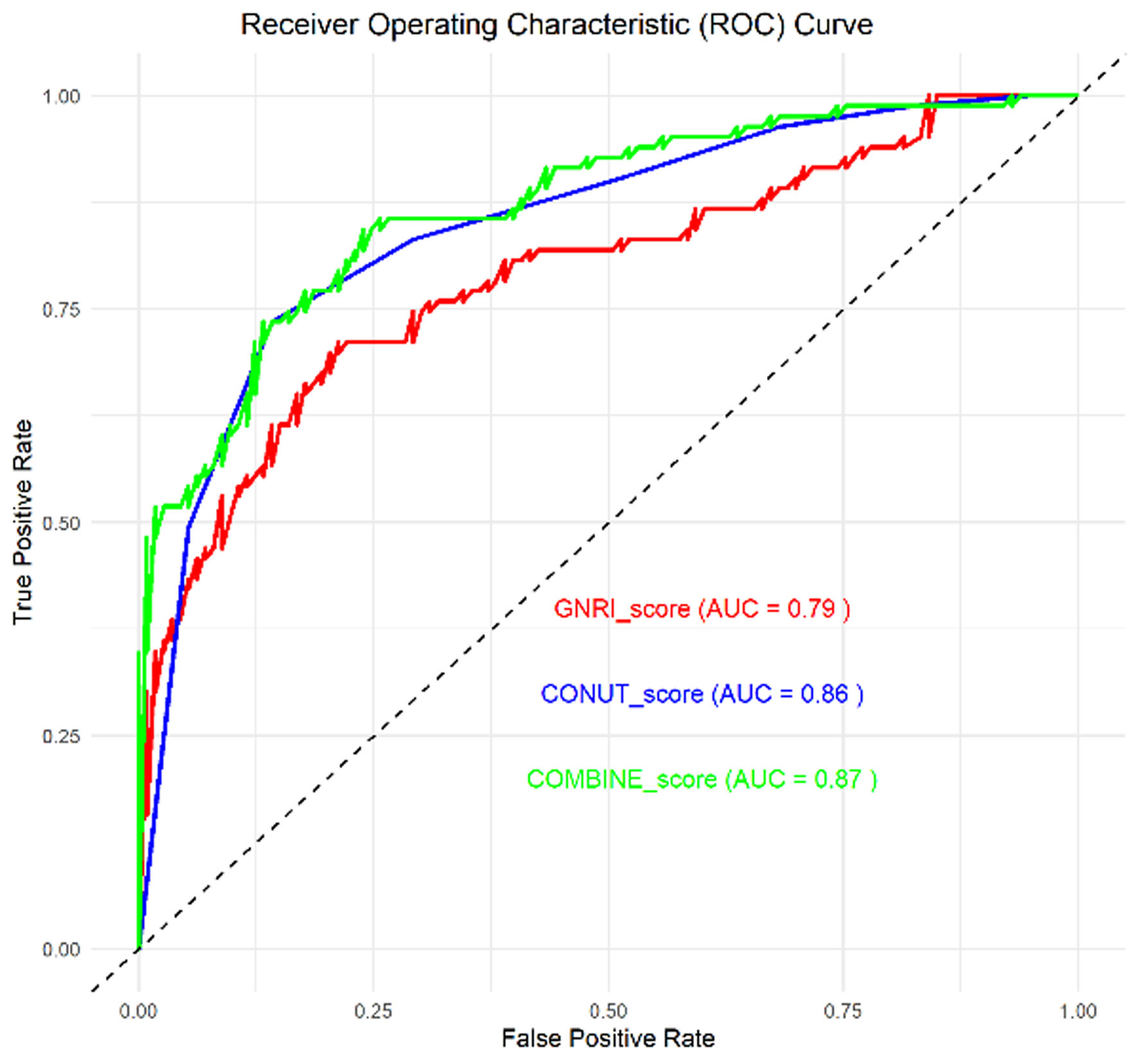
Results: Patients with higher CONUT scores or lower GNRI scores (indicating worse nutritional status) had significantly longer hospital stays, lower levels of nutrition-related indices (albumin, total cholesterol, low-density lipoprotein cholesterol (LDL-C), serum ferritin, transferrin saturation), lower lymphocyte counts, and higher NT-pro-B-type natriuretic peptide (NT-proBNP) and inflammatory markers (C-reactive protein (CRP), procalcitonin (PCT), interleukin-6 (IL-6)) (all P < 0.05). Over a median follow-up of 11.5 months, 83 patients (42.3%) died. In unadjusted analyses, patients with worse nutritional status had significantly higher rates of all-cause death, all-cause readmission, and heart failure-related readmission (all P < 0.05). Multivariable Cox regression revealed that CONUT (hazard ratio (HR) = 1.366, 95% confidence interval (CI): 1.181–1.579, P < 0.001) was an independent risk factor for all-cause mortality, while GNRI (HR = 0.962, 95% CI: 0.927–0.999, P = 0.043) was a protective factor. The CONUT and GNRI showed poor consistency (κ = 0.235, P < 0.01). Using receiver operating characteristic (ROC) analysis based on vital status at the end of follow-up, the area under the curve (AUC) for predicting all-cause mortality was 0.86 (95% CI: 0.80–0.91) for CONUT, 0.79 (95% CI: 0.73–0.86) for GNRI, and 0.87 (95% CI: 0.82–0.92) for a combined model incorporating both scores via logistic regression. Net reclassification improvement (NRI) analysis showed that compared with the GNRI score, the NRI of the CONUT score was 0.580 (95% CI: 0.309–0.852), and the NRI of the combined score was 0.760 (95% CI: 0.499–1.022), both reaching statistical significance (P < 0.01). By contrast, the NRI was 0.083 (95% CI: −0.197 to 0.363, P = 0.560) for the combined score versus the CONUT score.
Conclusions: Malnutrition is common in elderly patients with HFpEF. CONUT and GNRI scores are associated with adverse outcomes. Compared with GNRI alone, the combined assessment of the two scores improves predictive performance for adverse prognosis in elderly patients with HFpEF, while no incremental benefit is observed over CONUT alone.
Published
Issue
Section
License
Copyright (c) 2026 The authors

This work is licensed under a Creative Commons Attribution 4.0 International License.