

Virtual Assessment of Coronary Microcirculation Before and After Rotational Atherectomy
DOI:
https://doi.org/10.14740/cr2276Keywords:
Rotablator, Angiography-derived microvascular resistance, Coronary microvascular dysfunctionAbstract
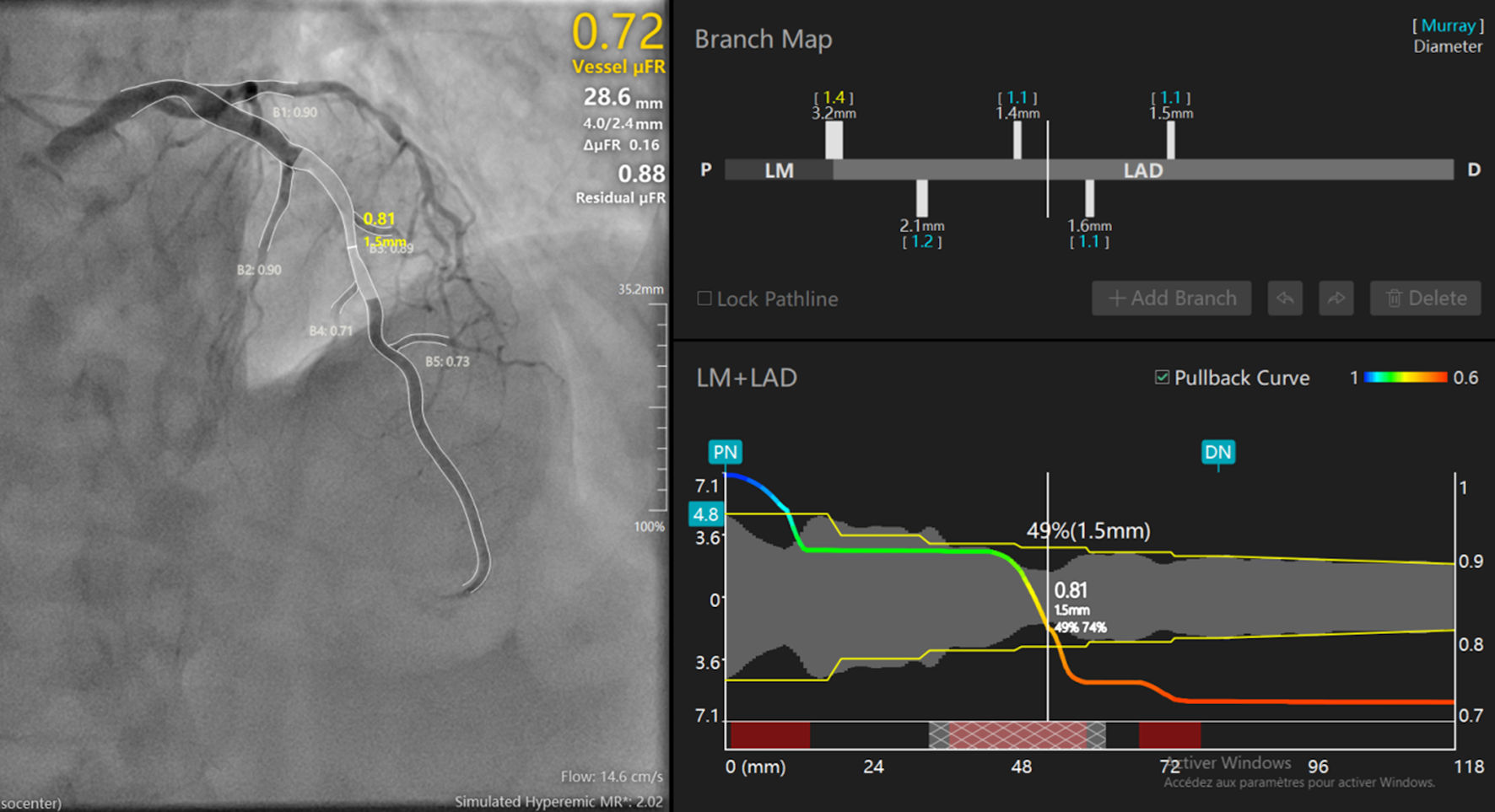
Background: Calcified coronary lesions remain a major challenge during percutaneous coronary intervention (PCI). Rotational atherectomy (RA) (Boston Scientific) is a well-established tool used to modify calcified plaques and facilitate stent delivery. Despite its mechanical benefits, RA may adversely affect coronary microcirculation through distal plaque debris embolization. Angiography-derived microvascular resistance (AMR) (Pulse Medical) is a wire-free index correlated with invasive indices such as the index of microcirculatory resistance (IMR), which allows assessment of microcirculatory resistance directly from angiographic images, without a pressure wire or adenosine. The objective of this study is to evaluate changes in AMR before and after RA and to identify clinical, angiographic, and procedural predictors of postprocedural coronary microvascular dysfunction (CMD).
Methods: We performed a retrospective single-center observational study including all patients who underwent RA between January 2023 and December 2024 at Clinique Saint-Hilaire in Rouen, France. AMR was measured before and after RA using the AngioPlus software (Pulse Medical). CMD was defined as postprocedural AMR > 250 mm Hg·s/m.
Results: Of 49 RA procedures, 40 patients were included. AMR increased in all cases but CMD occurred in 42.5% of patients (n=17). Diabetes mellitus and reduced left ventricular ejection fraction (LVEF) were significantly more prevalent in the CMD group. Long coronary artery lesions (> 20 mm), larger plaque burden, and prolonged burr run time were associated with higher AMR values. Mean AMR rose from 176 to 315 mm Hg·s/m in the CMD group, versus 177 to 201 mm Hg·s/m in the non-CMD group.
Conclusions: Performing RA affects the coronary microcirculation, especially in cases of diabetes mellitus and reduced LVEF.
Published
Issue
Section
License
Copyright (c) 2026 The authors

This work is licensed under a Creative Commons Attribution 4.0 International License.