


Optimization and Real-World Implementation of Guideline-Directed Medical Therapy in Heart Failure With Reduced Ejection Fraction: A Contemporary Clinical Review
DOI:
https://doi.org/10.14740/cr2195Keywords:
Heart failure with reduced ejection fraction, Guideline-directed medical therapy, GDMT implementation, Rapid initiation, Therapeutic sequencing, Advanced heart failureAbstract
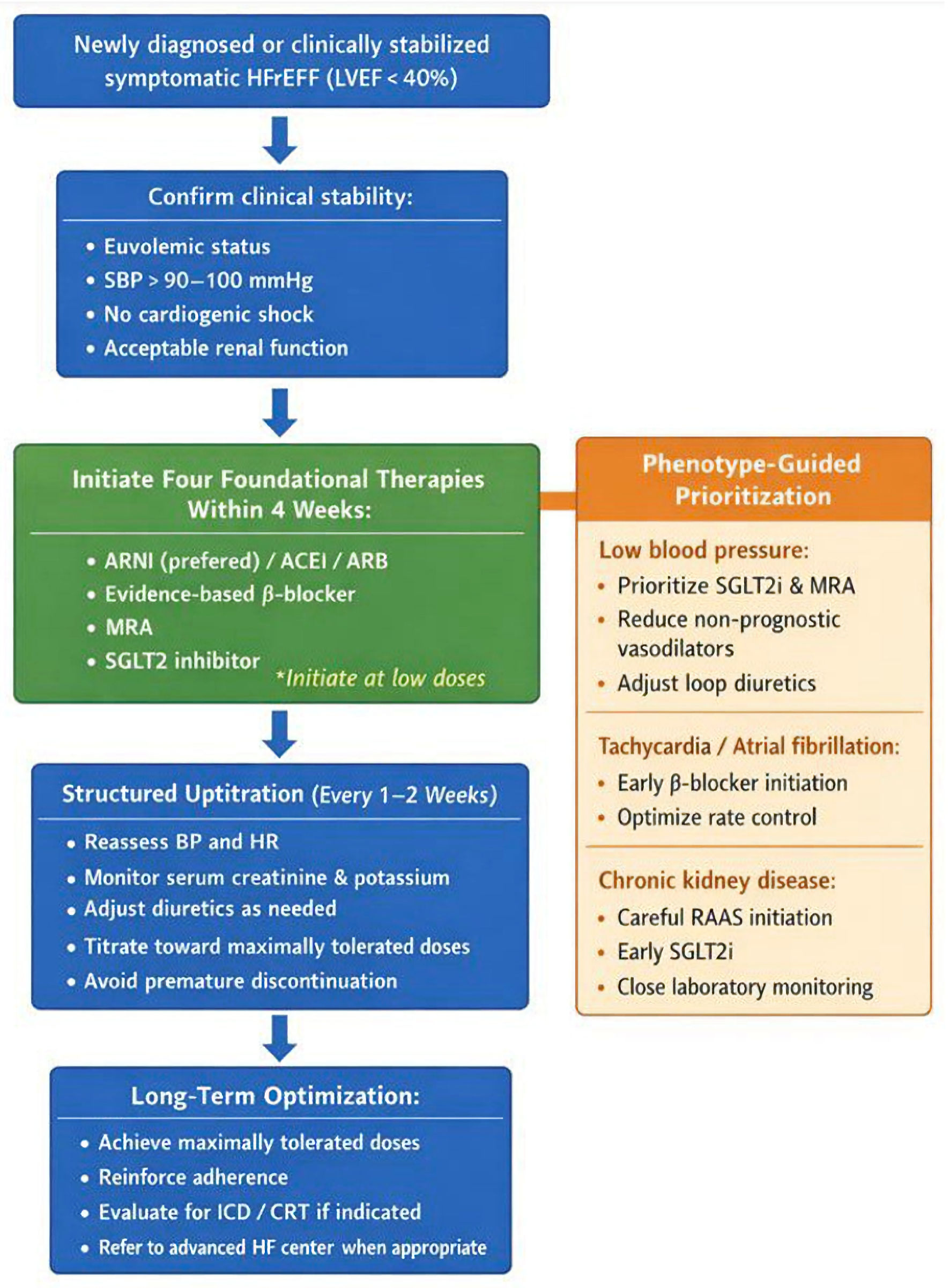
Heart failure with reduced ejection fraction (HFrEF) remains a major global health burden despite the availability of highly effective disease-modifying therapies. Contemporary guidelines consistently endorse four foundational pillars of guideline-directed medical therapy (GDMT); however, real-world implementation remains incomplete, with delayed initiation, suboptimal sequencing, and low rates of target dose achievement. This review aims to provide a clinically oriented, implementation-focused framework for optimizing GDMT in HFrEF, emphasizing early initiation, practical sequencing strategies, structured up-titration, and phenotype-guided prioritization in routine practice. A narrative synthesis of major randomized clinical trials, contemporary guideline recommendations, and real-world registry data was performed. Evidence was integrated to develop pragmatic strategies for rapid initiation (“four drugs in 4 weeks”), safe titration, and overcoming common barriers to implementation. Early and comprehensive initiation of renin–angiotensin system inhibition (preferably with angiotensin receptor–neprilysin inhibitors), evidence-based beta-blockers, mineralocorticoid receptor antagonists, and sodium–glucose cotransporter 2 (SGLT2) inhibitors is associated with rapid and sustained reductions in hospitalization and mortality. Clinical benefits of SGLT2 inhibitors emerge within weeks of initiation, reinforcing the importance of early deployment. Nevertheless, substantial residual risk persists even under quadruple therapy, and real-world data demonstrate persistent underutilization of foundational therapies. Structured follow-up, phenotype-guided prioritization, and protocol-driven titration strategies may facilitate safe and comprehensive implementation. Adjunctive device therapy, timely referral for advanced heart failure evaluation, and integration of cardiac rehabilitation further enhance long-term outcomes. The contemporary challenge in HFrEF management lies not only in identifying effective therapies, but in ensuring their timely and coordinated implementation. An implementation-oriented approach that prioritizes rapid initiation, structured up-titration, and individualized clinical decision-making may help bridge the gap between guideline recommendations and real-world practice.
Published
Issue
Section
License
Copyright (c) 2026 The authors

This work is licensed under a Creative Commons Attribution 4.0 International License.