

Concordance Between E/e’ Ratio and N-Terminal Pro-B-type Natriuretic Peptide Levels for Predicting Post-Discharge Heart Failure Events Within Ninety Days After Acute Coronary Syndrome
DOI:
https://doi.org/10.14740/cr2239Keywords:
Acute coronary syndrome, Heart failure, E/e’ ratio, NT-proBNP, Prognosis, Retrospective cohort studyAbstract
Background: Heart failure (HF) is a common complication after acute coronary syndrome (ACS) and is linked to substantial morbidity and mortality. Both the E/e’ ratio and N-terminal pro-B-type natriuretic peptide (NT-proBNP) are widely utilized as noninvasive signs of cardiac filling pressure and hemodynamic stress. This study aimed to determine whether concordance between the E/e’ ratio and NT-proBNP level was associated with post-discharge HF events within 90 days among patients hospitalized with ACS.
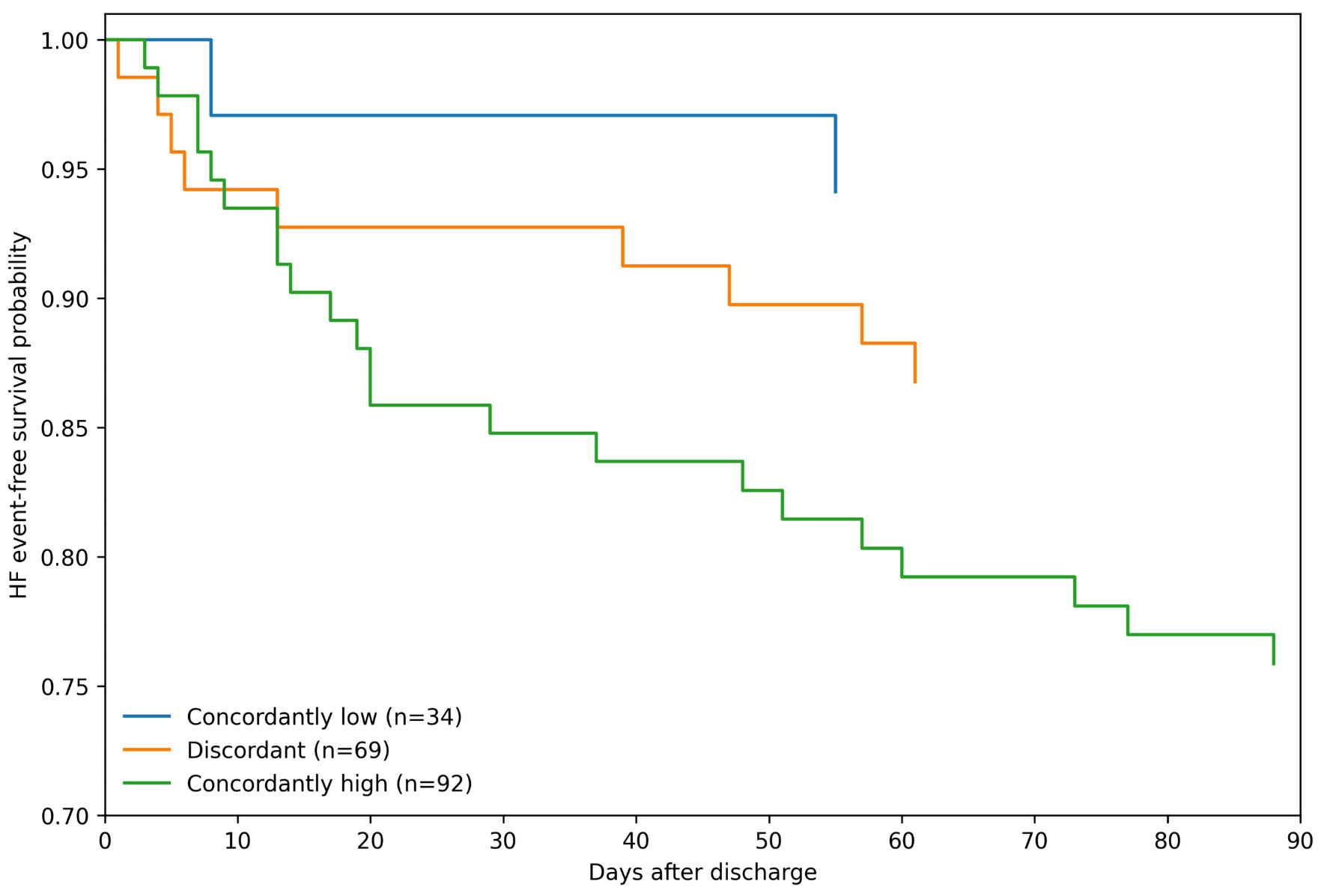
Methods: The current retrospective cohort study included 195 adults with ACS admitted to a military and teaching hospital for the Royal Thai Army between July 1, 2021, and August 31, 2025. Patients were sorted into three groups according to the concordance of the E/e’ ratio and age-specific NT-proBNP thresholds: concordantly low, discordant, and concordantly high. The primary outcome was a post-discharge HF event within 90 days after discharge, defined as an outpatient or emergency visit requiring diuretic therapy or hospitalization for HF. Time-to-event analyses were done using Kaplan–Meier methods and Cox proportional hazards regression.
Results: Of the 195 patients, 34 (17.4%) were in the concordantly low group, 69 (35.4%) in the discordant group, and 92 (47.2%) in the concordantly high group. Post-discharge HF events within 90 days occurred in 33 patients (16.9%). Event rates were 0.68, 1.64, and 3.21 per 1,000 person-days in the concordantly low, discordant, and concordantly high groups, respectively. Compared with the concordantly low group, the concordantly high group had a significantly higher risk of the primary outcome in univariable analysis (hazard ratio (HR): 4.50; 95% confidence interval (CI), 1.06–19.14; P = 0.042) and in the reported multivariable model (adjusted HR: 5.97; 95% CI, 1.22–29.10; P = 0.027). The discordant group did not have a statistically significant increase in risk.
Conclusions: Concordant elevation of the E/e’ ratio and NT-proBNP identified patients with ACS at substantially higher risk of post-discharge HF events within 90 days. Concordant elevation of E/e’ and NT-proBNP was associated with a higher rate of post-discharge HF events within 90 days after ACS. These exploratory findings require validation in larger prospective multicenter studies.
Published
Issue
Section
License
Copyright (c) 2026 The authors

This work is licensed under a Creative Commons Attribution 4.0 International License.