

Sardjito Cardiovascular Intensive Care Score as an Alternative to Mayo Cardiac Admission Risk Score for Predicting Mortality in Cardiovascular Intensive Care Patients
DOI:
https://doi.org/10.14740/cr2199Keywords:
Cardiac intensive care, Cardiovascular patients, SCIENCE, M-CARS, CICUAbstract
Background: The cardiovascular intensive care unit (CICU) has evolved into a multidisciplinary unit managing critically ill patients with high mortality rates. In 2022, the Sardjito Cardiovascular Intensive Care (SCIENCE) score introduced seven simple parameters assessed within the first 24 h to predict CICU mortality. The Mayo Cardiac Admission Risk Score (M-CARS) is a well-established tool for predicting CICU mortality but requires specialized laboratory tests. This study compared the predictive performance of the SCIENCE score and M-CARS and validated SCIENCE at its development site.
Methods: This retrospective cohort study was conducted between February 2022 and September 2024 and included CICU patients at Sardjito Hospital. Outcomes assessed were CICU and in-hospital mortality. Predictive performance was evaluated by accuracy, discrimination, and calibration (Hosmer–Lemeshow test).
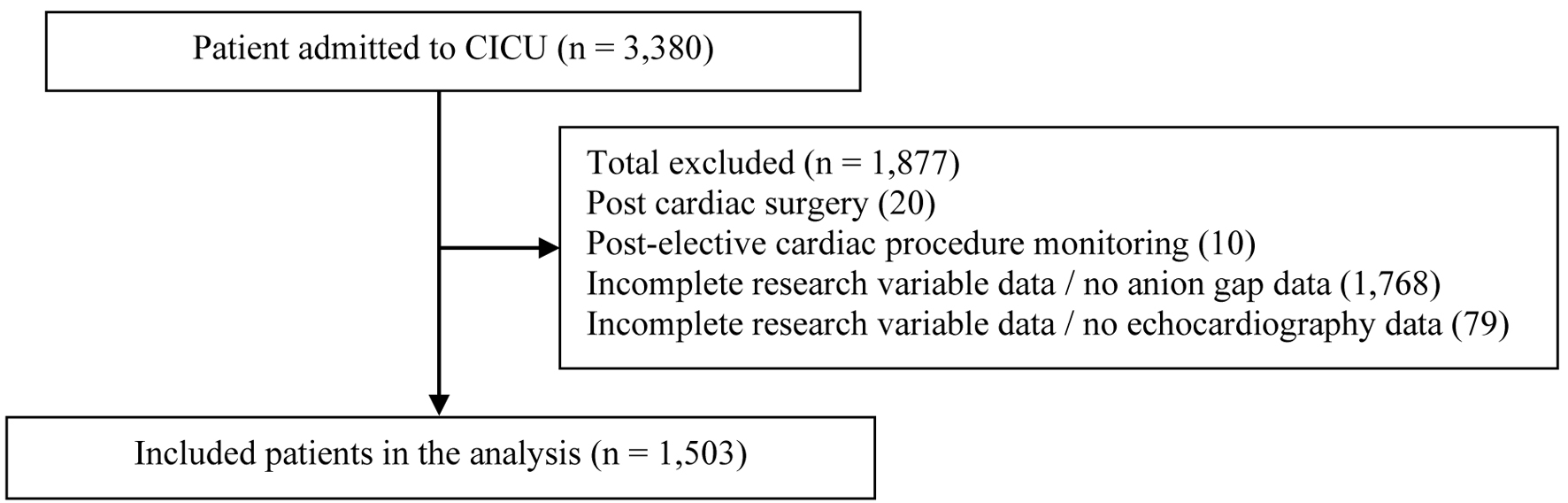
Results: Over 50% of the initial participants were excluded due to missing M-CARS data (particularly the anion gap), leaving 1,503 eligible patients. M-CARS showed good predictive performance for CICU mortality (accuracy 70.9%, area under the curve (AUC) 0.804, P = 0.685) and in-hospital mortality (accuracy 72.2%, AUC 0.797, P = 0.303). The SCIENCE score also showed good predictive performance for CICU mortality (accuracy 63.7%, AUC 0.775, P = 0.059) and in-hospital mortality (accuracy 65.8%, AUC 0.767, P = 0.352). Acute stroke (hemorrhagic and non-hemorrhagic) was associated with higher CICU and in-hospital mortality (P < 0.05).
Conclusion: Both the SCIENCE score and M-CARS provide acceptable predictive performance for CICU patients. However, as M-CARS has limited applicability in some settings, the SCIENCE score may serve as a more practical alternative.
Published
Issue
Section
License
Copyright (c) 2026 The authors

This work is licensed under a Creative Commons Attribution 4.0 International License.