

Takotsubo Syndrome: Clinical and Diagnostic Characteristics of 26 Consecutively Hospitalized Patients Over a Five-Year Period
DOI:
https://doi.org/10.14740/cr2249Keywords:
Takotsubo syndrome, Stress cardiomyopathy, Apical ballooning, Ejection fraction, NT-proBNP, Case series, OutcomesAbstract
Background: Takotsubo syndrome (TTS) is a transient form of acute heart failure characterized by reversible left ventricular (LV) dysfunction, predominantly affecting postmenopausal women following emotional or physical stress. Despite its historically benign reputation, in-hospital complications and mortality remain clinically significant. Data from Central and Eastern European populations are underrepresented in large international registries. The study aimed to describe the clinical, echocardiographic, and biochemical characteristics of a consecutive cohort of 26 patients hospitalized with TTS over a 5-year period and to compare findings with published international registry data.
Methods: This is a retrospective observational study (case series) of 26 consecutive patients. Diagnosis was established per Mayo Clinic criteria (2008). Descriptive statistics and Pearson correlation analysis were applied.
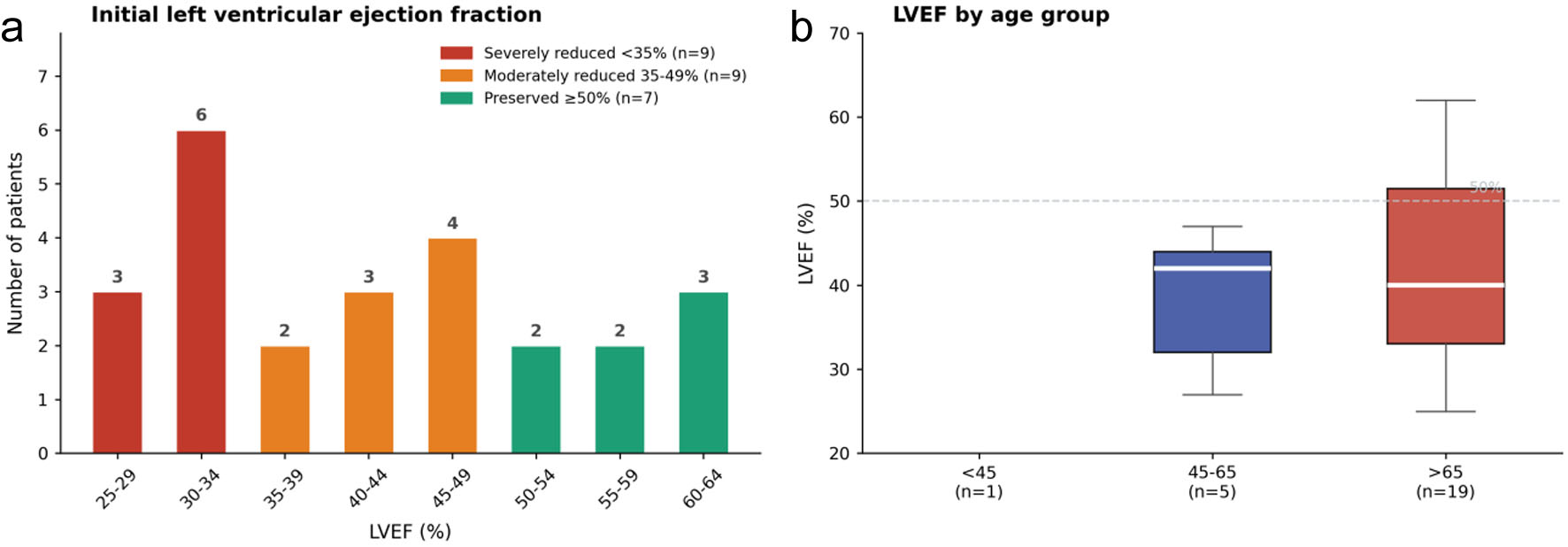
Results: The cohort comprised 23 women (88.5%) and three men (11.5%), with a mean age of 71.4 ± 12.0 years. A triggering event was identified in all 26 patients (100%). Mean initial left ventricular ejection fraction (LVEF) was 41.8±11.4%; classic apical ballooning was present in 100%. N-terminal pro-B-type natriuretic peptide (NT-proBNP) showed a moderate inverse correlation with LVEF (ρ = −0.53, Spearman). Mean length of hospital stay was 12.1 ± 10.2 days (median 7). In-hospital complications occurred in 25% of survivors; in-hospital mortality was 7.7% (2/26).
Conclusions: This study is consistent with the predominance of TTS in elderly women with universal triggering events and significant systolic dysfunction at presentation. NT-proBNP showed an inverse correlation with LVEF, reflecting neurohumoral activation proportional to hemodynamic impairment. Mortality and complication rates were at the upper limit of published values. These hypothesis-generating findings support the need for prospective multicenter validation.
Published
Issue
Section
License
Copyright (c) 2026 The authors

This work is licensed under a Creative Commons Attribution 4.0 International License.