

Strong Adherence to Cardiac Rehabilitation Program Improves Exercise Tolerance in Outpatients With Cardiovascular Disease
DOI:
https://doi.org/10.14740/cr2213Keywords:
Cardiac rehabilitation, Frequency, Exercise toleranceAbstract
Background: Exercise-based cardiac rehabilitation (CR) programs are recommended in outpatients at least three times a week, but high-frequency visits can be difficult due to patients’ work schedules. The association between the frequency of exercise-based CR and the increase in exercise tolerance is not well known. We evaluated the effect of CR once a week or more for improving exercise tolerance.
Methods: This is a retrospective observational study. From February 2011 to January 2020, 110 outpatients who participated in CR and performed a cardiopulmonary exercise test (CPET) two times (initially and within 6 months) were registered. We divided the patients into those who participated in CR once a week or more (n = 75) and less than once a week (n = 35) and compared the changes in the results of CPET.
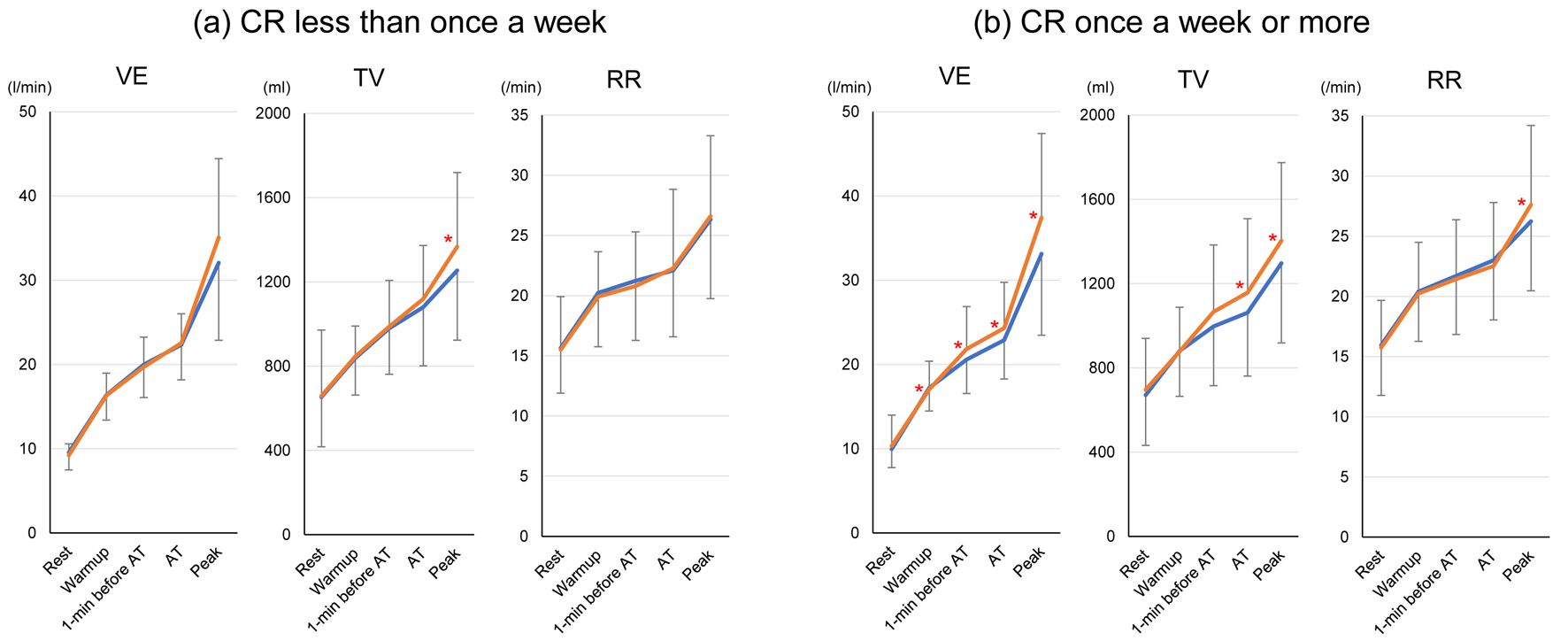
Results: Overall, the median patient age was 68.5 (59–74) years, 69.1% were males, and the body mass index was 23.8 (20.2–27.4) kg/m2. The average frequency of CR was 1.54 (0.93–1.89) times per week. While patients who participated in CR once a week or more showed improvements in oxygen uptake, ventilatory equivalent, ventilatory efficiency, and oxygen uptake per heart rate, those who participated in CR less than once a week showed only small improvements. The ratio of oxygen uptake to work rate in patients who participated in CR once a week or more also improved significantly.
Conclusions: Patients who participated in a CR program once a week or more showed improved exercise tolerance.
Published
Issue
Section
License
Copyright (c) 2026 The authors

This work is licensed under a Creative Commons Attribution 4.0 International License.